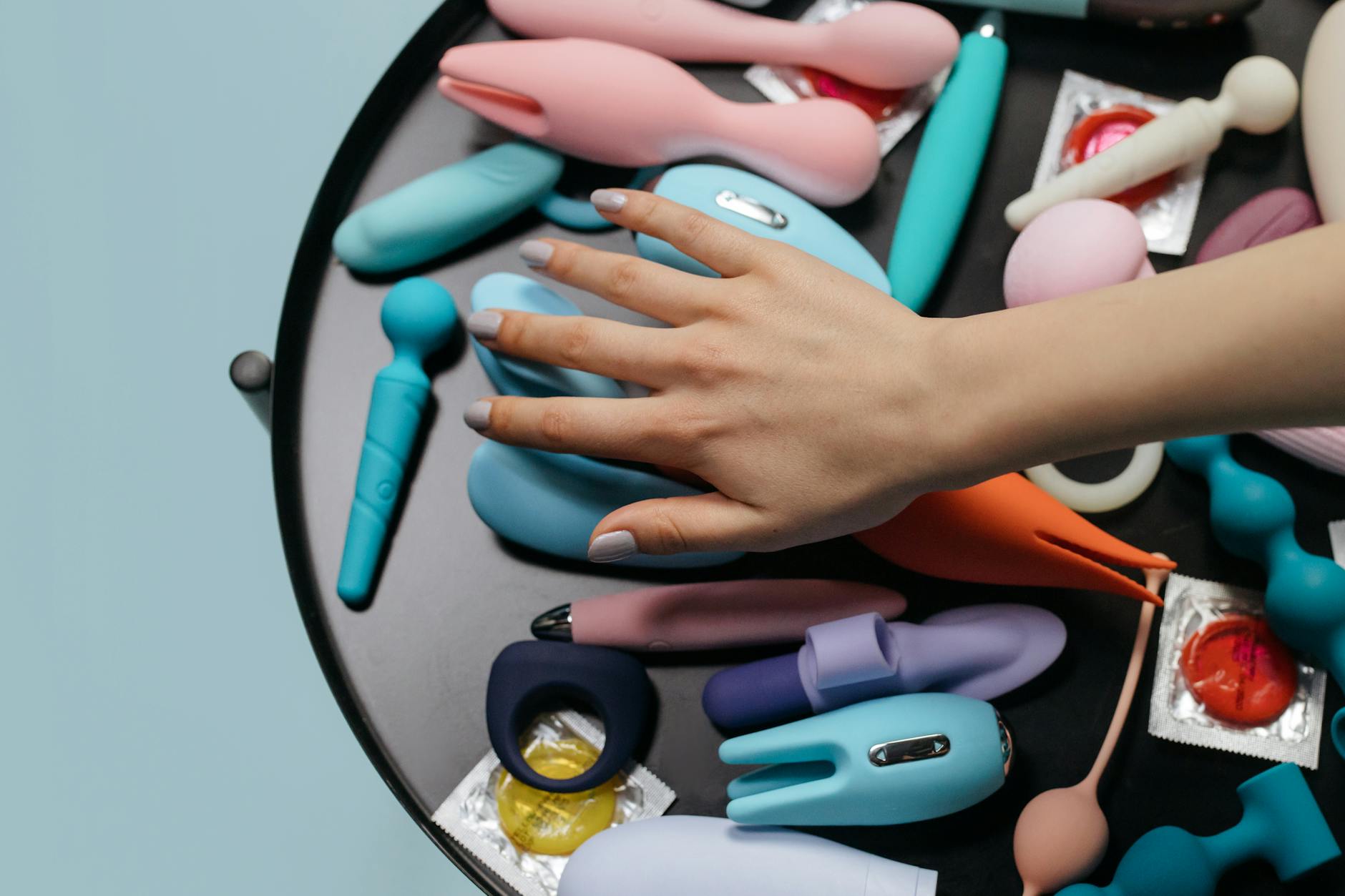
Let's start with what's actually happening
Perimenopause doesn't announce itself like a major life event. It creeps in. One month your body feels familiar. The next, arousal takes twice as long to build, or sensation feels muted, or your clitoris responds differently to touch than it used to. You're not broken. Your hormones are in flux, and that changes everything about how pleasure feels.
Here's the thing nobody tells you: perimenopause can last anywhere from four to ten years. That's a decade where your body is writing new rules every few months. If you're used to knowing exactly how your pleasure works, that uncertainty is disorienting.
Why sensation shifts during perimenopause
Estrogen and progesterone don't drop smoothly during perimenopause. They swing. One week you might feel like yourself. The next, your clitoris feels less responsive, or touch that usually felt amazing suddenly feels too intense. Your vulva's tissue gets thinner as estrogen fluctuates. Blood flow to the area becomes less predictable. The whole sensory map changes.
Your nervous system is also adapting. Perimenopause comes with hormonal shifts that affect dopamine and serotonin. That changes how your brain processes pleasure signals. It's not imagination. It's biology.
The good news: this doesn't mean your capacity for pleasure shrinks. It means it evolves. And certain tools, like lemon clitoral vibrators, adapt to these changes better than what worked before.
How lemon vibrators respond to changing sensation
Let me be specific. A lemon vibrator like the Lem uses air-suction technology rather than direct vibration. That matters during perimenopause because:
Suction doesn't rely on thickness. When tissue thins, direct vibration can feel harsh or even uncomfortable. Suction works by creating gentle pressure waves that stimulate nerve endings without requiring thick tissue to absorb impact. Your sensation is still there. The tool just meets your body where it is now.
The stimulation pattern is gentler and more precise. Unlike traditional vibrators that shake at a fixed frequency, suction-based technology gives you control over the intensity and pattern. During perimenopause, when your body's responses are unpredictable, this precision matters. You can start low and build up. You can adjust if sensation changes mid-session.
It works with reduced arousal time. One of the most common perimenopause complaints is that arousal takes longer. A lemon vibrator's suction stimulation doesn't require you to already be fully aroused to feel something. You can use it earlier in the warm-up phase, which actually helps build arousal naturally.
What to expect the first time using a lemon vibrator during perimenopause
If you've been using traditional vibrators and you're new to suction technology, the sensation feels different. Not better or worse. Just different. Most people describe it as more of a pulling or drawing sensation rather than buzzing.
Start with the lowest setting. Your clitoris during perimenopause is more sensitive to stimulation, even if overall sensation feels muted. That paradox is real. You might feel less overall sensation but find that focused stimulation is actually more intense. Budget twenty to thirty minutes for your first experience. Arousal takes longer now, and rushing defeats the purpose.
Use water-based lubricant. Even if you're not typically dry, perimenopause makes this a good habit. Thinner tissue benefits from lubrication, and it helps the suction technology work more effectively.
The pelvic floor factor during perimenopause
Here's something that gets overlooked: perimenopause changes your pelvic floor. Dropping estrogen means less muscular support down there. Your pelvic floor might feel weaker, or contractions during orgasm might feel different. Some people find orgasms feel less intense. Others find they're more concentrated or happen in a different pattern.
A lemon clitoral vibrator actually helps with this. The stimulation encourages pelvic floor engagement without requiring you to consciously flex. Over time and with regular use, many people find that their pelvic floor strength improves, and orgasms become more satisfying.
If you've been doing Kegels, keep doing them. But also practice relaxation. Perimenopause often brings tension in the pelvic floor because of hormonal shifts and life stress. Learning to fully release that tension matters as much as strengthening it.
Timing matters more than it used to
During perimenopause, your cycle becomes erratic. One month it's twenty-three days. The next, it's thirty-eight. This affects hormone levels throughout your month, which means your baseline sensation and arousal change week to week.
Pay attention to when in your cycle pleasure feels easiest. For many people, the week after ovulation (when progesterone is rising) feels more responsive. The week before your period (when both hormones are dropping) might feel duller. This isn't a problem to fix. It's just information. Some weeks you might want to use a lemon vibrator more intentionally. Other weeks, you might barely think about it.
As you move through perimenopause, these patterns will shift again. Your body isn't being difficult. It's adapting to a major transition. Work with it instead of against it.
Partner communication during this shift
If you have a partner, perimenopause sensation changes affect both of you, even if they're only happening in your body. A partner might interpret slower arousal as lack of interest. They might wonder why something that used to work isn't working now. That's a conversation to have directly.
Introducing a lemon vibrator into partnered sex can actually make this easier. It's not a replacement for your partner. It's a tool that helps your body respond the way it wants to right now. A partner using a lemon vibrator on you, or you using one while you're together, keeps the focus on your shared pleasure rather than on what's "missing."
The thing about perimenopause is that it requires communication that couples sometimes haven't needed before. Be honest about what feels good now. Let your partner know that sensation changes don't mean desire has changed. And if you're not sure what feels good yet, that's what exploration is for.
When to add other tools or adjustments
A lemon vibrator is genuinely useful during perimenopause, but it's not always the whole answer. If arousal is slow but sensation is normal, you might just need more warm-up time and less pressure on yourself. If dryness is the main issue, vaginal moisturizers (used daily) or lubricant (used during sex) might be equally important as the vibrator itself.
If pain appears during sex, don't assume it's normal perimenopause. Genitourinary syndrome (tissue thinning and dryness that causes pain) is real and very treatable. A gynecologist can prescribe topical estrogen that works locally without systemic absorption. Combined with a lemon clitoral vibrator, this can transform sensation.
If desire itself has vanished, that's worth exploring separately from sensation changes. Perimenopause brings stress, sleep disruption, and mood shifts that all affect desire independently of hormones. Sometimes you need both a vibrator and a conversation with a therapist. Both are valid.
The pleasure payoff
Here's what I've seen with clients navigating perimenopause: the women who struggle the most are the ones waiting for their bodies to "go back to normal." The ones who adapt, who get curious about what pleasure looks like now, who try new tools like lemon vibrators, often end up discovering that their sexuality actually deepens during this transition.
Your body isn't broken. It's evolving. A lemon clitoral vibrator is designed for bodies that are changing, for sensation that's shifting, for arousal that needs time and attention. It meets you where you are right now, not where you used to be.
FAQs
Can I use a lemon vibrator if I'm still having regular periods?
Absolutely. Perimenopause starts years before your last period. As soon as you notice changes in your cycle, sensation, or arousal, you're in perimenopause. A lemon vibrator works just as well during this early phase as it does later.
Will a lemon vibrator feel different each week of my cycle?
Very likely. Hormone levels shift throughout your cycle, even during perimenopause, so sensitivity and arousal will fluctuate. Some weeks a lemon vibrator might feel amazing. Other weeks, sensation might be duller. This is normal and temporary. Track what you notice and adjust your expectations accordingly.
Does using a lemon vibrator regularly help regulate sensation during perimenopause?
Not directly regulate hormones, but regular use does help maintain pelvic floor strength and nerve sensitivity. Many people find that consistent use keeps sensation sharper than it would be otherwise. It's more like maintenance than a cure.
What if a lemon vibrator feels too intense during perimenopause?
Start with the lowest setting and don't use it for long sessions. Ten minutes on the lowest setting beats thirty minutes at medium intensity. Your nervous system is already in flux. Respect that. Build up gradually.
Should I tell my partner I'm using a lemon vibrator during perimenopause?
If you have a partner and you're having sex together, yes. If you're using it solo, that's your business. But if perimenopause is affecting partnered intimacy, a lemon vibrator can actually help that conversation. It's easier to say "I'd like to try this together" than to pretend everything is the same.
Is it normal for orgasms to feel different during perimenopause even with a lemon vibrator?
Completely normal. Orgasms might feel less intense, more focused, happen faster, or feel like they're in a different part of your body. This isn't a failure of the vibrator. It's your nervous system adapting. Give yourself permission for pleasure to feel different. Different isn't worse.
What comes next
Perimenopause lasts years. That's long enough to get to know your body's new patterns, to figure out what brings pleasure now, and to build a toolkit that actually works. A lemon clitoral vibrator is one piece of that. Communication with your partner, attention to pelvic floor health, and understanding how your arousal changes are the others.
Your pleasure matters during this transition. Not as something to reclaim, but as something to rediscover. That's not a setback. It's an invitation.