Here's the thing nobody tells you about vibrator intensity
You're not supposed to use the same intensity setting as your partner, your friend, or the person in some Reddit thread. Your body isn't their body. Yet most guides treat vibrator intensity like it's universal, as if everyone with a clitoris has identical nerve density, the same pain tolerance, and responds to stimulation the same way. They don't. You don't.
Intensity matching is less about finding the "best" setting and more about discovering what your specific nervous system actually needs. That distinction changes everything.
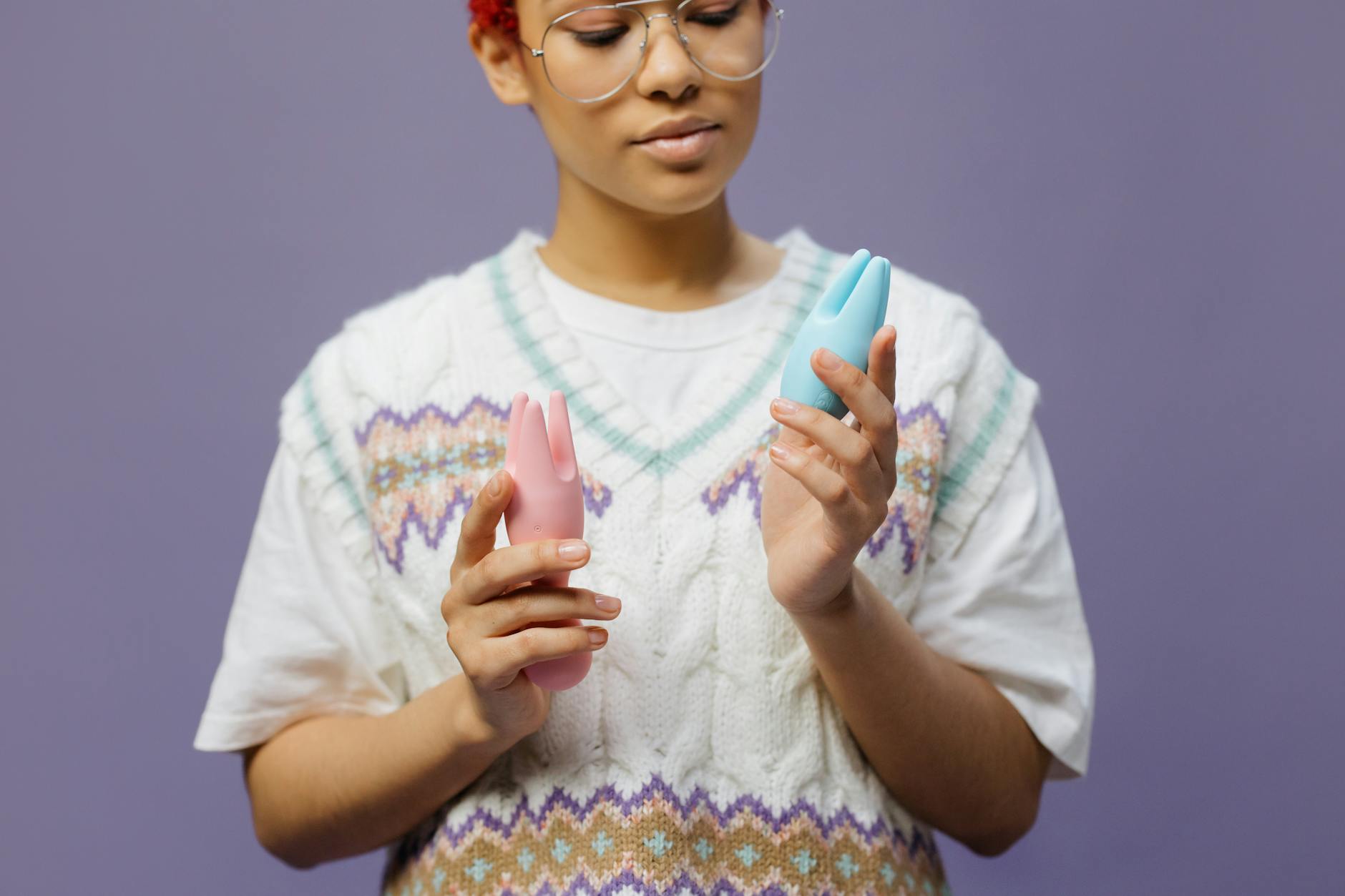
Photo by cottonbro studio on Pexels
Why intensity isn't one-size-fits-all
Three biological factors determine how your body responds to a lemon vibrator:
Clitoral nerve density. Your clitoris has roughly 8,000 nerve endings, but they're not distributed evenly across everyone. Some people have denser nerve clusters in the outer labia; others have more concentrated sensation deeper in the clitoral structure. If your nerve endings are tightly packed, lower intensities can feel overwhelming. If they're more dispersed, you might need higher settings to register sensation at all.
Glans sensitivity. The glans (the external head of the clitoris) can vary wildly between bodies. Some are incredibly reactive to light touch. Others prefer sustained, deeper pressure. This isn't a sensitivity problem. It's just variance in how your nervous system is wired.
Pelvic floor muscle tone. Tight pelvic floor muscles amplify the sensation of external vibration because there's less give in the tissue beneath. Relaxed pelvic floors may require stronger intensity to feel the same level of stimulation. Neither is "better." They're just different mechanical starting points.
Add in hormonal fluctuation, stress levels, medication side effects, and whether you're in an arousal cycle or not, and intensity becomes deeply personal.
The sensitivity categories most people fit into
I work with clients across a wide spectrum. Here's how the majority sort themselves out, and what intensity ranges generally work:
Highly sensitive bodies. These folks feel vibration intensely, sometimes to the point of discomfort at higher settings. If touching your clitoris directly feels almost too much during arousal, you're likely here. Most lemon adult toys have a range from 1-10 or patterns that start subtle. Start at 1 or 2, use patterns rather than steady vibration, and let arousal build naturally. Jumping to setting 7 out of curiosity typically backfires. These bodies often prefer suction-based stimulation (like a quality lemon clitoral vibrator with gentle suction) over intense vibration because suction distributes pressure more evenly.
Moderate sensitivity bodies. This is the middle band. Settings 3-6 usually feel right, and you can probably experiment without pain. You might notice that intensity feels different depending on your cycle, stress, or how long you've been aroused. That's normal. Log what works and adjust month to month.
Lower sensitivity bodies. Your clitoris feels more like a dial than a light switch. You need higher intensity to get clear sensation, and there's less risk of overstimulation. Settings 7-10 are probably in your zone. You might be attracted to lemon vibrators specifically because suction provides sustained pressure that direct vibration alone doesn't always deliver.
Variable bodies. Some people genuinely don't fit one category. You might feel sensitive on day 3 of your cycle and need setting 2, then feel less responsive on day 15 and want setting 6. This is incredibly common, especially if you've got hormonal fluctuation, are on medication that affects sensation, or are managing stress levels that rise and fall. There's no "right" intensity because your right intensity keeps changing. The solution is to own that flexibility instead of fighting it.
How to actually figure out YOUR intensity sweet spot
Forget guessing. Here's a systematic approach:
Session 1: Map your baseline. Spend time aroused (15-25 minutes of foreplay, fantasies, whatever gets you there) before you introduce the lemon vibrator. When you're genuinely turned on, start at the lowest intensity. Spend 30-60 seconds at each level, moving upward slowly. The goal isn't to chase orgasm yet. It's to notice what each setting feels like. Write down which levels feel good, which feel too much, which feel interesting but not quite enough.
Session 2: Narrow the band. Based on session 1, pick the range that felt most promising and spend more time there. Notice whether you prefer steady stimulation or patterns. Notice whether you want direct clitoral contact or prefer stimulation on the hood or labia. This is where personal preference becomes clear.
Session 3: Add context variables. Now try your favorite intensity at different points in your cycle, or at different stress levels, or in different states of arousal. The intensity that felt perfect after 20 minutes of foreplay might feel different after 5 minutes. That's real. Record it.
Session 4 onward: Trust and adjust. You now have a map. Use it. If you notice intensity feels different suddenly, check in with what's changed. New medication? Stress spike? Hormonal shift? Different partner or energy? All of these matter.
The role of arousal in intensity perception
One of the biggest mistakes I see is reaching for the vibrator before arousal is actually present. You touch yourself, feel a little something, think "maybe I'm just not that into pleasure right now," and stop. What actually happened is you skipped the warm-up.
Intensity doesn't exist in isolation. The same setting that feels barely perceptible when you're 20% aroused feels incredible when you're 70% aroused. Your nervous system is more receptive. Blood flow to your genitals increases, tissues swell slightly, and nerve sensitivity amplifies. This is why lemon sexual toys work so much better when you've genuinely turned yourself on first.
This also means your intensity needs might shift depending on whether you're with a partner, flying solo, or in a longer session where arousal builds over time. That's not inconsistency. That's normal nervous system response.
When higher intensity isn't the answer (and what to try instead)
Some people reach for higher and higher intensity thinking that's the path to better sensation or orgasm. Often, the opposite is true. If you're chasing intensity and not finding satisfaction, consider these alternatives:
Suction-based stimulation. Lemon clitoral vibrators with gentle suction (like those in the Nancy's Lem Shop line) provide a totally different sensation than pure vibration. Suction creates sustained pressure and tends to feel less harsh on oversensitive tissue while still delivering deep sensation. Try a lemon sucker approach before assuming you need maximum vibration intensity.
Pattern variety over power. Many devices have rhythmic patterns, pulses, and builds. These often feel more satisfying than steady vibration at high intensity because they create anticipation and variation. Explore patterns before maxing out the power dial.
Positioning and angle. Sometimes what feels missing isn't intensity but angle. If you're aiming the vibrator straight at the glans and it's uncomfortable or underwhelming, try positioning it over the hood, or angling it toward the side. Different nerve clusters are in different spots.
Dual stimulation. Internal sensation plus external vibration can shift how intensity lands. You might find that lower external intensity plus internal stimulation (finger, partner, or toy) feels more satisfying than cranking external intensity alone.
The partner conversation around intensity
Here's where this gets relational. If you're using a lem vibrator with a partner, intensity preference is worth naming directly. "I feel good at setting 4" or "I need a few minutes of arousal first or intensity feels abrasive" is essential information. Partners often assume they should crank intensity to prove they're being thorough or to speed things up. They're usually wrong.
If you're not sure yet what intensity you prefer, say so. Invite your partner into the discovery. "Let's find what feels good together" is radically different from "just use whatever." It also means when your needs shift (because bodies change), you've already got a framework to talk about it.
The most common couples conflict I see around toys isn't about whether to use them. It's about partners not checking in about preferences and just assuming one intensity works for everyone in the relationship. It doesn't.
Medication, stress, and intensity shifts
If you've found your intensity sweet spot and suddenly it stops working, don't assume your body broke. Check what changed. New antidepressant? Certain SSRIs and blood pressure meds can genuinely reduce genital sensation. High stress season? Cortisol impacts arousal significantly. You've been using the same toy for six months? Habituation is real; sometimes a different texture or pattern refreshes sensation more than upping intensity.
These aren't failures. They're just the reality of living in a body that responds to context. Intensity adjustment is maintenance, not a sign something's wrong.
A final word on experimentation
You don't need permission to figure this out. There's no "correct" intensity, no badge of honor for using the highest setting, no shame in needing lower intensity than someone else. Your nervous system is wired the way it's wired. A good lemon vibrator (whether it's a sophisticated Nancy's Lem Shop device or something simpler) is just a tool that should adapt to you, not the other way around.
Start low. Pay attention. Adjust as your body, life, and preferences change. That's it. That's how you find your intensity.
FAQ: Your questions about vibrator intensity and body type
Does clitoral nerve density change over time?
Nerve density itself is relatively stable from birth, but how sensitive your nerves feel can shift significantly. Hormonal changes (menstrual cycle, menopause, birth control), stress, medication, injury, and even how often you've been stimulated recently all affect perceived sensitivity. If you suddenly feel less responsive to your favorite intensity, check these factors before assuming something structural changed.
Can I damage my clitoris by using a lemon vibrator on high intensity?
The clitoris is remarkably resilient. Occasional use of high intensity won't cause permanent damage. That said, sustained, repeated overstimulation in the same spot can lead to temporary numbing or irritation, similar to how your skin feels numb if you rub it hard for too long. Give yourself recovery time, vary your stimulation method, and if pain appears, pause and let tissue calm down. A good lemon clitoral vibrator is designed for pleasure, not harm.
Why does my partner feel sensation differently than I do with the same vibrator intensity?
Nerve density, pelvic floor tone, hormonal baseline, stress levels, and even the angle of the clitoris relative to the vibrator head all create variance. Two people using identical settings on the same lemon sexual toy will likely experience totally different sensations. This is why the intensity that's perfect for one person might be overwhelming or insufficient for another. You're not broken if your preferences differ.
Is there an intensity that "works" for most people?
If lemon vibrators had to pick one default, it would probably be around setting 4-5 on a 10-scale device, combined with patterns rather than steady vibration. But "most people" is a range. Some prefer 2, others want 8. The most useful intensity is the one that feels good for your body during your life right now.
What if intensity feels different during different points of my cycle?
That's completely normal. Estrogen levels peak around ovulation, which increases blood flow to genital tissue and boosts nerve sensitivity. During the luteal phase, estrogen dips and sensitivity often decreases. Some people notice they need higher intensity in the second half of their cycle. Tracking this lets you adjust proactively instead of assuming something's wrong.
Can I train my body to want higher intensity over time?
Not in the way you might think. You can become habituated to a particular intensity (meaning you stop noticing it as strongly), but that's different from your body "needing" more stimulation. If you notice habituation, switch to a different pattern, take a break from that particular toy, or rotate in a different stimulation style. Habituation is a signal to vary your approach, not a sign you should keep escalating intensity.
Should I match my vibrator intensity to my partner's preference or my own?
Always your own. If your partner wants to experiment with a lemon sucker together, use the intensity that feels good for your body. Your partner can adjust the angle or pattern to enhance their experience. Forcing yourself to use uncomfortable intensity trains your nervous system to associate your own pleasure with discomfort. That's not a win.
Sources and further reading
For those curious about the neurology: the clitoris contains an estimated 8,000 nerve endings concentrated in the glans, with significant variation between individuals in how those nerves are distributed. Research on genital sensation and vibrotactile perception (published in journals like The Journal of Sexual Medicine) consistently shows that perceived intensity is highly individual and context-dependent, influenced by arousal state, hormonal factors, and prior stimulation history. If you're navigating medication-related sensitivity changes, speaking with a healthcare provider familiar with sexual function (sexologists, relationship-focused therapists, or medical specialists in sexual medicine) is valuable. Nancy's Lem Shop also offers care guides and safety information worth reviewing to get the most from your device.
Ready to explore what works for your body? Start with curiosity, not pressure. Get in touch if you want to talk through your specific questions.