Here's the conversation nobody wants to have
You want sex. Your partner doesn't. Not sometimes. Not tonight. Consistently, month after month, they're simply not interested. And the longer this gap exists, the more you start internalizing it as rejection. Maybe there's something wrong with you. Maybe the relationship is dying. Maybe you should just accept that this is who they are now.
Stop. This is one of the most common relationship dynamics—and it's not your fault, and it doesn't mean your pleasure has to disappear.
A lemon vibrator becomes less about "getting off alone" and more about reclaiming your body as yours. Not a consolation prize. Not a replacement. Your own space where desire is valid, responded to, and fulfilled. That distinction changes everything.
Why desire mismatches happen (and why it's not about you)
When someone's libido tanks, people assume it's either their partner's fault ("You're not attractive enough") or their own fault ("I'm broken"). Neither is usually true. Low desire in a committed partner typically stems from depression, medication side effects, stress, hormonal shifts, or simply a different baseline libido than you have. It's a biological and psychological fact, not a referendum on your desirability.
The trap is waiting around for their desire to return on its own. Some people say "I'm just not a sex person right now"—which might be true for two months or two years. Staying celibate while you wait is not a sacrifice that builds intimacy. It builds resentment.
That's where reclaiming your own pleasure comes in.
The guilt you're probably carrying (and why you should drop it)
If your partner has low desire, you've likely internalized one of these narratives: "It's selfish to prioritize my pleasure when they're not interested." Or: "If I use a vibrator alone, I'm somehow cheating." Or: "My pleasure is less important than keeping the peace."
All of this is wrong, and it's worth examining where it came from. Many of us were raised to equate female pleasure with selfishness. We learned that our job in relationships is to accommodate, adapt, and ask for less. A lemon vibrator isn't a rejection of your partner. It's an acceptance that your body deserves attention whether or not they can give it right now.
Here's what I tell clients: solo pleasure and partnered sex are not competitors. They're different acts. One doesn't diminish the other. Using a lemon vibrator alone doesn't mean you're giving up on your relationship. It means you're not letting your body's needs disappear because your partner's have changed.
How to set this up emotionally (the hard part)
Before you even touch a lemon vibrator, you need one conversation. Not in the bedroom. Not when either of you is activated. Somewhere calm, clothed, and grounded.
The frame is crucial. This isn't about blaming them or making them feel worse. It's about naming reality: "My libido and yours don't match right now. That's okay. But I'm not going to put my pleasure on pause indefinitely. I'm going to start exploring solo play again. I wanted you to hear that from me, not discover it." Then listen. Don't defend. Don't explain further unless they ask.
Some partners will feel relieved. Some will feel a tiny sting of guilt or inadequacy. Most will feel both. If they spiral into shame ("I've failed you"), that's important information about what they need—but it's not your job to manage their feelings by sacrificing your body. You can be compassionate and still maintain your boundary.
Let them know you're not looking to hide this. You're not ashamed. You're solving a real problem in a healthy way.
How to actually use a lemon vibrator when desire is mismatched
Start with time. Create a slot in your week—not when you're already frustrated or resentful, but when you have genuine physical and mental space. Sunday morning. Tuesday evening. A time when your nervous system is calm enough to actually enjoy sensation. Stress blocks arousal harder than anything else.
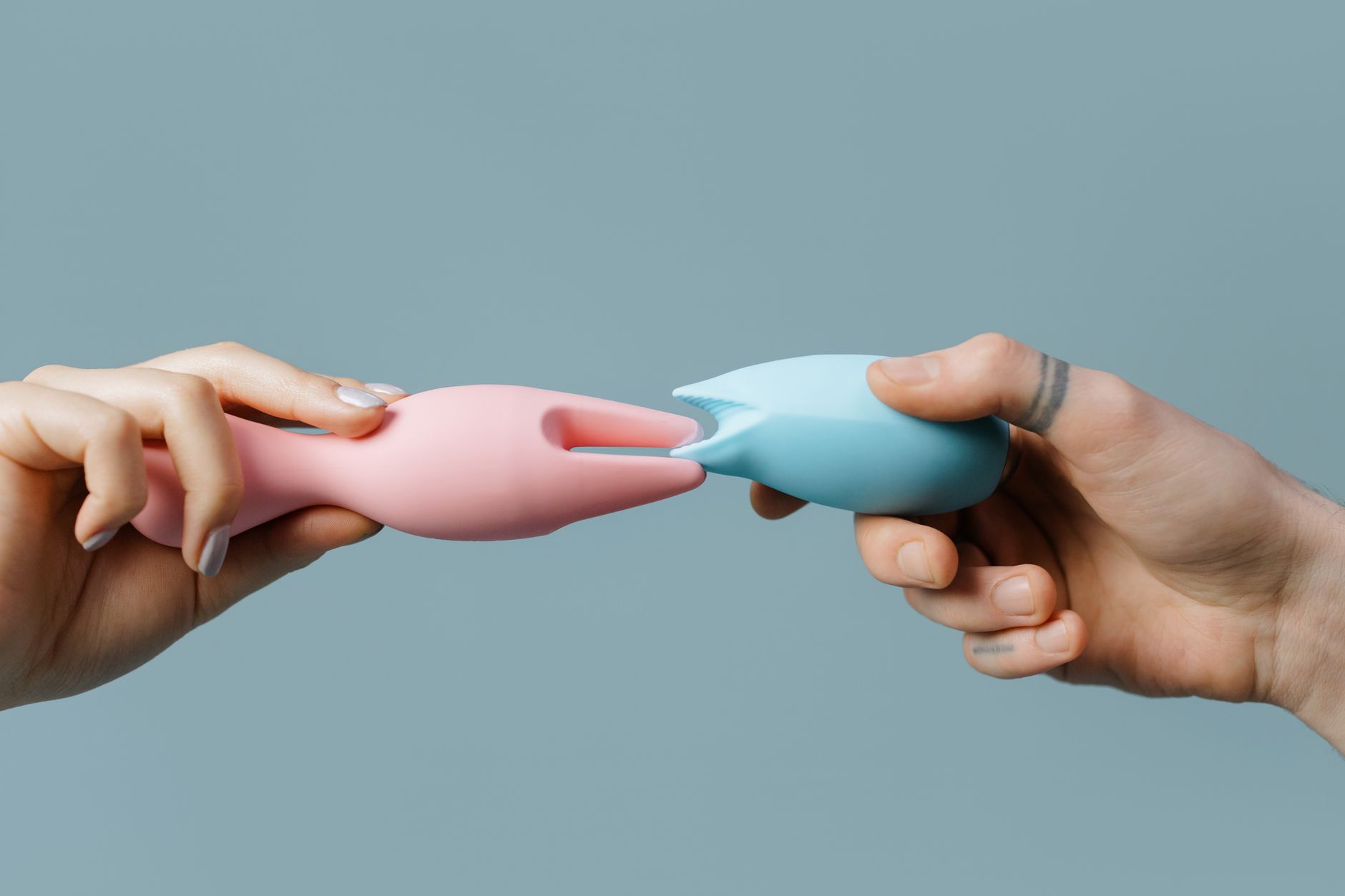
Set up your space intentionally. A lemon vibrator like the Lem is designed for clitoral suction stimulation that many people find more responsive than traditional vibration, especially when arousal is slow to build. That matters when you're trying to move from frustrated to present. Start at the lowest setting. The point isn't to chase orgasm—it's to feel your body respond to care.
Use lubrication even if you think you don't need it. Water-based works best. The friction is gentler, the sensation is richer, and it signals to your nervous system that this is intentional, sensual time. Not rushed. Not desperate.
Set a time limit. Twenty minutes. Thirty if you have it. Not "until you come"—until you feel genuinely present in your body. Some sessions end in orgasm. Some don't. Both are fine. The goal is consistent pleasure, not consistent climax.
The psychology shift (why this actually helps your relationship)
Here's what happens when you reclaim your pleasure: you stop waiting for permission to feel good. That's huge. Because waiting teaches your partner (and yourself) that your desire is conditional on theirs. It teaches resentment. It teaches obligation.
When you use a lemon vibrator regularly, something shifts. You remember what arousal feels like. You remember that your body is alive and responsive. You approach your partner from a place of "I'm already okay" rather than "I need you to fix me." That changes the entire dynamic of sex if and when it happens with them.
You also stop performing gratitude for crumbs. If you do eventually have sex with your partner, it's because you both want it, not because you're desperate for connection. That's actually more likely to create good sex than the alternative.
Additionally, knowing you have an outlet for your pleasure takes pressure off the "Do we need to fix this?" conversation. You're not asking them to suddenly want sex. You're just refusing to disappear in the meantime.
When to have a deeper conversation about desire
Using a lemon vibrator is a holding pattern, not a solution. If months go by and nothing changes, the relationship conversation needs to happen. Is your partner interested in addressing this? Are they open to therapy? Is there an underlying medical or psychological issue that's treatable?
Sometimes the answer is "No, I'm just not interested in sex anymore." That's information. Not a reason to hate them, but a reason to decide whether that's compatible with what you need. Some couples build solid, affectionate relationships without regular sex. Others can't. Both are valid. But you need to know which one you are before resentment calcifies.
If your partner is willing but stuck, there's actual help. Therapy. Medical evaluation. Sometimes medication changes or stress reduction make a real difference. But you can't do that work for them. What you can do is refuse to suffocate your own pleasure in the process.
The practical logistics (how to keep this private if needed)
If you're in shared living space and privacy feels complicated, a lemon vibrator is quieter than most vibrators—the suction mechanism is gentler and more controlled than buzzing. A closed bathroom door or a time when your partner is out works. Store it in a drawer, not hidden away like contraband. You're not doing anything wrong.
If your partner knows and it's okay with them, great. If they know and they're still adjusting, give them space. If you've decided not to tell them, that's your call too—though I'd gently push back on that instinct. Secrecy around pleasure is part of the guilt cycle. But this is your relationship. You know the terrain.
What solo play with a lemon vibrator actually teaches you
Consistently using a lemon clitoral vibrator alone teaches you what you need. What intensity. What rhythm. How long your arousal typically takes. Whether you prefer broad stimulation or intense focus. This information is gold when (if) you're with a partner again. You know what to ask for. You're not guessing.
It also teaches you that pleasure without performance is possible. You don't have to look a certain way. You don't have to come at a specific time. You don't have to want what you "should" want. That's radical after years of accommodating someone else's desire.
Most importantly, it teaches you that your body is yours. Not a bargaining chip. Not a casualty of your relationship's mismatches. Yours.
FAQ: Low desire and solo pleasure
Is using a lemon vibrator solo play cheating if I'm in a relationship?
No. Cheating requires deception and a breach of agreed boundaries. Solo play is just that—solo. It's not partnered sex, and it doesn't replace it. If you've had a conversation with your partner and they've consented (or at minimum, you've been honest), then you're in the clear. If you haven't had that conversation and they'd be upset to find out, that's worth examining why you feel you need to hide it.
What if my partner feels threatened by my lemon vibrator?
That's often less about the vibrator and more about what it represents: that you don't need them to feel okay. Some partners find that relieving. Others find it threatening. If they're threatened, that's worth exploring together. Are they worried about inadequacy? Are they controlling? Are they processing their own shame around sexuality? A couples therapist trained in sex-positive work can help here. But your pleasure isn't something you sacrifice to manage their insecurity.
How often should I be using a lemon vibrator if my partner has low desire?
As often as you need. Once a week. Three times a week. Daily if that's what your body is asking for. There's no "normal." Some people find that regular solo play (with a lemon vibrator or any toy) keeps their libido stable and their nervous system regulated. Others use it occasionally. The only wrong answer is using it until you resent your partner or using it so secretly that it becomes a source of shame.
Will using a lemon vibrator make me less interested in sex with my partner?
The opposite usually happens. When you're not sexually frustrated, you're actually more open to partnered sex. You're not approaching it with an edge of desperation. But also, if you discover through solo play that you want more sex than your partner does, that's important information. It doesn't mean you're incompatible. It means you need to have an honest conversation about how you'll both navigate that gap.
Should I involve my partner in my solo play if they have low desire?
Maybe. Some couples find that watching or participating occasionally (without pressure) can actually help. It's lower-stakes than partnered sex. But this only works if your partner genuinely wants to—not out of obligation. And it only works if you're not using it as a way to "fix" their desire. Make that clear before you invite them in.
What if my partner's low desire is actually about our relationship?
Then a lemon vibrator isn't the solution. It's a band-aid. If your partner's libido dropped specifically after infidelity, emotional distance, or a relationship rupture, you need couples therapy before anything else. Solo pleasure can coexist with that work, but it can't replace it. Get professional help if the mismatch is tied to the relationship itself.
The bottom line
Desire mismatches are real, and they're painful. But your pleasure isn't negotiable. A lemon vibrator isn't a consolation prize or a betrayal. It's a tool for staying connected to your body when your partner can't meet you there right now. Use it without guilt. Have the hard conversations. And remember that taking care of your own needs is what actually keeps a relationship healthy, not what destroys it.
Your body deserves attention. Your pleasure matters. That's true whether your partner's desire is high or low.
If you're navigating relationship friction around desire and intimacy, we're here to help. Get in touch to explore what might work for you.