
Let's talk about the gap between "cleared for activity" and actually wanting to
Your physical therapist gave you the green light. Your pelvic floor is stronger. The pain is gone, or at least manageable. And suddenly you're standing in front of your nightstand thinking: now what? There's a real difference between being medically cleared and feeling ready to reclaim pleasure. That gap is where most people get stuck.
I work with clients rebuilding intimacy after pelvic floor dysfunction all the time. The missing piece is almost never medical. It's usually fear, uncertainty about what your body can handle, or genuine confusion about how to restart something that felt broken for months. That's what I'm here to map out for you.
Why reintroducing vibrators takes intention
Pelvic floor physical therapy rewires your nervous system. You've spent weeks or months learning to relax, release, and breathe through sensation. That's protective work, and your body needed it. But now you're switching from "notice and let go" to "build pleasure." That's not a small shift.
A lemon clitoral vibrator like the Lem works differently than your fingers or a partner's touch. Suction-based stimulation bypasses the friction that might have triggered tension during your recovery. It's one reason so many of my clients return to vibrators first—they feel gentler, more controlled. But your nervous system doesn't know that yet. It's checking: Is this safe? Will it hurt? Can I trust this?
That's not anxiety. That's wisdom. Honoring it speeds up the real healing.
The timeline: when to start, what to expect
Assuming your physical therapist cleared you for sexual activity (and if they didn't, don't skip that conversation), I recommend waiting at least two weeks after your last PT session before introducing any vibrator. Your pelvic floor needs that buffer to integrate the strengthening work without new input.
Week one and two post-clearance: touch only. Hands. Partner's hands. No devices. Let your brain catch up to the medical reality that you're safe.
Week three onward: if you're interested and aroused, introduce the vibrator in a solo session. No performance pressure. No timeline. You're gathering data about what your body responds to, not proving anything.
Expect the first few attempts to feel weird, maybe uncomfortable. Not painful—there's a difference. Weird means your nervous system is re-mapping. Uncomfortable can mean you're tense, the angle is off, or the setting is too intense. Both are fixable. Pain is a stop sign.
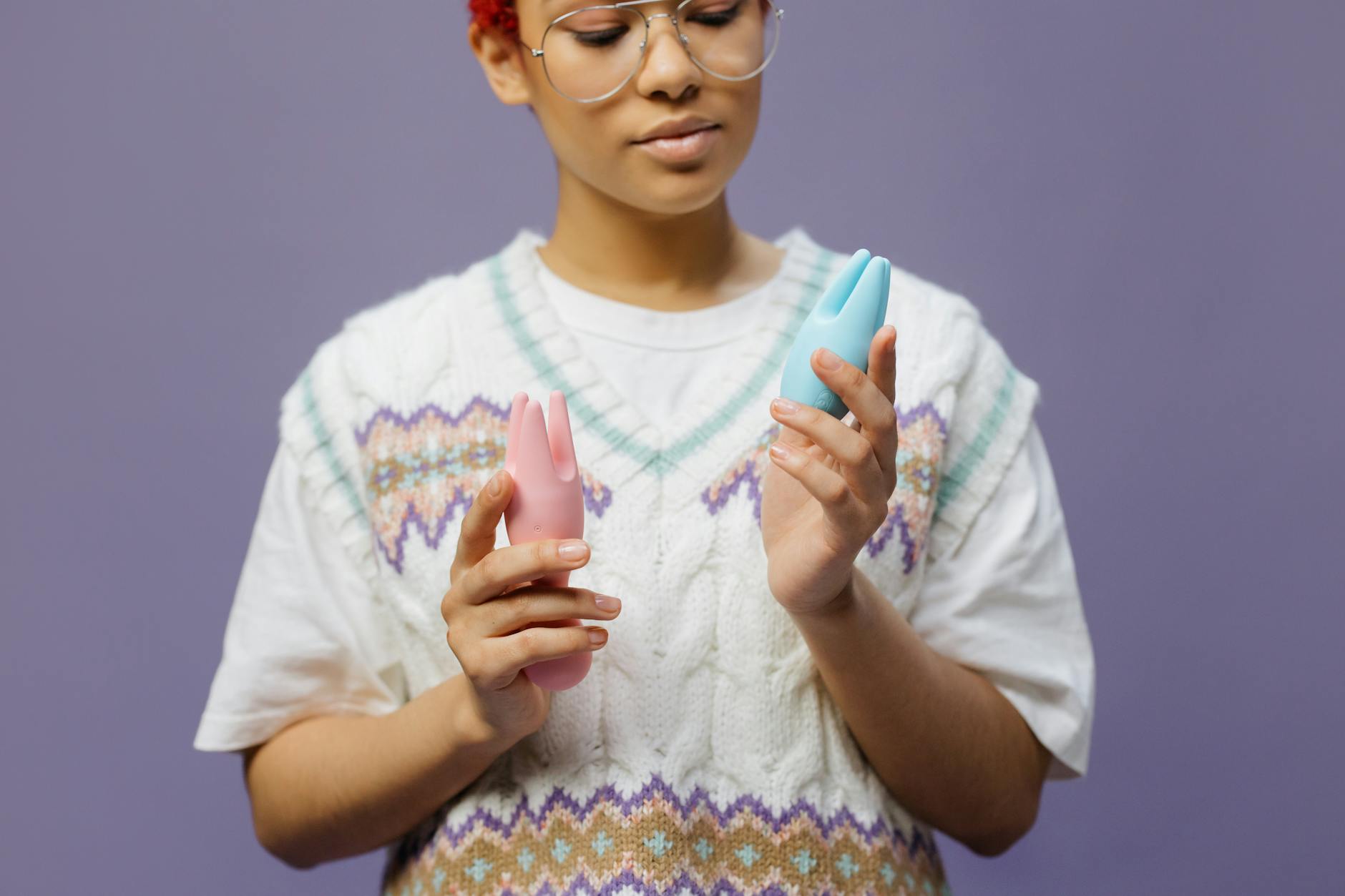
Photo by cottonbro studio on Pexels
How to actually start: the first session
Pick a time when you're relaxed, not rushed, and genuinely curious. Not when you're testing whether you're "fixed." That performance mindset kills it immediately.
Start clothed. Yes, fully clothed. Hold the lemon vibrator. Feel the weight. Turn it on at the lowest setting. Let the sensation travel from your palm up your arm. This teaches your nervous system that vibration is safe information, not a threat. Spend five minutes here if you need to.
Then move the vibrator near your inner arm, your collarbone, your neck. Anywhere sensitive but not erotic. Your goal is nervous system recalibration, not arousal. This feels silly. Do it anyway.
Only when you feel genuinely calm move toward genital tissue. Outer thighs first. Then the outer labia. Stay on the lowest setting. You're not trying to orgasm. You're trying to answer the question: does my body recognize this as pleasurable, or is it still in guard mode?
If you feel heat, relaxation, or genuine interest, you can slowly escalate. If you feel tension, numbness, or that peculiar freeze response, stop. No judgment. Your pelvic floor just told you it needs more time. Listen to that.
The clitoral suction angle: why it often works best
Unlike traditional vibrators, a lemon vibrator uses suction patterns rather than intense direct vibration. For someone rebuilding pelvic floor trust, that matters tremendously. Suction is gentler on tissue that's been tense or painful. It's also easier to control and stop instantly if your nervous system gets activated.
Start with suction-only mode if your vibrator has it. No pulsing yet. Just the soft cup sensation. This gives your body time to process pleasure without the added layer of vibration. Many of my clients find this is where they rediscover sensation they thought was permanently numbed.
When you're ready to add vibration patterns, stick with the slowest setting. The point is not intensity. It's reestablishing the neural connection between your clitoris and your pleasure center. That rewiring takes patience.
Managing arousal confusion after recovery
Here's what no one tells you: your arousal pattern might have changed during pelvic floor dysfunction. What turned you on before might feel boring now. What you never cared about might suddenly feel essential. This is normal. Your nervous system got reorganized. Of course your turn-ons did too.
Don't fight this. Get curious instead. The Lem's multiple intensity settings and patterns give you flexibility to experiment without committing to one speed. Try each setting. Notice what your breath does. Are you naturally holding your breath? That's a sign your nervous system is still slightly activated. Consciously slow your breathing and check whether sensation improves.
If arousal still feels flat after three or four solo sessions, it's not about the vibrator. It's usually about trust in your own body, residual fear, or sometimes hormonal shifts that got masked during the recovery period. That's worth discussing with your physical therapist or a sex-positive therapist familiar with pelvic floor recovery.
Reintroducing vibrators with a partner
Bring your partner into the conversation before you bring them into the session. Here's what they need to know: your nervous system is rebuilding. Surprise insertions or intensity escalations feel like betrayal to a body that just finished trauma recovery. Boring as it sounds, the conversation is sexier than the spontaneity will be right now.
Set clear signals. Tell your partner what you're exploring and what your boundaries are. "I want to use the lemon vibrator together, but I need you to start at the lowest setting and ask before changing anything." That clarity is not a mood killer. It's the opposite. It signals safety, which is actually what your nervous system needs in order to experience pleasure.
Let your partner hold the Lem instead of you holding it. There's something about receiving sensation from someone you trust that can help your nervous system integrate faster. But they need to understand: no rushing, no pressure, no goal. You're both learning your new normal together.
What to watch for: pain versus sensation
This is the single most important distinction in your recovery. Pain is sharp, localized, and usually has a clear trigger. Sensation is spread out, diffuse, and often changes as you breathe or relax.
If you feel pain, stop immediately. You haven't done anything wrong. Your pelvic floor is just signaling that the tissue or the nerve isn't quite ready. Scale back: lower intensity, shorter sessions, or wait another week. There's no prize for powering through.
If you feel unusual sensation (tingling, numbness, burning that's not sharp), that's still data. It often means the area is just beginning to wake up after being guarded. Most clients report that sensation normalizes within a few days to a week. If it lingers beyond that, check in with your PT.
When to bring it back to your therapist
You don't need permission to use a vibrator. But if pain returns, arousal completely flatlines after four weeks, or you notice new tension after sessions, your physical therapist should know. They can assess whether you're reactivating old patterns, whether pelvic floor strengthening needs to continue, or whether something else is happening.
Think of it this way: your PT is your nervous system's mechanic. The lemon vibrator is just a tool. If the tool isn't working the way you expected, the mechanic can help diagnose why.
The slower restart is the sustainable one
I know this roadmap feels tedious. Part of you probably wants to skip straight to the good part. Understandable. But the clients who rebuild pleasure fastest are the ones who honor the nervous system recalibration. They go slow intentionally, which paradoxically means they get back to their baseline of arousal and sensation much quicker than those who push.
Your pelvic floor did important work in recovery. Now your pleasure nervous system gets to do equally important work in restoration. Both require presence. Both reward patience.
People also ask
Can I use a lemon vibrator if I still have slight pelvic floor tension?
Slightly, yes, but with modifications. Keep intensity at the lowest setting. Use it for five minutes maximum in early sessions. Watch for increased tension after the session—that's your signal you went too far. If tension noticeably worsens, pause and return to your PT. The point is exploration, not achievement.
How long after physical therapy can I use a vibrator?
Most physical therapists clear patients for sexual activity at six to twelve weeks, depending on the initial dysfunction. Even after that clearance, I recommend waiting at least two more weeks before introducing vibrators specifically. This gives your nervous system time to believe the medical clearance. Then start with the timeline I outlined: two weeks of touch only, week three onwards for vibrator introduction.
Will using a vibrator too soon undo my pelvic floor progress?
Not if you're intentional. One intense session after clearance won't erase weeks of PT. But regular high-intensity use before your pelvic floor is fully integrated can reactivate protective tension. That's why the slow introduction matters. Your PT helped you build strength. The vibrator just teaches your pleasure system it's safe to respond again.
What if the lemon vibrator feels numb after my recovery?
That's common and usually temporary. Numbing can mean either that your pelvic floor is still in low-level protection mode, or that your nervous system simply needs time to re-establish the pleasure pathway. Try spacing sessions further apart (every three days instead of daily) and focus on longer warm-up time before introducing the vibrator itself. If numbness persists beyond four weeks, talk to your PT about whether nerve sensitivity needs attention.
Should I tell my partner about reintroducing vibrators during recovery?
Yes. Honesty here builds intimacy. You're not hiding something shameful. You're doing nervous system rehab that happens to feel good. Framing it that way transforms it from something secretive into something you're doing together, even if some sessions are solo. Most partners appreciate being included in the conversation.
How do I know if I'm ready to increase intensity?
Your body will tell you. If you're finishing sessions feeling relaxed, aroused, or satisfied, and you're not experiencing pain or increased tension afterward, you're probably ready. Try bumping up one level and pay attention to your nervous system response. If it feels good, great. If it feels like too much, drop back down. There's no rush.
You spent time reclaiming your body from dysfunction. Now you get to reclaim pleasure from recovery. That's the whole point of healing in the first place.