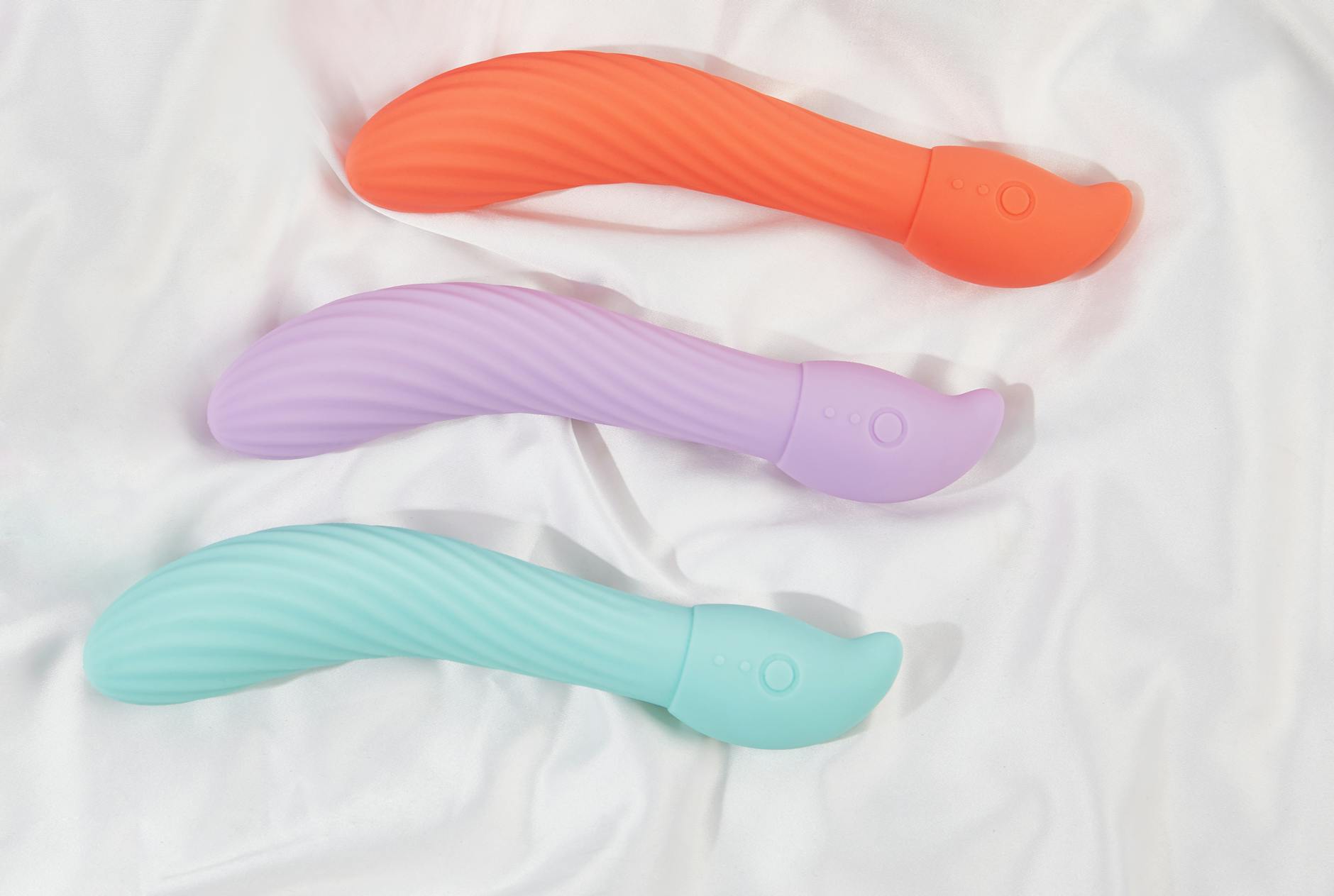
Let's talk about what slow arousal actually means
Slow arousal is not broken arousal. You're not defective. But if you've been waiting for your body to switch on like everyone else's seems to, yeah, that gap feels real.
Here's the thing. Arousal buildup is wildly individual. Some people light up in seconds. Others take 20 minutes of sustained stimulation before their nervous system even registers the signal. Stress, hormones, medication, age, relationship dynamics, how you're feeling about yourself that day. All of it reshapes the timeline.
And if you've spent years forcing yourself through a faster cycle because you thought you were supposed to, you've trained your body to ignore its own pace.
Why a lemon vibrator changes the equation
A lemon clitoral vibrator works differently than traditional vibrators because it uses suction and pulsing, not just buzz. That distinction matters hugely when arousal is slow.
With a standard vibrator, you're basically waiting for stimulation to trigger a response. With suction based design like the Lem, you're creating a sensation that your nervous system reads as intensely novel. It's not a familiar vibration your body has learned to tune out.
Second, suction doesn't require you to maintain perfect positioning. A standard vibrator needs direct contact, direct pressure, the right angle. If arousal is slow, the setup friction matters. You're already working harder to get there. The last thing you need is a tool that demands micro adjustments every 30 seconds.
A lemon sucker creates a seal. Once positioned, it stays there. Your mental effort drops. Your body relaxes into it. That shift alone changes the timeline.
The three arousal phases and where lemon vibrators actually help
Think of arousal in three distinct phases.
Phase one: The wake-up call. Your nervous system registers that sex is happening. Blood starts moving. If this takes you 5 minutes or 25 minutes, that's your baseline. A lemon vibrator accelerates this phase because the sensation is unfamiliar. Your brain actually pays attention.
Most people with slow arousal get stuck here because they're using tools that feel predictable. They sit there waiting for the switch to flip, and the predictability makes it take longer. With a new sensation pattern, that initial phase collapses from 20 minutes to 8 or 10.
Phase two: The climb. Once you're responsive, you're building toward orgasm. This is where arousal slows the most for many people. You feel good, but you're not escalating. You could stay in this phase for hours if you don't change something.
This is where intensity matters. With suction, you can shift the intensity without losing position. On a traditional vibrator, you're either turning it up and hoping it still feels good, or you're stopping, repositioning, starting again. Every pause resets your nervous system slightly.
With a lemon clitoral vibrator, you control the rhythm and suction strength while staying exactly where you need to be. No reset.
Phase three: The approach and release. Once you're past the climb, the body accelerates naturally. If you've gotten here with slow arousal, you're actually almost done. The issue isn't that you can't orgasm. The issue was getting to the point where your body felt safe enough to try.
The actual technique that works with slow arousal
Honestly though. The best technique is the one that fits your specific pace.
Here's what I recommend to clients with slower arousal timelines.
Start without pressure. Use the Lem on setting 1 or 2. Not because you'll stay there, but because your nervous system needs to register the sensation without feeling rushed. Spend 3 to 5 minutes just letting your body get used to it. This isn't foreplay. This is acclimation.
So many people with slow arousal skip this because they think they should be past the gentle phase. Your body's pace isn't a defect to overcome. It's information.
Find your position and don't move. With suction, you're looking for a gentle seal around your clitoris. Not too high, not too low. Once you find it, stop adjusting. Your brain can relax. Your arousal can actually build instead of resetting every time you shift.
This sounds obvious, but most people keep fine tuning. Stop. The positioning doesn't have to be perfect. It just has to be stable.
Increase intensity slowly. Once you feel something building, you have the option to turn it up. Go to setting 3. Wait 2 or 3 minutes. Then 4. Slow escalation works better than jumping straight to high intensity. When arousal is slow, your nervous system is cautious. Gradual increases feel like invitations. Sudden jumps feel like pressure.
Use rhythm, not just power. Many lemon vibrators offer both intensity and pattern. Pattern changes without intensity increase often moves you forward better than pure power when arousal is slow. Your nervous system can stay engaged without getting overwhelmed.
Add mental specificity. This is the part nobody talks about. If your arousal is slow, your mind is probably active. You're monitoring. Are you there yet. Is something working. Stop that.
Right before you use the vibrator, spend 30 seconds thinking about a specific scenario, a specific moment, a specific sensation you want. Not generic porn. Something that actually makes you want to move. Hold that thought loosely while the tool does its job. Your brain doesn't have to work so hard.
What changes when you actually match the tool to your pace
Most people report that once they stop fighting their arousal timeline and use a tool designed for longer buildup, the experience gets easier and the sensation gets stronger.
You're not spending 45 minutes willing yourself to get there. You're spending 15 or 20 minutes actually building. Your body releases more completely. Your orgasms often feel deeper because your nervous system isn't tense from rushing.
Partners also notice. If you're stressed about taking too long, that tension gets read in your body. Once you have a reliable tool that matches your pace, you relax. That changes the whole dynamic.
When to use this with a partner versus solo
Honestly, solo practice is your friend here. When you're alone, there's zero performance pressure. You can actually feel what your body needs without anyone waiting.
Once you understand your own pace and what works, partnered use gets simpler. You already know the timeline. You already know what intensity lands. You're not figuring it out in real time while someone watches.
If you want to use a lemon vibrator during partner sex, the conversation beforehand matters. Not to ask permission. But to normalize that you have a tool that works for you. Most partners actually find it hot. You're not struggling. You're not faking. You're engaged and getting exactly what you need.
For more on using clitoral vibrators during partnered intimacy, read our guide on how to use a lemon vibrator during partner foreplay.
The arousal timeline myth you probably believe
You've probably absorbed the idea that arousal should be faster than yours is. That's not science. That's porn and misguided advice.
Real arousal timelines are all over the map. Some shifts come from hormones, stress, or medication. Some are just your baseline. Some get slower as you age, some get faster. The only arousal problem is the one where you're fighting against your own body instead of working with it.
A lemon sucker isn't about speed. It's about creating a sensation that your nervous system actually wants to engage with, at whatever pace you naturally move.
When arousal stays very slow even with the right tool
If you're using a lemon clitoral vibrator correctly for 15 to 20 minutes and there's still almost no response, that might be pointing to something else.
Medication effects are real. Antidepressants and some blood pressure meds genuinely flatten arousal. That's not something a better tool fixes. It's something to discuss with your doctor about timing or alternatives.
Mental stuff matters too. If you're carrying worry about your body, your desirability, the relationship, that weight dampens arousal faster than anything physical can compensate for. That's where a therapist or counselor helps more than a vibrator.
Stress and sleep deprivation tank arousal. A vibrator can't fix burnout.
But if arousal is slow and everything else checks out, a lemon vibrator designed for longer buildup often solves it.
People also ask
How long should I use a lemon vibrator before I notice a difference with slow arousal?
Most people see a shift within the first few uses, but real understanding takes a week or two. Your first session is acclimation. By session three or four, you'll feel your body responding faster because it recognizes the sensation pattern. It's not magic. It's your nervous system learning that this tool actually works and relaxing into it.
Can a lemon vibrator make arousal faster, or just easier?
Both, actually. Once your body trusts the sensation, arousal often accelerates naturally. But the real gift is that the experience stops feeling like a problem. You're not stressed about time. You're just building at your pace. That ease alone makes everything feel faster.
Is slow arousal worse with age?
Often, yes. Hormone shifts, reduced blood flow, stress loads, relationship fatigue. All of it plays a role. That's also why a tool designed for sustained stimulation without requiring constant adjustment becomes more valuable. You need something that works with a slower timeline, not against it. A lemon clitoral vibrator is usually more effective than traditional vibrators for this exact reason.
Should I use a lemon vibrator every time I have sex if my arousal is slow?
No. The goal is eventually understanding your own rhythm without it. But in the beginning, yes. Let your body learn that you can get there. Once the fear lifts and your nervous system trusts the process, you might find you can access arousal faster on your own. Or you might not, and that's fine. Use the tool whenever it serves you. There's no graduation requirement here.
If I'm on antidepressants and arousal is flat, will a lemon vibrator help?
It can help with sensation and response once arousal starts, but it won't fix medication induced flatness at the source. That's a conversation with your prescribing doctor. But while you're talking to them, a lemon sucker gives you something that actually works with what's happening in your body right now. Start that conversation. Don't just accept it as permanent.
Does slower arousal mean I'm less attracted to my partner?
Not necessarily. Arousal and attraction are different systems. You can be completely attracted to someone and still need 20 minutes to get your body online. Stress, hormones, distraction, how safe you feel. All of that lives separately from desire. If you're attracted but arousal takes longer, that's not a relationship problem. It's a nervous system pacing issue. A better tool often solves it faster than a different partner would.
The real shift
Using a lemon vibrator with slow arousal isn't about fixing yourself. It's about working with how you actually function instead of against it. Once your nervous system learns that you have a reliable tool and a realistic timeline, arousal usually improves. Not because you're suddenly faster, but because you're not spending energy on panic and doubt.
Your pace is information. Honor it. Let it lead where it wants to go.
If you're curious about whether a lemon clitoral vibrator is right for your body specifically, our buying guide can help.