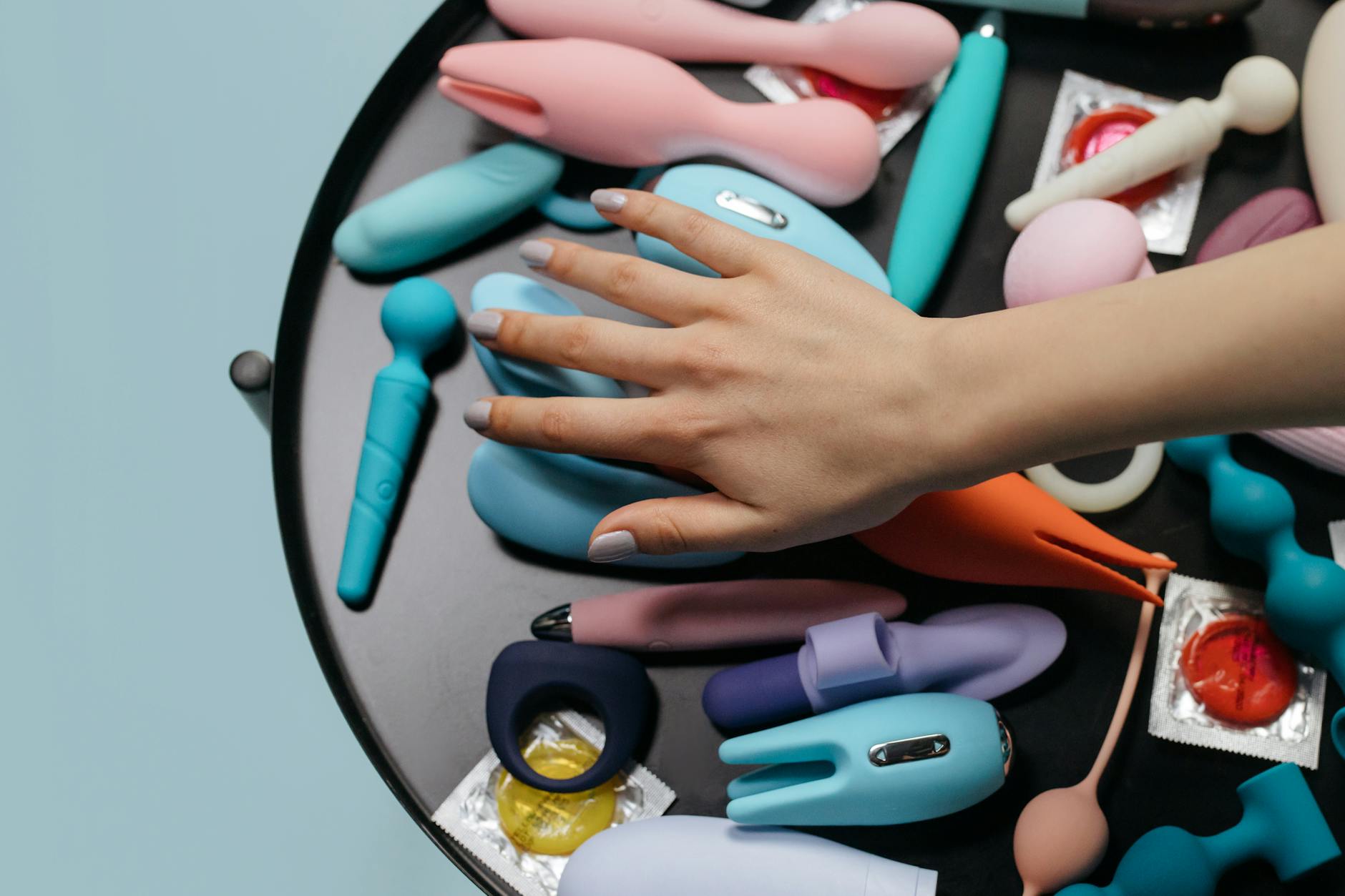
How to Use a Lemon Vibrator When Anxiety Interferes With Arousal
Let's be real. Your brain can shut down arousal faster than anything else in your body. One anxious thought, one worry about being watched or judged or not performing well enough, and your nervous system slams the door on pleasure. You might feel completely willing, even excited, but your body won't cooperate. That's not a personal failure. That's neurology.
Here's the thing about anxiety and arousal: they live on opposite ends of your nervous system. Arousal requires activation of the parasympathetic nervous system, the part responsible for rest, digestion, and pleasure. Anxiety activates the sympathetic nervous system, which is designed for fight, flight, or freeze. You can't be in both states at once. When anxiety wins, arousal doesn't stand a chance.
The good news is that tools like a lemon vibrator can actually help reset this dynamic. Not by pushing harder, but by creating a circuit breaker between the anxious thoughts and the nervous system response.
Why traditional foreplay often backfires when anxiety is present
If you've ever felt pressured to be aroused on someone else's timeline, you know how this works. Your partner is doing everything right, but your mind is still spinning with worry. Maybe you're thinking about whether you look good enough, or whether you're taking too long, or whether they're getting bored. The harder you try to relax, the more tense you become.
This is sometimes called "performance anxiety," but that term misses the real problem. You're not actually anxious about performing. You're anxious about what might happen if arousal doesn't show up on schedule. And that meta-anxiety, the worry about the worry, is what really kills the moment.
Traditional foreplay requires you to manage your arousal AND manage your anxiety simultaneously. You're supposed to relax while someone watches you relax. You're supposed to feel pleasure while monitoring whether pleasure is showing up. It's like being asked to fall asleep while being observed for signs of sleep. The more conscious you become of the process, the more it fails.
How direct clitoral stimulation bypasses the anxiety loop
This is where a lemon clitoral vibrator changes the equation. Air-suction toys like the Lem work differently than traditional vibrators because they create a concentrated sensation that's difficult to ignore or override with anxious thoughts. The stimulation is so specific and consistent that it actually interrupts the anxiety spiral.
Here's what happens neurologically: when you apply consistent, pleasurable stimulation to a highly sensitive area, your brain has to redirect attention. It's not that the anxiety disappears. It's that the sensory input becomes louder than the mental chatter. Your nervous system gets a clear signal from your body that overrides the anxious narrative running in your head.
This is why many people with anxiety find that self-pleasure works better than partnered sex initially. You can control the pace, the pressure, the timing. There's no one waiting for you to perform. There's no external timeline. You're not managing anyone else's expectations, which means your nervous system can actually settle.
Starting with the right mindset and environment
Before you even touch a lemon vibrator, you need to set up the conditions for your nervous system to calm down. This sounds obvious, but most people skip it and then wonder why they're still anxious.
First, remove time pressure entirely. If you're thinking "I have 20 minutes before I need to pick up groceries," your nervous system knows it. Tell your body you have as long as you need. Lock the door. Put your phone in another room. These aren't luxuries. They're prerequisites for your parasympathetic nervous system to activate.
Second, get your breathing right. Anxiety lives in shallow chest breathing. Parasympathetic activation lives in deep, slow belly breathing. Before you do anything else, spend two minutes breathing in for a count of four, holding for a count of four, and exhaling for a count of four. This single shift signals your nervous system that you're safe.
Third, establish a pre-pleasure ritual that feels grounding. This might be a specific song, a warm shower, a few minutes of journaling to externalize the worry, or dimmed lighting. The point is to create a container that tells your body, "This time is different. This time is just for sensation." Your nervous system learns to associate these rituals with safety.
Using the Lem when anxiety is high
When you're ready to use a lemon clitoral vibrator, start at the lowest setting. Not because you're gentle with yourself, but because high intensity when you're still partially anxious can actually retraumatize your nervous system. You want to introduce sensation gradually so your body has time to recognize it as safe pleasure rather than overwhelming stimulation.
Begin by applying the toy externally, over your underwear or a thin layer of fabric. This creates a buffer that makes the sensation feel less intense and therefore less threatening to an anxious nervous system. Spend time here. Let your body learn that this sensation is predictable and not dangerous.
As your body relaxes (and you'll feel this shift. Your breathing will deepen, your shoulders will drop), you can gradually increase intensity or move directly to your skin. The key is pacing. If you feel anxiety creeping back in, return to the lower setting or pull back for a moment.
Many of my clients find that the suction sensation of a lemon vibrator is easier to manage than traditional vibration because it feels more targeted and less "vibratey." It's a different neural signal. If you've struggled with traditional vibrators feeling overwhelming, a lemon sucker like the Lem might actually be the tool that bypasses your particular anxiety response.
The role of self-talk and attention management
Here's a technique that works alongside the vibrator itself. Instead of trying not to think about anxiety, give your attention something specific to focus on instead.
Instead of "I hope I can orgasm," try "I'm noticing the pressure on my left labia" or "My breathing is getting deeper." Instead of "Am I taking too long," try "This feels good right now." You're not forcing positivity or denying the anxiety. You're simply redirecting your attention toward sensation and away from judgment.
This is sometimes called sensory grounding, and it's one of the most effective anxiety-interruption techniques available. Your brain can't simultaneously be fully present in bodily sensation and spinning in anxious thought. One or the other wins. The lemon vibrator gives you something concrete to attend to, making it much easier to win.
When anxiety is tied to specific triggers or past experiences
If your anxiety around arousal is connected to past trauma, a bad sexual experience, or a particular relational dynamic, the vibrator is a tool, not a solution. The tool can help you practice what it feels like to experience pleasure safely, but the underlying anxiety usually needs more support.
This is where working with a therapist trained in sexual trauma or somatic therapy becomes essential. They can help you understand what's triggering the anxiety response and gradually rewire your nervous system's associations with pleasure and intimacy.
A lemon vibrator can absolutely be part of that healing process. Many therapists now work with clients to reclaim pleasure as part of trauma recovery. But it's most effective when paired with proper support.
Building arousal capacity over time
One more important thing: using a lemon clitoral vibrator while anxious isn't just about getting off. It's about teaching your nervous system that pleasure is possible, that your body can relax, that anxiety doesn't have to always win. Each time you successfully navigate from anxiety to sensation, you're literally rewiring neural pathways.
Over time, this practice can expand your capacity for arousal in other contexts. You might find that partnered sex becomes easier because your nervous system has more confidence in its ability to access pleasure. You might notice anxiety taking longer to activate because your body remembers that it has other options.
But there's no timeline here. Some people move through this relatively quickly. Others take months. The important thing is to approach it with patience and curiosity rather than pressure.
 Photo by cottonbro studio on Pexels
FAQ: Lemon Vibrators and Anxiety
Can a vibrator actually reduce anxiety, or does it just distract from it?
It's both, but in a way that matters. A vibrator doesn't cure anxiety, but it does interrupt the anxiety loop temporarily by redirecting your nervous system's attention toward pleasure. Over time, repeated experiences of "anxiety decreasing when I use a lemon vibrator" can actually rewire your nervous system to more readily access the parasympathetic state. So it's not just distraction. It's nervous system retraining.
Is it normal to feel more anxious the first few times I use a vibrator?
Completely normal. If you've spent a long time with anxiety blocking arousal, your nervous system might not recognize pleasure as safe. The new sensation can actually trigger the fight-flight-freeze response at first. This is why starting at low intensity and in a very safe, private environment matters. It's not you. It's your nervous system being cautious. Keep going, and it usually settles within a few sessions.
What should I do if I start to feel anxious during use?
Stop, breathe, and ground yourself. Place your feet firmly on the ground, feel the temperature of the room on your skin, notice five things you can see. These grounding techniques help your nervous system move from "threat" back to "safe." Once you're grounded, you can resume, but there's zero pressure to continue in that moment. Honoring your nervous system's signals is more important than completing the session.
Does anxiety get better faster with a partner present or solo?
For most people, solo practice is the foundation. When you're alone, you can't worry about someone else's experience or judgment. You can go at your own pace. Once you've built confidence and your nervous system has learned that arousal is accessible, partnered pleasure often becomes easier. But there's no universal timeline. Some people find that a supportive partner actually helps them feel safe enough to relax. The key is knowing what your particular nervous system needs.
Can a lemon clitoral vibrator help with anxiety-based vaginismus or difficulty with penetration?
Yes, often. Vaginismus is frequently a nervous system protection response. By helping your nervous system access safety and pleasure through external clitoral stimulation first, you're building the foundation for eventual internal comfort. But vaginismus is also something to address with a pelvic floor physical therapist alongside any vibrator use. The combination is usually most effective.
Will using a vibrator make it harder to orgasm without one later?
This is a common worry, but research doesn't support it. If anything, understanding what pleasure feels like through a vibrator can make it easier to access pleasure in other ways because you know what you're working toward. Your body doesn't "get lazy." It learns what's possible.
Moving forward
Anxiety and arousal aren't meant to coexist, but they do. The gap between knowing that and actually feeling pleasure can be frustrating and lonely. A lemon vibrator isn't a magic solution, but it's a concrete tool that helps your nervous system remember it's safe to relax, and that pleasure is still possible even when your brain is trying to protect you.
If you're struggling with persistent anxiety around arousal or intimacy, reach out to a therapist or counselor who specializes in sexual health. You don't have to figure this out alone. Your pleasure matters, and you deserve support in reclaiming it.
Ready to explore? Start here with how to choose a lemon vibrator based on your sensitivity level, or if you're new to the space entirely, our buying guide walks you through the basics. And if you have questions about what might work best for your particular situation, let's talk.