Let's name what actually happened
A job loss. A health diagnosis. A family crisis. A move. Grief. Any of these things will torch your libido in ways that have nothing to do with your relationship or your body. Stress floods your system with cortisol, which suppresses sex hormones and tells your nervous system that survival matters more than pleasure. Your brain isn't wrong. It's doing exactly what it evolved to do. The problem is that once the immediate crisis passes, desire doesn't always snap back on its own.
Here's what I see in my practice: people wait for desire to return naturally, it doesn't, they panic, and that panic makes it worse. A lemon vibrator (or any clitoral vibrator) isn't a magic fix, but it's a practical tool for breaking that cycle and reconnecting with your body's capacity for pleasure when stress has temporarily erased it.
Why stress specifically kills arousal
When you're in crisis mode, your prefrontal cortex (the thinking, planning part of your brain) takes over. The limbic system (the feeling, desire part) gets sidelined. Add to that the fact that chronic stress literally suppresses testosterone and estrogen, and you've got a perfect storm: your brain isn't signaling for sex, your hormones aren't supporting it, and your body has forgotten what pleasure even feels like.
This is temporary. But temporary can feel permanent if you're sitting in it alone.
The other thing that happens is dissociation. You might feel numb, detached from your body, or like you're watching yourself from outside. People describe it as feeling "absent" during sex or masturbation. That's not a sign you've broken something. That's your nervous system in self-protection mode.
The reset approach with a lemon clitoral vibrator
I'm not recommending you jump back into sex with your partner or try to perform orgasms you don't feel. I'm recommending you use a lemon vibrator in a very specific way: as a tool for nervous system regulation and body reconnection, not as a shortcut to arousal you don't have yet.
Here's the framework.
Step one: low-stakes solo exploration. Start alone, no pressure to reach orgasm or feel anything in particular. The goal is curiosity, not performance. Use the Lem vibrator (or any lem vibrator you have) on the lowest setting. Spend 10-15 minutes exploring what sensation feels like right now, in this moment. Not what it used to feel like. Not what it should feel like. What it actually feels like today.
Step two: pattern variation. Most clitoral vibrators, including the Lem, have multiple patterns. Use this to your advantage. Stress-depleted nervous systems often respond better to rhythm than to constant intensity. Try switching between patterns every 30 seconds. You're not chasing sensation. You're teaching your body that it's safe to feel again.
Step three: anchor to a time of day. Set a specific time (morning coffee, right after work, before bed) when you check in with yourself and your lemon vibrator for 10 minutes. Consistency matters more than duration. Your nervous system starts to anticipate the practice and actually begins to downregulate in preparation.
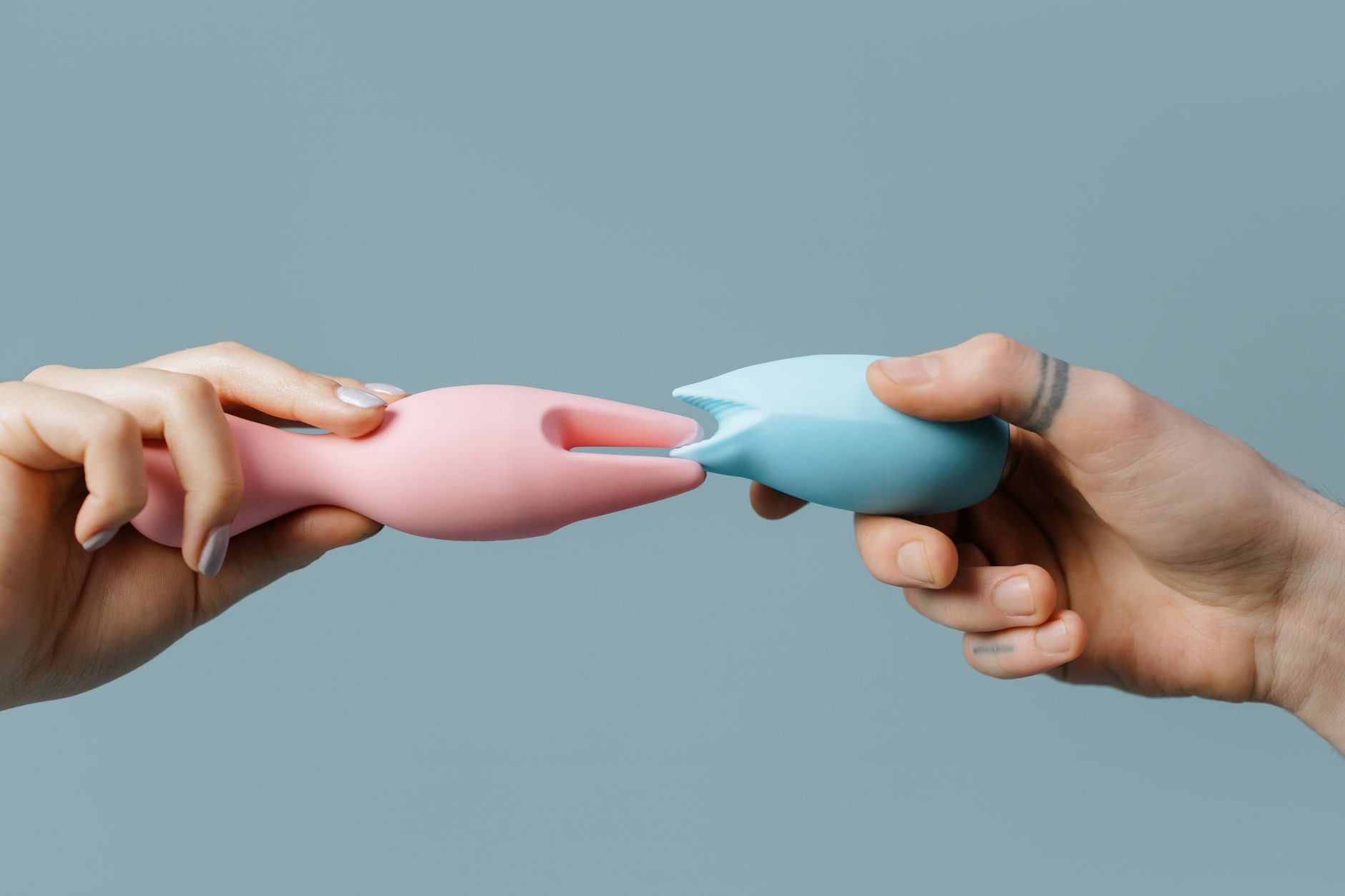 Photo by cottonbro studio on Pexels
When lube matters more than you think
Stress can cause physical dryness independent of arousal. Your cortisol stays elevated, which pulls water away from genital tissue. You might feel like your body isn't responding, when actually you just need lubrication that your body would normally provide in less stressful times.
Use a good water-based lube when you're working with any clitoral vibrator. Not because something's wrong with you, but because stress literally changes the physical environment of your vulva. Lube removes the friction that can feel jarring or painful when you're already feeling disconnected.
The difference between solo practice and partnered sex
You need to rebuild arousal in isolation before adding a partner back into the picture. This isn't punishment or rejection. It's logistics. If you jump straight into partnered sex while your nervous system is still in recovery, you're adding performance pressure on top of genuine numbness. That's a fast way to develop secondary desire issues that stick around long after the original stress has resolved.
Use solo time with your lemon clitoral vibrator to rebuild the neural pathways for pleasure. Give that practice 2-4 weeks before you transition back to partnered intimacy. When you do, tell your partner what you need: slower buildup, more foreplay, permission to stop if you disconnect. If they can't give you that, that's a separate conversation that's worth having.
What to expect in the first few weeks
Week one: Nothing, or almost nothing. You might feel sensation but not arousal. You might feel aroused for 30 seconds and then it vanishes. This is completely normal. Your body is literally remembering how to turn on.
Week two: Sensation starts to feel less alien. You might find that certain patterns feel better than others. You're no longer fighting numbness quite as hard.
Week three to four: Arousal starts to build more reliably. You might actually reach orgasm, or you might just feel present in your body in a way you haven't in months. Both are wins. Orgasm isn't the point. Reconnection is.
If you're rebuilding with a partner
The conversation to have is not "I want to feel sexy again" or "I'm sorry my libido is broken." Those framing invite guilt and pressure. The conversation is: "My nervous system is recovering from stress. While I do, I need us to slow down and rebuild from the ground up. Here's what that looks like."
Specific: "I'm using some time alone to reconnect with my body. When we're intimate, I need you to check in verbally instead of assuming I'm ready. Can we start with 20 minutes of foreplay before anything else happens?"
That clarity matters. It tells your partner this isn't about them or your attraction. It's about your system recalibrating. Most partners respond well to that because they actually understand. They've probably been anxious too, waiting for things to "go back to normal."
The patience part nobody wants to hear
You cannot force desire back. The harder you push, the longer it takes. A lemon vibrator can help you meet your body where it actually is right now, but it can't shortcut the time your nervous system needs to feel safe enough to want sex again.
Stress recovery isn't linear. You might have a good week and then something triggers a memory of the crisis and you're numb again. That doesn't mean you've failed. It means you're human and your nervous system is still processing.
Keep showing up. Keep using your vibrator. Keep telling yourself that desire will return. Most of the time, it does. And when it does, it often feels more grounded than it did before because you've actually dealt with what happened instead of just waiting for it to pass.
FAQ
Can using a lemon vibrator make numbness worse?
No, but forcing yourself to use one when you're actively dissociated can feel bad. If you're using your vibrator and it feels like you're mechanically doing something rather than exploring sensation, stop. The point is curiosity, not performance. Come back to it in a few days.
How do I know if my low libido is stress-related or something else?
If the libido drop happened after a specific stressful event (job loss, health scare, major loss) and you didn't have desire issues before, it's almost certainly stress-related. If low desire has been chronic and predates the stress, or if it's paired with depression or other symptoms, talk to a therapist or doctor. Both can be true at once.
Should I use a lemon vibrator if I'm on antidepressants for stress-related anxiety?
Absolutely. Some antidepressants can affect arousal, but many don't. Even if yours does, a clitoral vibrator can help you work with that side effect rather than against it. More direct stimulation often compensates for medication-related numbness.
How often should I practice with my lem vibrator during stress recovery?
Start with 10-15 minutes three to four times a week. You're not trying to reach orgasm every time. You're building a habit of checking in with your body. Consistency matters more than duration.
Is it normal to feel emotional while using a clitoral vibrator after stress?
Completely normal. Your body holds stress, and reconnecting with sensation sometimes releases it. You might feel sad, angry, or relieved. That's all part of the nervous system coming back online. Let it happen. It means the practice is working.
When should I bring my partner into this process?
After you've spent 2-4 weeks rebuilding arousal solo. By then, you'll have a clearer sense of what actually feels good to you right now, which makes partnered sex less about performance and more about genuine connection. Your partner will also sense the shift in your confidence and engagement.