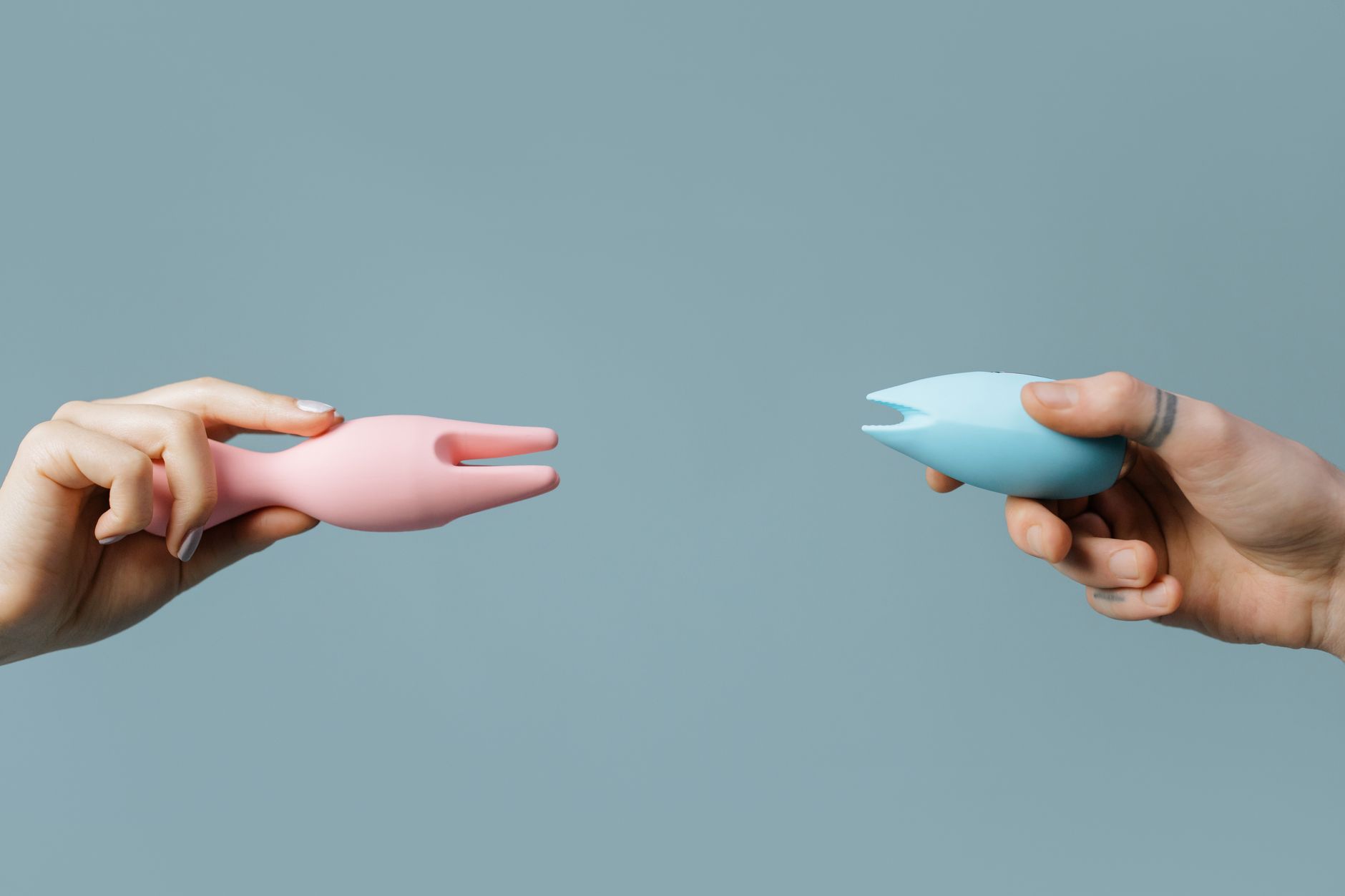
Let's talk about the pressure that kills desire
You know that feeling when sex stops being something you want and starts being something your partner wants from you. The moment it flips from invitation to obligation. That's not low libido. That's not broken hardware. That's pressure.
When a partner (or multiple partners over time) has made their sexual needs your responsibility, your nervous system learns to protect itself. Arousal becomes impossible because arousal requires a sense of safety, permission, and freedom. You can't be turned on when part of your brain is tracking your partner's expectations, checking the clock, or performing the emotion of desire you don't actually feel.
A lemon vibrator or any clitoral vibrator can't fix relationship pressure. But it can help you separate your pleasure from someone else's agenda. And that separation is often the first step to feeling anything at all.
How partner pressure actually blocks arousal
This isn't psychological weakness. This is biology doing its job. When you're chronically worried about disappointing someone, your sympathetic nervous system stays partially activated. You're in a low-level fight-or-flight state. Blood doesn't pool where it needs to. Your clitoris doesn't swell. Your breathing stays shallow.
Meanwhile, your partner might be reading this as disinterest or rejection. They might increase the pressure. They might initiate more often, try harder, or get frustrated. Each of these makes the cycle worse.
The cruelest part: you might still love them. You might find them attractive. But attraction alone doesn't override a nervous system that's learned to brace for performance failure.
Why solo exploration changes everything
When you use a lemon vibrator or lem vibrator alone, you're doing something radical. You're telling your body that pleasure doesn't have to earn you anything. You're not performing for anyone. You're not managing anyone's feelings. There's no timeline, no pressure to come quickly or at all.
This matters because your clitoris doesn't know the difference between pressure from a partner and pressure you've internalized. It just knows: safe or unsafe. Solo use of a clitoral vibrator, especially something like a lemon sucker design, lets you rebuild that safety signal.
Start in a room where you won't be interrupted. Lock the door if that helps. The goal isn't necessarily to orgasm. The goal is to let your body remember what neutral arousal feels like when no one's waiting for you to finish.
The physical setup that protects your autonomy
Use water-based lubricant, even if you don't think you need it. Pressure and anxiety often reduce natural lubrication, and friction can feel uncomfortable. A lemon clitoral vibrator with lube removes any physical discomfort that might reinforce the idea that your body is broken.
Start at a low pattern. The Lem vibrator has multiple intensities for this reason. You're not trying to orgasm quickly. You're exploring sensation at your own pace. Many people find that after weeks of solo exploration, sensations return that they thought were gone.
Set a time limit that feels good. Some people do better with 10 minutes. Others need 45. Neither is wrong. The only rule is that you stop when you want to, not when you've accomplished something.
The conversation you might need to have
If you share a bed with this partner, they might notice you're exploring solo. Some partners respond with curiosity. Others get defensive, taking it as rejection or a sign the relationship is in trouble.
It's not. In fact, rebuilding your own arousal capacity is one of the best things you can do for the relationship. But your partner might not see it that way yet.
If the conversation comes up, try separating two truths. Truth one: your pressure around sex isn't about them as a person. Truth two: you need some space to remember what pleasure feels like when it's just yours. Both can be true. Neither means the relationship is over.
Some partners respond well to this. Some don't. If your partner makes your solo pleasure about their own needs or insecurities, that's worth examining with a therapist.
When to involve your partner again
There's no timeline. Some people feel ready after a few weeks. Others need months. The signal is usually this: solo arousal comes more easily, and the idea of partnered sex feels like an option instead of a demand.
When you do come back to partnered sex, a lemon vibrator can still be useful. You might use it during foreplay, or ask your partner to use it on you. This keeps the focus on your pleasure instead of your performance. It takes pressure off penetration as the goal.
You might also discover that your arousal needs have changed. Maybe you need more time. Maybe you need different kinds of touch. Maybe you need your partner to stop initiating for a while and let you lead instead. All of this information is valuable and can only come from solo exploration first.
The long-term shift you're actually building
When you reclaim solo pleasure, you're not rejecting your partner. You're rebuilding trust with yourself. You're teaching your nervous system that arousal is safe again. You're proving to yourself that pleasure doesn't have to be earned or performed.
This takes pressure off sex in the relationship, not adds to it. Ironically, partners often report that the relationship improves when the pressured person finds their own pleasure again. There's less resentment. There's more genuine desire instead of obligatory yes-ing.
If that doesn't happen, if your partner continues to make their needs your responsibility, that's different information. That might mean the relationship itself needs examining. But at least you'll know it's not your arousal that's broken. It's the dynamic.
FAQ: Partner Pressure and Reclaiming Pleasure
Why does partner pressure actually affect my body's ability to get aroused?
Partner pressure keeps your nervous system in a partial fight-or-flight state. Blood flow goes to your limbs instead of your genitals. Your clitoris doesn't swell the way it needs to for arousal to build. Pressure literally changes the physiology. This isn't psychological drama. This is how your body protects itself from stress.
Can a clitoral vibrator like a lemon vibrator fix this on its own?
A vibrator can help your body remember what arousal feels like without pressure. But the vibrator is a tool, not a cure. The real work is separating your pleasure from someone else's expectations. The vibrator gives your nervous system permission to do that. That's the power.
What if my partner sees me using a lemon clitoral vibrator and gets angry?
That's worth taking seriously. A partner who can't support your solo pleasure often has deeper insecurity or control issues. It doesn't mean you're wrong for exploring. It means the relationship dynamic might need professional help. Consider talking to a therapist, with or without your partner.
How long does it usually take to feel aroused again after partner pressure kills it?
It varies wildly. Some people feel shifts in weeks. Some need months. Your nervous system has learned a pattern, and retraining takes repetition. Don't rush it. The timeline matters less than the consistency of giving yourself permission.
Should I tell my partner I'm using a vibrator, or keep it private?
That depends on your relationship and your comfort. Some people benefit from honesty and openness. Others know their partner will make it about themselves. You get to choose what serves you. Privacy isn't deception. It's self-protection when you need it.
What if I still can't feel aroused even when I'm alone with a vibrator?
That's information too. It might mean the pressure is deeper than you realized. It might mean you need time away from the relationship. It might mean past trauma is at play. A therapist can help you untangle what's actually happening. A vibrator can't do that work alone, but it can be part of rebuilding.
The permission you might need to hear
Your pleasure is not your partner's right. It's not a gift you owe them. It's yours. Using a lemon vibrator solo, exploring what feels good on your own terms, asking for different things in bed.that's not selfish. That's basic.
If reclaiming your arousal threatens your relationship, the relationship might have a bigger problem than you thought. And knowing that is valuable information too.
Start with yourself. Use the lemon sucker, the lem vibrator, whatever works. Let your body remember that pleasure can be safe. Everything else builds from there.