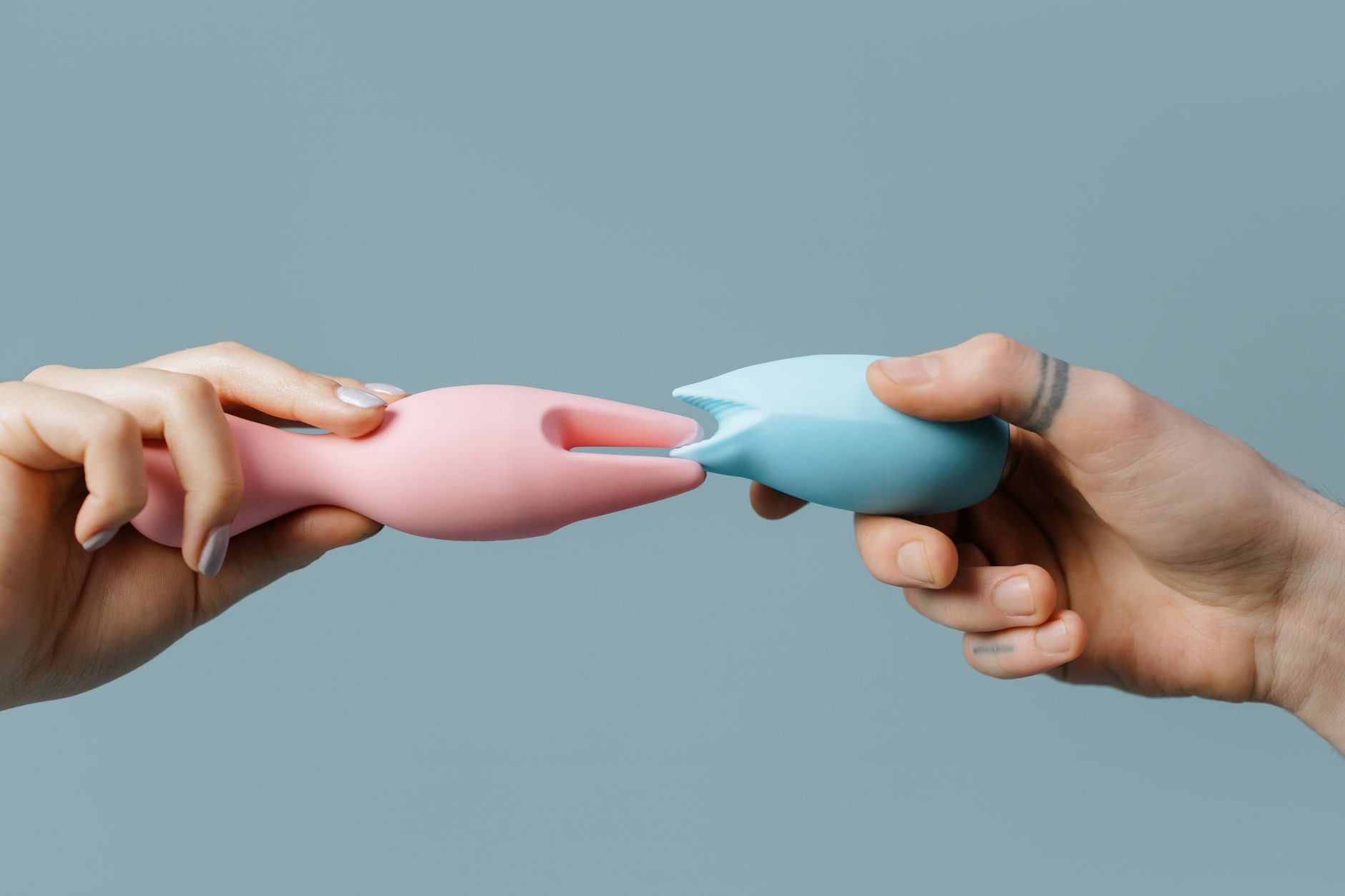
The shift from solo to shared is its own thing
Let's be real. What works when you're alone is different from what works with a partner in the room. Not worse, not better. Different. And the difference matters because the second you try to force your solo routine into a partnered moment, something breaks. Either you lose the focus that got you there, or your partner feels like they're watching instead of participating, or both.
The good news: a lemon vibrator like the Lem actually makes this transition easier than you'd think, because the design itself doesn't require constant hand movement or positioning. That means your hands are free for your partner to hold, for them to touch you, for reciprocal pleasure. The shift is less about changing your tool and more about changing your framework.
Why solo pleasure and partnered pleasure feel so different
When you're alone with a lemon clitoral vibrator, you've got something nobody talks about enough: complete control of the stimulation pattern, the intensity, the timing. Your brain isn't monitoring whether your partner is enjoying themselves. You're not managing their expectations or performance. You're just. There.
The second a partner enters, your nervous system shifts. Not in a bad way, but in a real way. You're now managing two bodies, two sets of expectations, two pleasure timelines. Your brain has to split attention between your own sensation and their presence. For some people, that's hot. For others, it's the exact thing that kills arousal.
There's also the vulnerability piece. If your lemon vibrator solo routine is something that never existed before you had a partner, you might be showing them a version of your pleasure they've never seen. That can feel exposing. But here's the thing: that exposure is also where deeper intimacy happens, if you frame it right.
The conversation before you do anything
The most important step happens outside the bedroom. Tell your partner what you want them to know: that you've found something that works for you, that you want to include them, and that you might need to go slowly because it's a different dynamic.
Ask them what they want their role to be. Are they wanting to watch? To touch you while you use the lemon vibrator? To have you use it on them? To use it together? Those are completely different scenes, and your partner might not even know which one they want until you ask.
The conversation also lets you set boundaries. Maybe you need a few minutes alone with the toy first to hit the right headspace. Maybe you need them to understand that if you ask them to stop touching you for a moment, it's not about them. Maybe you want them to understand that orgasm might look different or feel different with them there, and that's okay.
This sounds unsexy when you're reading about it. In practice, it's the thing that makes the actual moment way hotter because there's no guessing, no tension, no awkward pauses while you both figure out what's happening.
The physical setup that works
Here's where lemon vibrators have a real advantage. Unlike traditional vibrators that require specific angles or constant hand positioning, the Lem and similar lemon-shaped clitoral vibrators work because of the suction technology, not pressure. That means once you've got it positioned, you can relax into it while your partner is doing other things.
Start with you positioning the toy yourself while your partner watches or is nearby. This does two things: it keeps you in control of the moment, and it lets them see exactly how you use it and what angle works. Don't rush this part. Let them watch you find the spot. Let them see what pleasure looks like on your face before they're also touching you.
Once you're in position and the lemon vibrator is working, then bring them in. Their hands can go places yours were before. They can touch your thighs, your stomach, your chest. They can hold you. The suction technology means you don't lose the clitoral stimulation if their hand brushes over yours. That's different from a traditional vibrator where shifting angle kills the whole thing.
Managing intensity and pacing together
One of the hardest parts of transitioning from solo to partnered play is that your arousal curve just shifted. When you're alone, you know exactly how long it takes you to build, how your body moves, what rhythm works. When your partner is involved, your nervous system is slightly more activated, which can speed things up or slow things down depending on your baseline.
If your solo routine involved building slowly over 15 or 20 minutes, don't expect that timeline to hold with a partner present. It might compress to 10 minutes. Or it might stretch to 30 because you're in your head. The fix is to not have a timeline at all.
Instead, focus on what your partner can do to support the pleasure you're already building with the lemon vibrator. If you feel yourself getting tense when they touch you, tell them. If you need them to do the same touch over and over so your nervous system settles into it, ask. Most partners are genuinely relieved to have direction because it takes the guesswork out.
The intensity of the lemon vibrator itself doesn't usually need to change. What changes is how much external stimulation you can handle alongside it. Some people want their partner to be still and quiet while they use a lemon clitoral vibrator with them present. Others want ongoing touch, sound, engagement. Neither is right. Both are real.
What to do if you freeze or lose sensation
This is probably the most common thing that happens when you transition solo play into shared play. Your body just. Stops. responding. You've got the lemon vibrator going, your partner is there doing exactly what you asked, and suddenly your clitoris feels like a thousand miles away.
First: this is not a malfunction. This is your nervous system protecting you because something about the situation doesn't feel safe enough yet. The fix is not to push harder. The fix is to pause, breathe, and usually to ask your partner to step back for a minute while you re-establish sensation on your own.
You might tell them: "I need you to be still for a bit." Or: "Can you leave your hand here but don't move?" Or: "I'm going to use this alone for a minute and then you can come back." Any of those is fine. What matters is that you're not forcing your body to perform on a timeline.
Sometimes the answer is also that partnered play with a lemon vibrator just isn't your thing, and that's information too. Some people are wired for solo pleasure and partnered pleasure to stay separate. That's not a limitation. That's just how your nervous system works. You don't have to force them together.
The role of communication during
Unlike partnered sex where rhythm and responsiveness happen organically, bringing a lemon clitoral vibrator into shared play usually needs explicit communication. That sounds clinical, but it's actually hot because it means nobody's guessing.
During the moment, phrases like "harder," "softer," "keep doing that," "your hand there," are genuinely more effective than staying silent and hoping your partner reads your mind. They give your partner something to do and focus on. They keep your brain engaged in the pleasure instead of stressed about whether they're enjoying themselves.
You can also establish really simple signals. One finger on your arm means "keep going." Two means "change something." No pressure to be eloquent. Just honest direction.
After: the conversation nobody has
Something shifts after you've brought a partner into your solo routine. Usually it's good. Sometimes it's complicated. And almost nobody talks about this part, which is wild because it's actually the most important.
After you've finished, give yourself time before diving into cuddling or talking extensively. Sometimes you need a few minutes to integrate what just happened. Your nervous system just did something different. Your brain just made new associations with your lemon vibrator and with your partner.
When you're ready, tell your partner what worked and what didn't. "I loved that you were quiet." "It helped when you touched my..." "I felt rushed when you..." This feedback isn't criticism. It's the roadmap for the next time.
You might also discover that sometimes you want to use your lemon vibrator solo again, and that's completely normal. Shared pleasure doesn't replace solo pleasure. It's just another thing your body can do.
FAQ: Using a lemon vibrator when your partner joins
Does my partner need to watch or can we do this in the dark?
Completely up to you. Some people find that visual exposure is part of the vulnerability and intimacy they want. Others find that darkness lets them focus on sensation more. You can also do something in between: low lighting, eyes closed most of the time, but they're still touching you. There's no right way.
What if my partner wants to use the lemon vibrator on me instead of me using it?
That changes the dynamic significantly because you lose the control of exactly where the suction is positioned. Some people love that surrender. Others find it stressful. If your partner wants to try, start with them using it on you for just a minute or two while you stay present and guide them. You might find you actually prefer it, or you might realize you want to stay in control. Both are valid.
Can we use a lemon vibrator together in the same session but not at the exact same time?
Absolutely. You might use the lemon clitoral vibrator first while your partner watches or touches you, and then you use it on them, or they use a different toy while you're touching them. That's actually a really good way to ease into partnered play because it keeps the focus on one person at a time.
What if I orgasm and they haven't?
First, your orgasm isn't a cue for the scene to end unless you want it to be. You can absolutely finish, rest for a minute, and then shift focus to your partner's pleasure. Or you might stay engaged but in a different role. This is where that pre-conversation matters because you've already agreed on what happens next.
Is it weird if my partner also uses a lemon clitoral vibrator with me?
Not weird at all. Some couples use lemon vibrators on each other or simultaneously. It's different from what you do solo, but "different" doesn't mean "less good."
How do I know if my partner actually wants this or is just going along with it?
There's no way to know except asking directly. "Are you genuinely interested in this, or are you doing this for me?" is a completely fair question. Some partners are genuinely curious. Some are doing it to be supportive. Some are doing it because they think you want them to. Only they can tell you which one it is.