Let's be real about what happens after infidelity
Infidelity fractures things. Trust, obviously. But also your sense of your own desirability, your ability to feel safe with your partner, and your capacity to experience pleasure without it being tangled up in shame, anger, or doubt. Sex becomes complicated in a way it wasn't before. Sometimes it becomes impossible.
The instinct is to rush back to coupledom, to prove the relationship still works, to have sex and "move on." That instinct is understandable and almost always counterproductive. You can't rebuild something while you're still standing on the rubble.
This is where solo play becomes not a replacement for partnership, but a foundation for it.
Why reconnecting with your own pleasure matters first
Here's what I see clinically: after infidelity, people often lose access to their own pleasure. Not because they can't physically experience it, but because pleasure has become tied to the breach. Your partner's arousal, which once felt affirming, now carries echoes of betrayal. Your own body feels like it wasn't enough, or worse, like it was somehow complicit.
That's not a sex problem. That's a trust problem wearing a sex mask.
Solo play with a lemon vibrator serves a specific function here. It's not about having an orgasm (though that's fine). It's about reclaiming your body as yours. About proving to yourself that you can experience pleasure without your partner present, without their validation, without the landmine of hurt underneath every touch.
When you use a lemon clitoral vibrator alone, you're not running from your partner. You're running toward yourself.
The physical reset: why lemon vibrators work for this particular healing
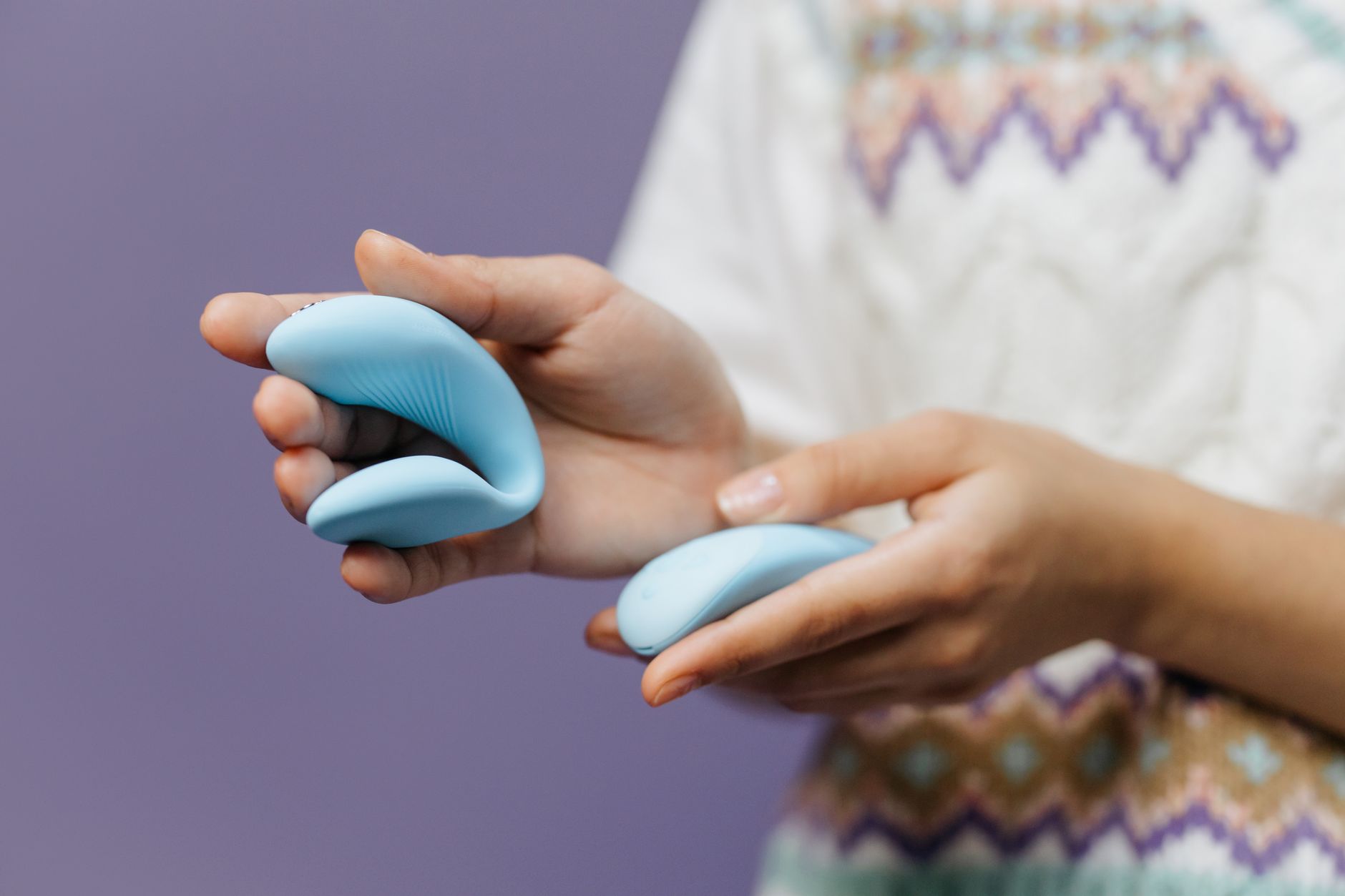
Lemon vibrators, with their air-suction design, offer something different from traditional vibrators. They stimulate without mimicking a partner's touch. That distinction matters after infidelity, because right now, partnered touch might feel unsafe or triggering.
Air-suction technology creates a gentle, rhythmic pulse that builds arousal gradually. You can't rush it. You can't perform it for anyone. You're simply present with sensation, which is exactly what healing requires.
Start at the lowest setting. Your nervous system is already dysregulated by betrayal. You don't need intensity right now. You need consistency and safety. The Lem vibrator's gentlest patterns allow you to build arousal on your timeline, not anyone else's.
Timing: when are you actually ready to touch yourself again?
There's no timeline. Some people feel ready weeks after disclosure. Others need months. The question isn't "how long should this take" but "do I feel safe in my own body right now?"
One marker: can you feel pleasure without immediately judging yourself for it? Can you have an orgasm without it triggering thoughts about your partner, the infidelity, or whether you're "allowed" to enjoy this? If those thoughts show up and you can observe them without being crushed by them, you're probably ready.
If touching yourself triggers panic or deep shame, wait. This isn't avoidance. This is wisdom. Rebuilding is a process, and forced pleasure is a contradiction.
When you do start, choose a time when you're alone and your nervous system is calm. Not when you're angry or using it to numb. Not as a reaction to your partner. You're not trying to prove anything. You're simply reconnecting.
The solo-play practice that actually helps rebuilding
Think of this in stages.
Week one: touch yourself with your hands only. No toys. Feel what your body responds to. This isn't about orgasm. Notice sensation. Warmth. Texture. This is basic nervous-system reorientation.
Week two or three: introduce the lemon vibrator. Start at pattern one. Spend 15 to 20 minutes with it, no pressure to finish. The goal is familiarity, not outcome. Your body learning that pleasure can be something you give yourself.
Week four onward: you're building a practice. Maybe it's twice a week. Maybe it's daily. There's no prescription. But consistency matters. Your brain needs to learn that solo pleasure is separate from partnered dynamics.
Here's what's happening underneath: you're building a somatic anchor for safety. When you can reliably create pleasure in isolation, your nervous system begins to reset. Trust in yourself returns before trust in your partner does.
When your partner asks about this, what do you say?
Honestly? That's between you and them, and it depends on what you've committed to post-infidelity.
If you've agreed to transparency as part of rebuilding, tell them. "I'm reconnecting with my own body through solo play. This is part of healing for me." You don't need to narrate every session or justify the practice.
If your relationship agreement doesn't include that level of reporting (and many don't), you don't need to disclose. Solo play is yours. Your pleasure, your body, your timeline.
What matters is that this isn't about hiding from your partner or preparing to leave. It's about tending to yourself while the relationship is still fractured. This is actually the most honest thing you can do.
Rebuilding desire with your partner comes later
After weeks of solo practice, when you feel something shift.your nervous system is calmer. Your body feels like it's yours again. You've had orgasms without your partner present, and the world didn't end. You might start feeling curious about your partner again.
That's when partnered intimacy becomes possible, not obligatory. You're choosing it from a place of reconnection with yourself, not from a place of trying to fix the relationship through sex.
Some couples find that reconnecting after relationship distance happens naturally once individual healing progresses. Others discover they need a therapist present for those first moments. Both are fine.
What matters is that you've built a foundation. You've proven to yourself that your body is yours, that you can experience pleasure without your partner, and that you're choosing reconnection because you want to, not because you're desperate to.
Practical setup for your solo practice
This sounds small, but it changes everything: create actual space for this. Not rushed, not in the corner of your partner's nap time, not squeezed between household tasks.
Maybe it's 20 minutes on Sunday morning. Maybe it's a locked door and a timer. You deserve physical and temporal space to do this. Your body learns from context. When you show up consistently in a calm environment, your nervous system knows what's happening. Arousal builds more easily. Pleasure deepens.
Have water nearby. Have your lemon vibrator charged and clean. Have a small towel. Make this feel intentional, even if it's just you alone in your bedroom. Intention signals to your brain that this matters.
After infidelity, that signal is essential. It says: you matter. Your pleasure matters. Your healing matters.
When to bring a therapist in
If after three or four weeks of solo practice you're still experiencing panic, numbness, or intrusive thoughts about the infidelity during arousal, talk to someone. A sex therapist or trauma-informed therapist can help your nervous system process the breach more quickly than solo practice alone.
Therapy isn't a failure of this process. It's a parallel track. Many couples do both: individual solo-play practice plus couples therapy, plus sometimes individual therapy for the partner who was betrayed.
Healing from infidelity isn't fast. But it is possible. And it starts not with forgiveness or reconnection, but with the quiet radical act of touching your own body and remembering that it's yours.
FAQ: Questions people actually ask
How often should I use the lemon vibrator during this phase?
Two to four times a week is the sweet spot for most people. Frequent enough that your body gets the signal of safety and consistency, not so frequent that it becomes compulsive or performative. Listen to your body. If you're reaching for it as numbing, pull back. If you're genuinely curious about sensation, lean in.
Is using a lemon vibrator during healing going to make it harder to have sex with my partner later?
No. The opposite, actually. When you reconnect with your own pleasure, you remember what arousal feels like, what your body's signals are, what you actually want. That clarity makes partnered sex more intentional and more satisfying, not less.
My partner wants to watch or participate in my solo play. Should I allow this?
Not right now. This practice is specifically for you to rebuild your relationship with your own body. Inviting your partner in changes the dynamic entirely. You're no longer healing. You're performing. Set that boundary clearly and kindly. Solo play can invite partnership later, but not yet.
What if I don't have orgasms during solo play? Am I doing it wrong?
Orgasm isn't the point. Sensation is. Connection to your body is. Some of your most valuable solo sessions might end without climax. You've still accomplished the goal: you've shown your body that pleasure and safety can coexist without your partner present.
How do I know when I'm ready to be intimate with my partner again?
You'll feel it as a shift from obligation to curiosity. You're not doing it because you think you should or because you're trying to prove the relationship works. You're doing it because some part of you wants to. That want doesn't erase the hurt, but it does sit alongside it. That coexistence is the marker of readiness.
Can I use the lemon vibrator with my partner eventually, or should this stay just for me?
Totally your choice. Some people find that introducing a lemon clitoral vibrator into partnered play feels wonderful and reclaiming. Others prefer to keep solo play separate. There's no rule. What matters is that whatever you choose, you're choosing it because you want to, not because you feel obligated.
You don't have to rush this
Infidelity asks the hardest questions. Can I trust again? Do I want to? Do I still desire this person? Am I even still capable of desire? Those questions can't be answered through forced sex or quick reconciliation. They're answered through the slow, private work of reconnecting with yourself.
Your lemon vibrator is a tool for that work. Not a replacement for therapy, not a shortcut around grief, not a way to skip the hard conversations. But a consistent, private way to tell your body: you're safe. Your pleasure matters. You belong to yourself, regardless of what happens next with your partner.
That foundation changes everything.