Let's name what's actually happening
You've been together for years. Maybe decades. And somewhere between the mortgage payments, the kids, the careers, the exhaustion, physical intimacy stopped feeling like connection and started feeling like a checkbox. Or it disappeared entirely. Now one partner wants to fix it and the other isn't sure where to start. That's not a dead relationship. It's a paused one. The good news: it doesn't stay paused.
What I see in my practice is couples who've spent so long in disconnection that they've forgotten sex can be fun. They've forgotten it's something they can explore together without judgment. A clitoral vibrator like the Lem becomes less about solo pleasure and more about a shared language. A way to say "I want this again" without having to say those scary words out loud.
Why long-term couples get stuck in the first place
There's a pattern I've watched repeat a thousand times. Early on, sex feels charged because there's discovery. You don't know your partner's body yet. Then life happens. Kids cry at 2 a.m. Jobs demand overtime. Bodies change. One partner's libido shifts. Instead of talking about it, you both just... stop trying. The avoidance becomes habit. Years pass. Now initiating sex feels risky because rejection is possible and the hurt would be amplified by all that silence.
But here's what trips most couples up: they think the problem is sexual technique or attraction. Usually it's emotional. You've forgotten how to be playful with each other. You've forgotten that pleasure is a form of communication.
That's where a tool changes things. Not because vibrators fix relationships—they don't. But because they give you permission to try without the weight of performance.
The shift from solo to shared
If you've used a clitoral vibrator alone before, introducing it with a partner can feel awkward. That's normal. The instinct is to hide it or rush through it. Don't.
Start by naming the thing you're actually doing: rebuilding. Say it out loud. "I want us to find our way back to this." That conversation—uncomfortable as it is—does more work than any vibrator ever could.
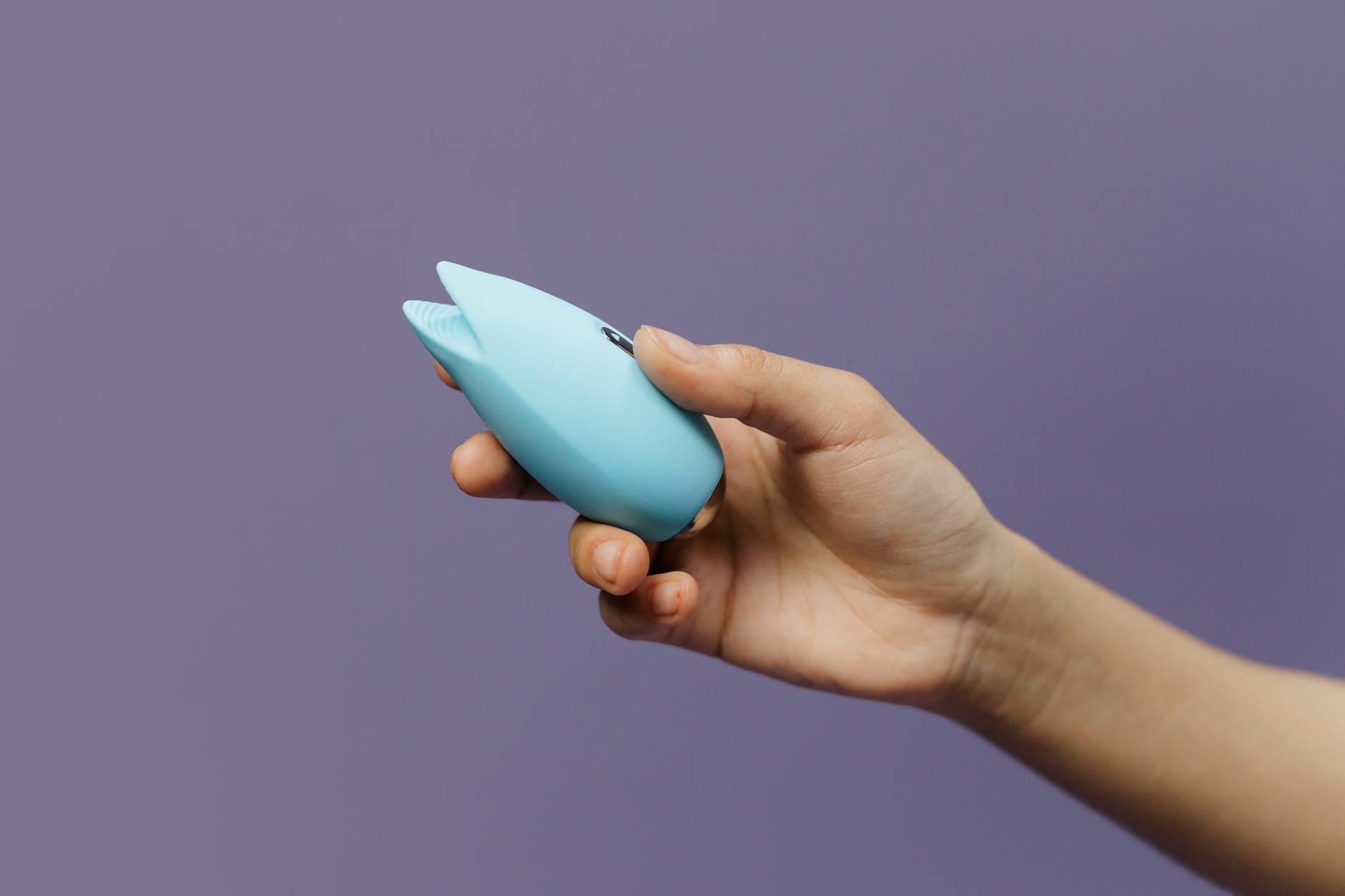
Then talk practically. A lemon vibrator is compact, quiet, and designed for precise stimulation. It's not a replacement for your partner. It's a tool that lets you both focus on what actually feels good instead of performing what you think should feel good. There's a difference, and it matters.
When you're actually together, one of you controls the device. Usually the person receiving uses it on themselves while the partner is present and engaged. That presence—the eye contact, the touch elsewhere on the body, the conversation—that's the intimacy piece. The vibrator handles the physical stimulation so that your brains are free to reconnect.
Building comfort before you actually use it together
Don't jump straight to using it mid-sex. That's like asking someone who's been afraid of water to swim the length of a pool. Start smaller.
First step: show your partner the device. Hold it together. Talk about intensity levels—the Lem has multiple patterns that let you control sensation without stopping to adjust. Turn it on. Neither of you needs to feel anything yet. The goal is to remove mystery. Mystery breeds anxiety in couples that are already disconnected.
Second step: one partner uses it alone while the other is in the room. Reading or watching. Not pressured to participate yet, just present. This takes about ten minutes and demolishes the shame around it. You're just a couple. One person happens to be using a clitoral vibrator. It's not scandalous. It's not weird. It's just part of your life now.
Third step: you're together, clothes on, and you're exploring sensation. The receiving partner uses the vibrator on themselves. The other partner touches their back, their neck, their arm. You're looking at each other. Maybe you're not even talking. This is where reconnection actually starts. You're remembering what it feels like to be close to this person.
Then, when you both feel ready, you move toward sex. And the vibrator becomes part of that.
The technical setup that actually works
Here's what I hear from couples: "It felt clinical." Usually that means they set expectations that were too high, too fast. You're not auditioning for a film. You're rebuilding a connection.
Practically speaking: make time when neither of you is exhausted. This matters more than people admit. If your only window is after work at 10 p.m., you're fighting against biology. Aim for a time when you both have some energy left.
Remove distractions. Phones silent. Kids asleep or in another space. This isn't about being romantic in a movie sense. It's about attention. You've both been starved for it in this context.
One partner lies down. The other sits or lies beside them. The receiving partner guides the vibrator—they know what pressure and pattern feel best. The other partner stays engaged. Touching. Watching. Talking if you want to. Quiet if that's better.
If it doesn't feel good the first time, that's information, not failure. The Lem has five intensity levels. Sometimes it's too much. Sometimes you need longer warm-up time. Sometimes you need a different pattern. That's a conversation to have together, without shame. "That pattern feels better" or "Can we go slower" are the kinds of things couples who are rebuilding actually need to practice saying.
What changes in your dynamic
Using a clitoral vibrator together does something interesting to a relationship that's been stuck. It forces presence. You can't text during this. You can't mentally grocery shop. You have to show up.
It also creates permission. If vibrators are on the table, what else have you both been avoiding talking about? Maybe one partner wants to try something else. Maybe there's a fantasy that's been dormant. Maybe the desire was always there but the safety to express it wasn't. A tool that opens the conversation about pleasure has a way of opening other conversations too.
Most importantly, it reminds you that you chose each other. That attraction can come back. That your bodies aren't the problem—disconnection was. And disconnection can be fixed.
Common friction points and how to move through them
Some people feel self-conscious the first time. That's real. Take your time. There's no timeline here.
Some people worry that using a vibrator means their partner isn't "enough." That's a conversation worth having head-on. A vibrator isn't a critique of your partner. It's a tool that helps your partner feel pleasure more consistently. It's not an upgrade. It's support.
Some couples find that one partner is more enthusiastic than the other. That's when you remember that rebuilding intimacy isn't a transaction. One person might need more time to get there emotionally. Patience isn't boring. It's the foundation.
When a partner is reluctant, curiosity beats pressure. "What are you worried about?" gets you further than "Let's just try it." The worry is usually not about the vibrator. It's about what vulnerability might cost.
The part that actually heals the rut
I want to be clear about something: a clitoral vibrator doesn't save a relationship. But it can restart a conversation that's been silent for too long. It gives you a framework to practice presence together. It normalizes pleasure as something couples can share, not hide.
The healing happens in the small moments. The eye contact. The "I like this" or "That feels good." The decision to keep trying even though it's awkward at first. The choice, night after night, to show up for each other in this particular way.
That's not about the toy. That's about deciding your relationship matters enough to rebuild it.
People also ask
Can a lemon vibrator help couples who've been disconnected for years?
Yes, but not by itself. A clitoral vibrator like the Lem becomes helpful when it's paired with actual communication. The tool opens a door. You and your partner have to walk through it together. If one person is using a vibrator to avoid talking about the real disconnect, the vibrator becomes avoidance, not repair. But if it's introduced as part of a conversation about wanting to reconnect physically, it can reset something important in the dynamic.
What if my partner is uncomfortable with the idea of a vibrator?
Start with curiosity instead of pushing. Ask what the discomfort is about. Is it the vibrator itself? Is it fear that pleasure is being redirected away from them? Is it shame? Once you understand the actual fear, you can address it. Sometimes people are uncomfortable because they've never seen one or don't understand how it works. Showing them, talking about it, and moving slowly removes a lot of that resistance. And sometimes one partner needs more time than the other. That's not rejection. That's just how humans work.
Should we use a vibrator during partner sex or separately?
Both can work. Some couples use a clitoral vibrator during penetrative sex because it increases sensation and makes orgasm more accessible. Some couples use it as part of foreplay—one partner stimulating themselves while the other is engaged and present. Some couples use it and then transition into other forms of sex. There's no script. The key is that you both know what's happening and you're both comfortable with it. The first time, using it while you're both present but not necessarily during penetration gives you the least pressure and the most information about what feels good.
How long should rebuilding intimacy take?
There's no timer on this. Some couples reconnect over a few weeks. Some take months. What matters is consistency and communication. If you're both showing up, you're making progress. If it's one-sided, that's a different conversation and might benefit from couples therapy. Rebuilding isn't linear. You'll have weeks that feel connected and weeks that feel stuck again. That's normal. Keep talking. Keep trying.
Is it weird to use a vibrator when you've been married for twenty years?
No. Plenty of long-term couples rediscover pleasure together using vibrators. Some of them introduce toys for the first time after decades of vanilla sex. Some of them try new things after their kids leave home. The length of your relationship doesn't mean you've explored everything or that pleasure has to be repetitive. Actually, long-term couples often benefit most from tools that help them focus on sensation instead of performance. You've earned the permission to be playful.
What if using a vibrator together feels awkward or doesn't lead to arousal?
That's information. Awkwardness usually fades with repetition. The first time you do anything new together feels strange. That doesn't mean it's wrong. But if arousal isn't happening, check in with each other. Is the setting comfortable? Is one partner anxious? Are you warm enough? Is there something emotionally in the way? Sometimes couples need to address the emotional disconnection more directly before they can relax into physical pleasure. A vibrator can't fix emotional distance. Conversation can.
Moving forward
Rebulding intimacy after a long stretch of disconnection takes intention. It takes vulnerability. It takes the willingness to say "I want us to try again" even though you've both been hurt by the silence.
A tool like a lemon vibrator doesn't solve that. But it gives you a concrete way to practice. To be present. To remind each other that your bodies can still feel good and that pleasure is possible together.
That's worth showing up for. If you're ready to take the first step, start with conversation. Then move slowly. Your relationship has time. And you both deserve to feel connected again.
If you want to talk through what rebuilding looks like for your specific situation, reach out to Nancy's Lem Shop at /contact. We're here to answer questions without judgment.