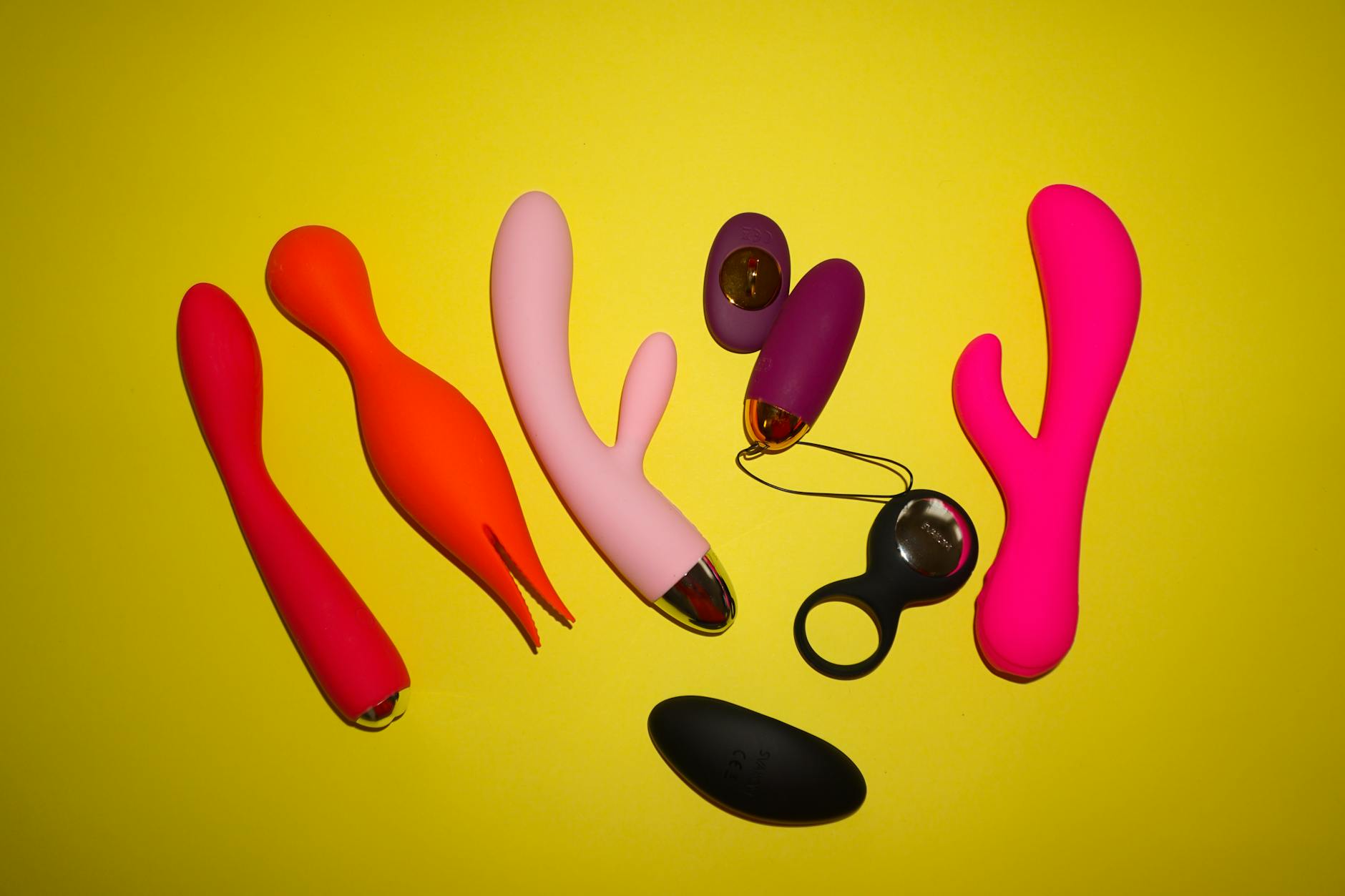
How to Use a Lemon Vibrator When Medication Side Effects Kill Your Arousal
Let's talk about the thing nobody warns you about
You start taking an SSRI for anxiety. Your mood lifts. Your racing thoughts slow down. And then, somewhere around week three, you realize you haven't thought about sex in days. When your partner touches you, it's like someone turned down the volume on your entire nervous system. You feel touch, technically. But the spark? Gone.
This is real. And it's not in your head.
Antidepressants, blood pressure medications, hormonal birth control, and a dozen other common drugs all have the same side effect: they kill sexual desire and flatten arousal response. About 40-60% of people taking SSRIs report sexual dysfunction. It's so common that most doctors mention it in the same breath as "dry mouth" — like it's just a minor inconvenience, not something that actively damages your relationship and your sense of self. Here's what's happening, and what actually helps.
Why medications tank your arousal
SSRIs work by keeping serotonin in your brain longer. That helps depression and anxiety. But serotonin is also the neurochemical that tells your dopamine system to chill out. High serotonin, low dopamine. And dopamine is the wanting chemical. It's what makes you desire anything. Desire pizza, desire your partner, desire your own pleasure. Medication flattens that wanting.
Birth control works differently. Hormonal contraceptives suppress testosterone, and testosterone is a major player in sexual desire regardless of your sex assigned at birth. People with vulvas produce testosterone too. Lower testosterone equals lower baseline desire.
Blood pressure meds and some antihistamines interfere with the actual mechanics of arousal. They can reduce blood flow to genital tissue or mess with the neurotransmitters that trigger the physical response. You might find that arousal takes longer, gets less intense, or stops happening altogether.
The good news: this is a you problem plus a medication problem, not a you're broken problem.
The physical barrier: numbness and delayed response
Medication-induced sexual dysfunction shows up in three main ways. Understanding which one you're experiencing matters because the fix is different for each.
Type 1: Desire is gone. You don't want sex. You're not avoiding it because of relationship issues or trauma. You just have no urge. You might feel affection for your partner, but sexual desire? It's not there. This is the dopamine suppression, and it's the hardest one to work around because you're starting from zero arousal.
Type 2: Arousal is slow or incomplete. You feel some desire, maybe, but your body doesn't respond. Genital arousal takes forever. Orgasm becomes harder or impossible. You might feel frustrated touch, but sexual pleasure feels muted, like you're experiencing it through glass.
Type 3: Orgasm is gone. Desire and arousal are fine, but you hit a wall before orgasm. This happens a lot with SSRIs. Your body builds arousal, but something blocks the actual orgasmic response. That's serotonin directly interfering with the orgasmic reflex.
Most people experience a mix. The point is: a lemon vibrator can't fix the medication. But it can bypass some of these barriers by providing external stimulation that's consistent, intense, and doesn't require your desire system to cooperate.
How clitoral vibrators work around medication side effects
A suction-based clitoral vibrator like the Lem uses a completely different mechanism than penetration or manual touch. Instead of friction, suction stimulates the deeper nerve network in the clitoris. This is useful for medication-affected bodies because it doesn't rely on wanting to be aroused. You can use it even when desire is flat.
Here's what makes this work.
1. Direct nerve stimulation bypasses dopamine. Your clitoris has about 8,000 nerve endings. A vibrator talks directly to those nerves. It doesn't care if your dopamine is tanked. You activate the nerves regardless. This is why many people report that they can reach orgasm with a vibrator even when sex with a partner feels impossible.
2. Intensity compensates for numbness. When sensation feels muted, you need more oomph. A quality clitoral vibrator delivers consistent, targeted stimulation that's stronger than manual touch. It doesn't get tired. Intensity patterns don't vary based on your partner's arm strength. You get reliable sensation every time.
3. Suction feels different. If friction-based stimulation feels overwhelming or numb on medication, suction often feels different enough to wake up sensation. Some people describe it as less intense on the surface but deeper somehow. That can be exactly what your nervous system needs.
A practical protocol for medication-induced numbness
If you're experiencing medication-induced sexual dysfunction, here's what works for most people:
Start with patience about desire. If desire isn't there, don't chase it. Skip the whole "foreplay" section. Go straight to the tool. Use the lemon vibrator on its own, solo, with no expectation that you'll feel horny first. Your job is just to see if your body responds to direct stimulation.
Experiment with timing. Some medications have a peak effect at certain times of day. If you're on an SSRI, try the vibrator at different hours and notice when sensation feels sharpest. Many people find that sensation is better right before they're due for the next dose (called "end-of-dose" response). This isn't true for everyone, but it's worth tracking.
Use patterns, not power. Start on lower intensity settings. If you're numb, your instinct is usually to crank intensity to maximum. Actually, many people find that cycling through patterns feels better than constant high vibration. The Lem's rhythm mode mimics the natural build of arousal, which can help compensate for what the medication is suppressing.
Layer it with touch. Even if you feel numb, stimulation is still happening. You might feel more if you add another sensation simultaneously. Some people find that a partner touching their thighs, torso, or inner arms while they use the vibrator helps the brain recognize the stimulation as sexual. This doesn't require desire. It's just sensory stacking.
Build a routine. Medication-induced dysfunction is real, but your brain can learn to associate vibrator use with arousal and orgasm. Even if it feels mechanical at first, using the vibrator regularly (weekly, or more) teaches your body that this tool leads to pleasure. After a few weeks, the response often improves.
The partner conversation
If you're in a relationship, your partner needs to understand that this isn't about them. Their attractiveness didn't change. Your feelings didn't change. Your medication is interfering with a neurochemical, and that neurochemical powers desire.
The trickiest part is that pleasure isn't the only thing medication kills. It also kills the spontaneous horniness that makes partners feel wanted. If your partner was used to you initiating sex, they might interpret flatness as rejection. It's not. It's pharmacology.
Using a clitoral vibrator solo, or together with a partner, can actually ease this tension because it decouples sex from desire. You can still have pleasure, connection, and even orgasm even when desire is suppressed. That feels better for both of you than months of "not tonight, I'm just not feeling it."
If your partner is involved, how lemon vibrators build intimacy when couples feel emotionally distant is worth reading together.
When to talk to your doctor
Not all medications are created equal. Some SSRIs have lower sexual side effects than others. Sertraline and paroxetine are known for hitting desire hard. Bupropion actually improves sexual function. If you've been on your current medication for 8-12 weeks and sexual function is still flatlined, talk to your prescriber.
You have options. You can switch to a different SSRI. You can add bupropion as an augmentation (it counteracts the sexual side effects of SSRIs in some people). You can adjust timing, take it at night instead of morning, or talk about dose reduction. These are real conversations, and good doctors take them seriously.

Photo by Madison Inouye on Pexels
What you should not do is stop taking your medication to regain sexual function. Depression and anxiety aren't worth the trade. The point is to find a medication that works for both your mental health and your sexual life. That's usually possible, but it requires advocating for yourself.
Using the vibrator when you're also managing depression
There's an extra layer here worth mentioning. Depression itself kills desire. Then medication improves the depression but also kills desire. You end up in this frustrating middle ground where your brain is less broken, but your body feels more broken.
This is temporary. Your nervous system adapts. But while you're in it, a vibrator gives you a way to experience physical pleasure even when psychological pleasure feels distant. That matters. Pleasure is part of what makes us feel alive. When medication and depression both flatten that, reconnecting with your body through a tool that works reliably can actually help the depression feel less total.
What to choose if you're starting from zero
If you've never used a vibrator and you're medication-numb, the Lem is built for exactly this situation. The suction mechanism is gentler than you'd expect but also more intense than regular vibration. You can start on the lowest setting and barely feel anything, then dial up gradually. It's also quiet and discreet, which matters if you're self-conscious or worried about a partner judging you. Choose a lemon vibrator when you've never used one before for more guidance.
The last thing you should know
Medication-induced sexual dysfunction is not a sign that you're broken or that your body doesn't work. Your body is responding exactly as it should to a chemical that's actively suppressing the systems involved in desire and arousal. That's frustrating, but it's fixable. Sometimes the fix is switching medications. Sometimes it's learning to use a tool that works around the barrier instead of waiting for the barrier to move on its own.
Your pleasure matters even when your medication is getting in the way. Especially then.
People also ask
Does vibrator use stop working if I'm numb from medication?
Not usually. Numbness and lack of sensation are different. You might not feel as much, but your nerves are still firing. With a clitoral vibrator, intensity and direct nerve stimulation often bypass the sensation muting that medication causes. That said, sensation can take time to return even with a vibrator. Give it 3-4 weeks of regular use before deciding it's not working.
Can I use a vibrator while I'm still deciding whether to switch medications?
Completely. In fact, this is a great strategy. You can try the vibrator for two to three weeks and see if it helps you reconnect with arousal and pleasure. If it does, and you like your current medication for mental health reasons, you've solved the problem. If it doesn't help much, you have more information to bring to your doctor about whether a medication switch makes sense.
Will my partner feel threatened if I use a vibrator because of my medication?
Some might, but usually only if they don't understand what's happening. If you explain that medication is suppressing your arousal system, not your attraction to them, and that the vibrator is a tool to work around a chemical problem (not a replacement), most partners understand. This is especially true if you frame it as something that could actually help the two of you have sex again instead of months of nothing.
Do SSRIs always cause sexual side effects?
No, but they commonly do. About 40-60% of people report some sexual dysfunction. How severe and how long it lasts varies wildly. Some people adapt after a few weeks. Others struggle the entire time they're on the medication. Your doctor should ask about sexual side effects at every follow-up because there are solutions.
Is it normal for arousal to feel muted even after I've been on the medication for months?
Yes. Your brain adapts to many medication side effects over time, but sexual side effects often persist. This is partly because serotonin stays elevated the entire time you're on an SSRI. Your dopamine stays suppressed. Your body doesn't just adjust. That's why talking to your doctor about solutions (medication switch, augmentation, or accepting it and working around it) is important rather than just waiting longer.
Can I orgasm with a vibrator even if my medication makes orgasm impossible with a partner?
Often yes. The direct, consistent stimulation that a clitoral vibrator provides is mechanically different from partner sex. Many people find that they can reach orgasm with a vibrator even when medication makes partner sex feel impossible. This isn't cheating or weird. It's actually a really common experience and a good sign that the issue is medication-related, not something deeper in your body or relationship.