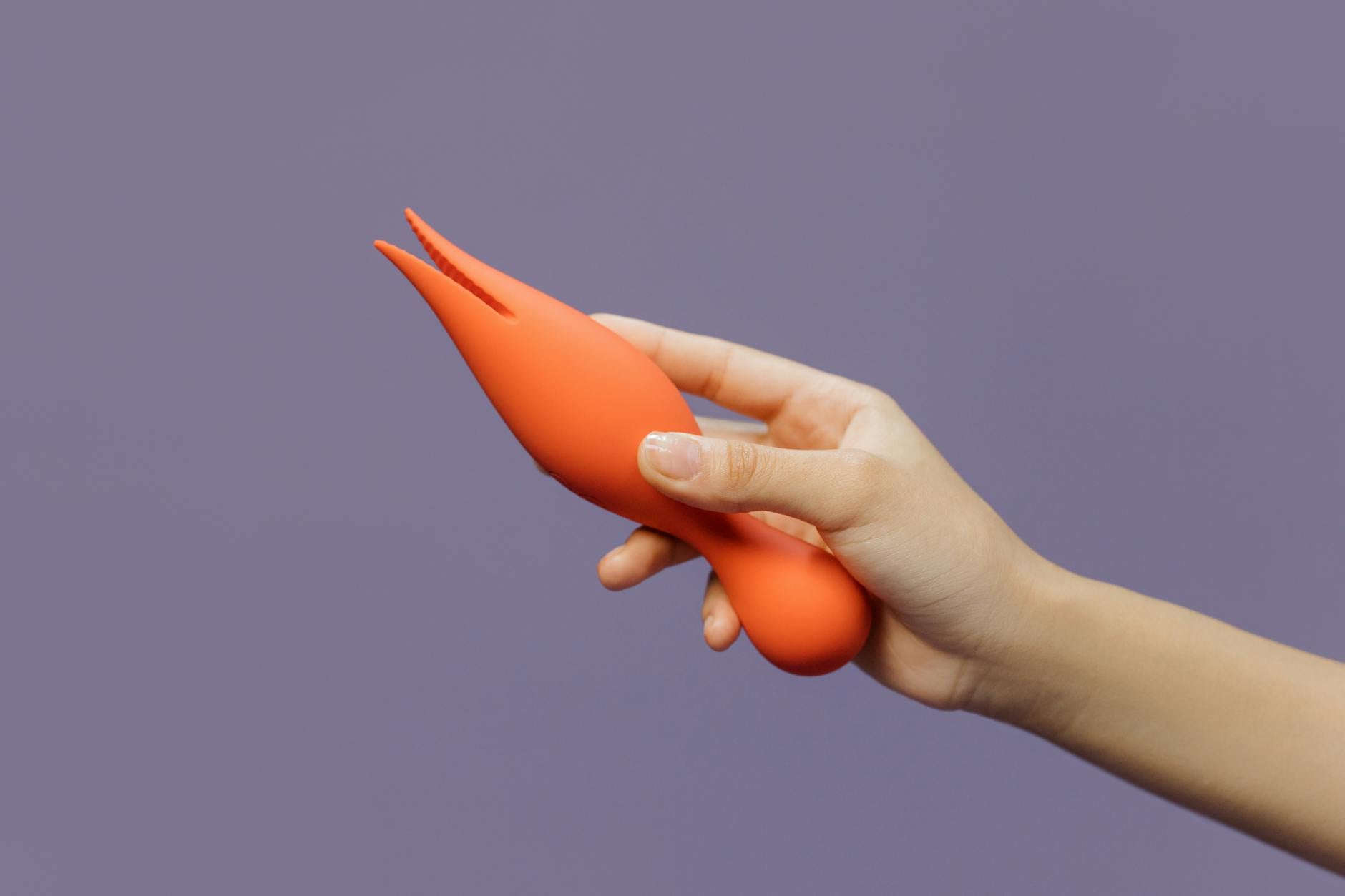
How to Use a Lemon Vibrator When Switching From Traditional Vibrators
Air-suction technology feels nothing like what you're used to. Here's exactly what to expect, why the learning curve is worth it, and how to transition without frustration.
Let's be real. If you've been using traditional vibrators for years, picking up a lemon clitoral vibrator for the first time can feel like learning pleasure from scratch. The technology is fundamentally different. The sensation is different. Even how you hold it and position it feels unfamiliar at first.
Traditional vibrators work through repeated friction and vibration. They buzz, they rumble, they create sensation through direct contact and oscillation against tissue. You've trained your body to recognize this pattern over months or years. Your nervous system knows what to expect.
A lemon vibrator uses air-pulse technology, which creates a gentle suction sensation rather than vibration. Instead of something pressing and moving, you're feeling a rhythmic drawing sensation. It stimulates deeper nerve endings without the mechanical friction of a traditional toy.
This is why the first experience often feels weird, even slightly uncomfortable, if you approach it expecting the old sensation. Your body is literally receiving a different signal. The pleasure pathway is there, but the route is unfamiliar.
Three things happen when you make the transition intentionally.
First, your clitoral tissue gets a break from direct friction stimulation. If you've been relying on higher-intensity vibrators, switching to suction actually allows nerve endings to recover sensitivity. Many people report that after two to three weeks of using a lemon vibrator exclusively, their overall sensation improves across all toys.
Second, the air-pulse sensation often produces a different quality of orgasm. Traditional vibrators typically generate faster, more surface-level orgasms. Suction tends to create deeper, longer contractions because it's stimulating tissue below the surface. Not better, not worse, just different. And different can be revelatory.
Third, you're breaking a neurological pattern. If you've been conditioned to climax a certain way with a certain toy, switching actually rewires your pleasure response. That sounds intimidating, but what it really means is you're expanding your capacity rather than replacing it. You're not losing the old way; you're adding a new one.
Don't go in expecting immediate magic. Bring the same amount of time you'd normally need for solo pleasure, then add 10 to 15 minutes. Patience matters here.
Start with the lowest setting. On a lemon vibrator, this is typically pattern 1 or 2. Position it directly against your clitoris, the same way you would with another toy. The sensation will feel gentler than you're probably used to. That's intentional, not a sign something is wrong.
Spend two to three minutes at the lowest setting just getting used to the feeling. Your brain is recalibrating. This isn't about reaching climax; it's about familiarization. If you feel mild discomfort or that itchy sensation of something that doesn't feel quite right, stay with it for another minute. That often resolves as your body adjusts.
After you're used to the lowest setting, gradually move up to pattern 3 or 4. The jump in intensity should feel noticeable but not jarring. If it is jarring, go back down. There's no prize for moving fast here.
If you don't reach orgasm in the first session, that's normal and doesn't mean the toy isn't working. Your body is processing new information. Orgasm will come once the novelty wears off and arousal deepens.
You might feel like the sensation is too gentle. This usually means you're comparing it to a toy that was overstimulating you without you realizing it. Stick with the lemon vibrator for three sessions before deciding it's underpowered. Many people report that what felt too subtle in session one feels perfectly satisfying by session three.
You might experience a weird ticklish or itchy sensation. This happens because the suction is reaching nerve clusters in a new way. Apply more pressure by pressing the lemon vibrator more firmly against your body, or move it slightly off-center. A small positional shift often eliminates the sensation entirely.
You might feel like you're not getting that same quick release you're used to. That's partly because traditional vibrators can push you toward climax quickly, sometimes before deeper arousal builds. With a lemon vibrator, arousal develops more gradually. Give yourself permission to take longer. The result is often more intense.
You might worry you've broken your ability to orgasm with other toys. You haven't. Your clitoris isn't a car that can only run on one fuel. You're expanding your toolkit, not replacing it.
You don't have to choose. The healthiest approach is integration, not replacement.
If you have favorite traditional vibrators, keep using them. Once you're comfortable with the lemon vibrator (usually after a week or two), try alternating. Use a traditional vibrator for warm-up and early arousal, then switch to the lemon vibrator as you approach climax. This combination often produces a more complex, layered orgasm because you're using two different stimulation patterns.
Or reverse it. Start with suction to build arousal deeply, then switch to a traditional vibrator for the final push. Your body will tell you which sequence feels better.
If you have a partner, the suction sensation also adds novelty to partnered play. Many couples find that switching between toys during sex keeps things fresh without requiring an entire new toy collection. Refer to our guide on how to use a lemon vibrator when your partner wants to watch for more on that dynamic.
Traditional vibrators often work fine no matter the angle. A lemon vibrator is more sensitive to positioning because the suction needs a proper seal to work efficiently.
Hold it so the opening sits flush against your clitoris, not at an angle. The seal doesn't need to be tight, just complete. If it's slightly off-center, you lose about 40 percent of the sensation. A tiny adjustment left or right makes an enormous difference.
Also, resist the urge to move it around constantly. With traditional vibrators, movement is part of the experience. With a lemon vibrator, the device does the work. Plant it and let the suction do its thing. Movement is fine, but stationary contact usually feels better.
If you're lying down, positioning is straightforward. If you're at a different angle, the lemon vibrator's shape actually makes it easier to hold steady than some traditional wand vibrators because it's smaller and has a clearer grip area.
Honestly, the biggest barrier to switching toys isn't physical. It's mental. You're used to one sensation, and your brain has linked it with pleasure. Introducing something new creates a tiny amount of cognitive dissonance.
The fastest way through that is lowering your expectations for the first few sessions. Don't go in thinking this will be the best orgasm of your life. Go in thinking, 'I'm going to learn what this feels like and see if I like it.' That mindset removes pressure and gives your nervous system permission to explore without judgment.
If you're someone who tends to be hard on yourself or impatient with unfamiliar sensations, this matters even more. Three sessions. That's the minimum to know whether a toy works for you. Fewer than three is just not giving your body enough time to adjust.
Traditional vibrators excel when you want quick arousal, when you're tired and need something efficient, or when you're using a toy in a partnered context and want variety. They're also better if you have numbness or reduced sensation because the intensity can push through.
A lemon vibrator works beautifully when you have time to linger, when you want a deeper or more complex orgasm, when you're recovering from sensitivity issues, or when you want to explore pleasure without the intensity of a traditional toy. It's also gentler on tissue if you're using it multiple times a day or dealing with any kind of irritation.
If you're unsure which to reach for, ask yourself one question: do I want efficiency or depth? Efficiency is traditional vibrators. Depth is lemon vibrators. Neither answer is wrong.
By week two or three of using a lemon vibrator regularly, something shifts. Your body stops treating it as foreign. The sensation becomes as familiar as any toy you've used long-term. At that point, you have genuine choice rather than preference based on habit.
Many people find that once they're fluent with suction, they use it more often than traditional vibrators because the orgasms feel more satisfying or last longer. Others cycle between tools depending on their mood and what they have time for. Both patterns are totally normal.
The bonus: if you ever try another suction toy or air-pulse device from a different brand, you already know how to use it. You're not starting from zero.
You'll know you've successfully transitioned when using the lemon vibrator feels automatic rather than intentional. When you don't have to think about positioning or settings. When you can tell the difference between discomfort (which means adjust) and unfamiliarity (which means wait).
At that point, you have expanded your pleasure capacity. You're not replacing what you had; you're building on it. And that expansion often makes everything feel a little bit better.
No. Your clitoris is resilient. Switching from friction to suction won't harm tissue; in many cases, it gives tissue a chance to recover if you've been using high-intensity vibrators. If you experience pain (sharp, burning, or persistent), that's usually a sign of irritation unrelated to the toy type, not damage from the switch itself. Pain means pause and reassess, but soreness from adjustment is different from injury.
Most people feel genuinely comfortable within three to five sessions. That's usually one to two weeks if you're using it a couple of times per week. Some people click with it immediately; others need a full week. The variation is totally normal and depends on how sensitive your body is to novelty and how much time you give the adjustment process.
No, but it might change what you prefer. Some people find traditional vibrators too intense after using suction regularly. Others find they're glad to have both options. Your clitoris won't forget how to respond to vibration; you're just adding a new response pattern to your existing toolkit. Think of it like learning a new music genre without forgetting the ones you already love.
Not exactly. It's more subtle than that. It's a gentle drawing sensation rather than a vacuum. If it feels too intense or uncomfortable, the seal isn't quite right or you're on a setting that's too high. Adjust positioning slightly or drop down one pattern level. The sweet spot feels like pleasant, rhythmic pressure, not like something is trying to pull your skin off.
Absolutely. Water-based lube works perfectly and can actually make the sensation feel smoother. Silicone-based lubes will degrade silicone toys over time, so if your lemon vibrator is silicone (most are), stick to water-based. Lube also helps with the seal if you're struggling to feel the sensation clearly. A tiny amount is all you need.
Then keep using it. Not every toy works for every person, and that's fine. You tried something new, gave your body time to adjust, and made an informed choice. That's the goal. Pleasure isn't about forcing yourself to like something new; it's about knowing your options and choosing what actually feels good to you.
Switching from traditional vibrators to a lemon vibrator isn't about deciding one is better. It's about expanding what's possible for your body. The transition takes patience, but that patience pays off in ways that often surprise people. Give yourself permission to take your time, trust the process, and enjoy discovering what air-pulse technology can do. Your pleasure is worth the learning curve.