
Let's name the thing that's probably happening
You can orgasm on your own. Reliably, consistently, sometimes intensely. But the moment your partner is in the room, watching, touching, or waiting. The whole system shuts down. This is not a you problem. It's a very common nervous system response to the shift from solo focus to shared attention.
The gap between what your body does alone and what it does with someone else present is one of the most frustrating aspects of partnered sex. And it's also one of the most fixable ones, especially with the right tool.
Why your body responds differently with a partner in the room
Your nervous system has two competing states: sympathetic (fight or flight) and parasympathetic (rest and digest). Orgasm requires a deeply parasympathetic state. When your partner is present, even if you love them deeply, your brain is monitoring them. Are they getting bored? Are they judging? How long should this take? These background questions, even when unspoken, pull you out of the parasympathetic mode where pleasure lives.
There's also the physical element. When you're solo, you control everything. Speed, pressure, angle, rhythm. All of it is calibrated to your exact nervous system response. A partner, no matter how attentive, introduces variables you can't fully predict. That unpredictability can trigger protective responses that block arousal.
One more piece: many people experience a kind of performance pressure when a partner is present. The fear that if orgasm doesn't happen, your partner will feel rejected or that you'll feel like you've failed at sex. That pressure is an orgasm killer.
Why a lemon vibrator works better than traditional vibrators for this specific problem
Most traditional vibrators are rumbly or buzzy. They feel good, but they're very focused on friction and direct clitoral contact. When you're already nervous, that intensity can feel too demanding. It can actually increase the mental chatter instead of quieting it.
A lemon clitoral vibrator works through suction. That means it draws tissue into a small chamber and stimulates it without friction. The sensation is completely different. It's more encompassing, less sharp, and it builds in a way that feels less performative. You can't fake a response to suction the way you can fake a response to vibration. Your body either surrenders to it or it doesn't.
Because suction-based toys like a lemon vibrator operate on a different sensory pathway than traditional vibrators, they often work when buzz vibrators have failed. The pattern is also gentler to initiate, which means your nervous system doesn't have to brace itself against an immediate wall of intensity.
The setup that actually changes the dynamic
Three things need to happen before your partner is even in the picture.
First, you need to establish baseline comfort with the lemon vibrator completely alone. Not in a "testing" way. In a committed pleasure way. Use it enough times solo that your body stops treating it as a novelty and starts treating it as a known quantity. This typically takes three to five solo sessions. Your nervous system needs to know the sensation intimately enough that it doesn't activate a surprise response when it's happening in front of someone else.
Second, you and your partner need to talk about this before you try it together. Not during sex, not as a surprise. Over coffee or dinner, tell them exactly what's happening. "I can orgasm solo but my nervous system goes into protection mode when you're there. I want to try using a toy with you present to see if that changes." This conversation does two things: it removes the shame, and it tells your partner this is about your physiology, not about them.
Third, agree on what "with you present" actually means. Does your partner sit nearby but don't touch? Do they touch you in other ways but not clitorally? Do they play with you but step back once you start using the lemon vibrator? These boundaries need to be decided beforehand so your nervous system knows what to expect.
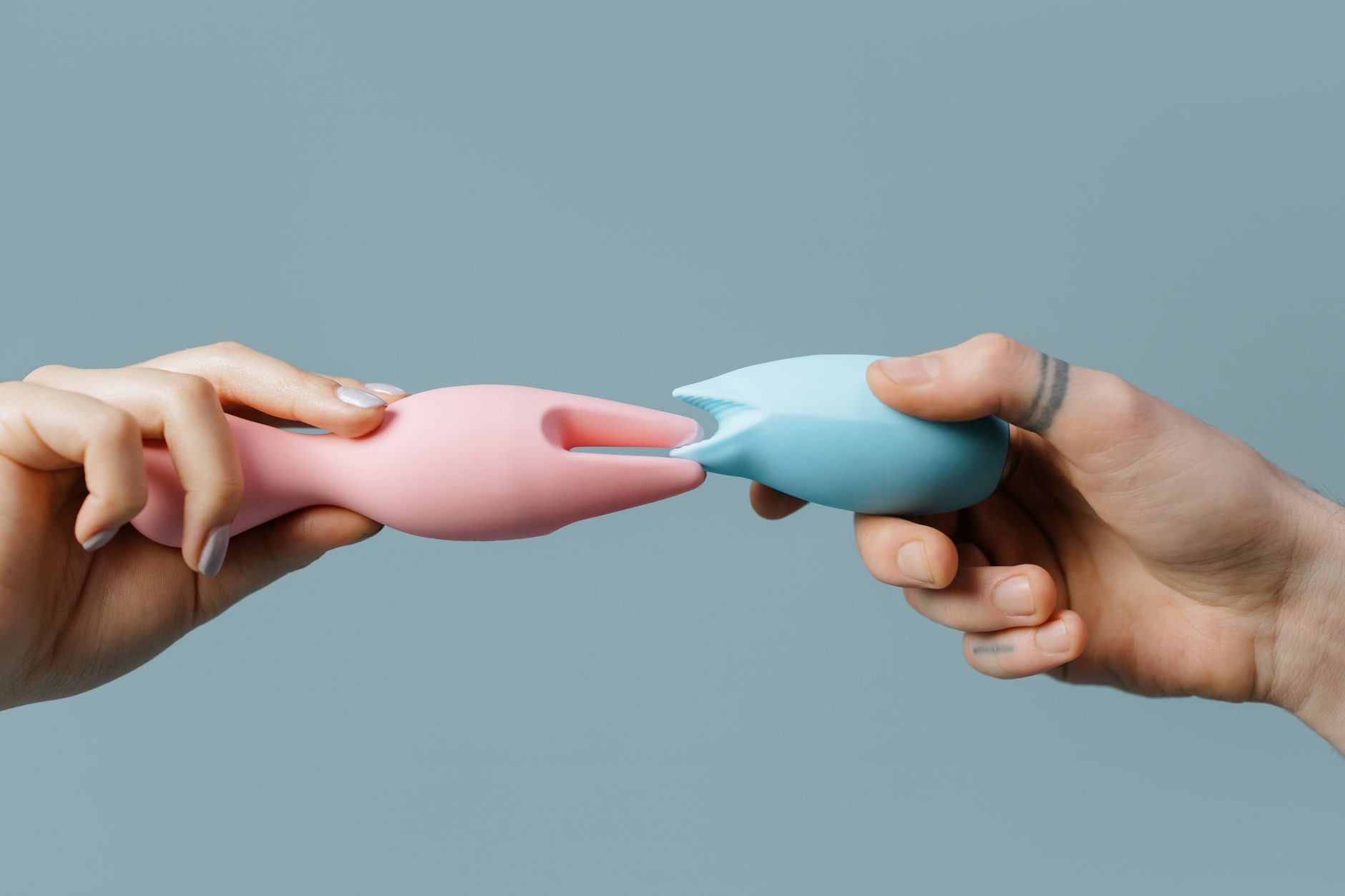
Photo by cottonbro studio on Pexels
The actual approach that works
Start with your partner not initiating anything. You're in charge of your own pleasure. They're there, but passive. Use your lemon clitoral vibrator the same way you would alone. Take your time. Don't rush. Let your body settle into the sensation.
Once you've had one successful orgasm this way, your nervous system has new data: "I can come with this person present." That data is powerful. It shifts the entire story from "I can't" to "I can, and here's how."
On the second or third time, ask your partner to touch you in non-clitoral ways. Kiss your neck. Touch your breasts. Hold your hand. This adds layers of partnership without disrupting the foundation. Your clitoris is still getting the exact stimulation you calibrated solo, but now you're receiving touch from your partner too.
The third evolution is your partner being more actively involved while you guide. You might hold the lemon vibrator and they might touch you around it, or they might hold it while you give real-time feedback on pressure and angle. Some people find that sharing the physical control of the toy with their partner actually deepens the sense of connection.
Don't rush these stages. Some people spend weeks in stage one before moving to stage two. That's exactly right.
What to actually say to your partner
Honestly, the words matter less than the tone. You're not asking permission. You're inviting collaboration. Try something like: "I want to try something that might help me get there with you. I'm going to use my vibrator, and I'd love for you to just be with me. Not doing anything special yet. Just being there."
If your partner seems hesitant, curious questions help. "What's coming up for you?" often reveals that your partner is worried they're not enough, or that the toy means you don't want them. These are real feelings that need real addressing. You might say: "This isn't about you not being enough. This is about my nervous system. When I'm alone, I can focus entirely on sensation. When you're there, I'm also monitoring your experience. This tool helps me bridge that gap so we can both be fully present."
Some partners feel more connected when they're helping you reach orgasm. That's actually a beautiful dynamic. If that's your partner, frame it as teamwork. You're not excluding them. You're bringing them in.
Common obstacles and how to move through them
You try the lemon vibrator with your partner present and nothing happens. This is normal. Your body might need three or four attempts before it believes this is safe. Pressure to succeed makes it worse. Set a timer. Give yourself 15 minutes. If it doesn't happen, that's data, not failure. Try again in a few days.
Your partner touches you at the wrong moment and you lose focus. This is why the conversation beforehand matters. Go back to the agreement. "I need you to keep your hands away until I signal," or "I need you to touch me more," or whatever you actually need.
You feel self-conscious using the lemon vibrator in front of your partner. This is about vulnerability, not the toy. What helps: doing it multiple times until it becomes normal. Making eye contact with your partner while you use it. Telling your partner explicitly what you're feeling. "I feel a little shy right now, and I'm going to push through it." Shame dissolves in the light of honest naming.
When this changes the entire dynamic
Many couples find that once they crack this code, everything shifts. Sex becomes less about performance and more about pleasure. Your partner gets to experience you fully surrendering, which is intimate in a way that standard sex often isn't. You get to experience being desired while you're completely absorbed in your own sensation. Both of those things are deeply connecting.
The lemon vibrator becomes a tool not just for reaching orgasm, but for teaching your partner how your body works. They get to see what you like, at what pace, with what kind of surrounding touch. That's invaluable information for future partnered sex that doesn't involve a toy at all.
Some couples integrate it as a permanent part of their sex life. Others use it as a bridge until the nervous system rewires itself and then move beyond it. Both are perfect.
FAQ
Can I orgasm with a partner if I've never orgasmed during partnered sex?
Yes. The skill is learnable. It's not about being broken or incompatible. It's about your nervous system needing a different context to relax. A lemon vibrator provides that context because it gives you control of the primary sensation while you're learning to accept your partner's presence.
Does using a toy during partnered sex mean I'm not attracted to my partner?
No. Attraction and orgasm are different things. You can be wildly attracted to your partner and still have a nervous system that doesn't downregulate easily in their presence. The toy isn't a substitute for attraction. It's a tool for helping your physiology catch up to your desire.
What if my partner feels threatened by the vibrator?
This is common and worth addressing directly. Reassure your partner that this is about you, not them. Invite them into the process. Some partners feel less threatened when they're actively involved. Others feel less threatened when they understand the biology. Figure out which one your partner is, and work from there.
How long does it usually take to orgasm with a partner present using a lemon vibrator?
It varies. Some people succeed on the first try. Most people take three to five sessions before their nervous system fully believes this is safe. After that, it typically gets easier and faster. The key is consistency and zero pressure.
Should I use the highest intensity setting on the lemon vibrator when my partner is present?
Not necessarily. Start at a lower intensity than you use solo, so you're not bracing against sensation. As your body relaxes into the presence of your partner, you can gradually increase intensity. You might find that a lower setting with your partner present feels as good as a higher setting solo.
What if I can orgasm with my partner but only with a toy?
That's completely normal. Some people always need a toy during partnered sex. Some people graduate away from it over time. Both are fine. Your partner wanting to use a tool together isn't a compromise. It's a feature of your shared sex life.
The real permission slip
You don't need your body to work a certain way for you to be a good partner or a sexual person. If your nervous system needs your partner to step back while you use a lemon clitoral vibrator to reach orgasm, that's not a limitation. That's information about how you're wired. And working with that wiring, rather than fighting it, is what actually builds sustainable pleasure.
The couples who get this right aren't the ones with the fewest complications. They're the ones willing to name what's actually happening and problem-solve together. That's where real intimacy lives.
Ready to try a different approach? Reach out if you'd like to talk through what might work for your specific situation.