Let's talk about wanting more
Intensity is personal. Some people crave it from day one. Others build toward it slowly over months or years. Both are completely normal. The problem isn't wanting stronger stimulation. The problem is that nobody talks about the mechanics of getting there safely, and "just crank it to the highest setting" is actually terrible advice.
Here's what I see in my practice: people who jump straight to maximum intensity either hurt themselves, desensitize their tissue, or end up frustrated because they've skipped the whole foundation that makes intense pleasure actually feel good.
Why intensity alone doesn't equal better orgasms
This is the part that surprises most people. Your clitoris has about 8,000 nerve endings concentrated in a space the size of a pea. More power doesn't automatically activate more of them. What actually matters is precision, rhythm, and the buildup phase before you ever touch the intensity dial.
Think of it like sound. A whisper at close range carries more information than screaming from across a room. A lemon clitoral vibrator like the Lem works on this principle. It uses suction and micro-vibration rather than brute force, which means you can reach genuinely intense sensations at lower power levels than you'd need with a standard vibrator.
The clinical term is "specificity of stimulation." What that means in practice: targeted pressure on exactly the right spot beats random high intensity every single time.
The progression framework that actually works
If you're serious about building toward more intense sensation, here's the framework I recommend to clients:
Weeks 1-2: Sensation mapping. Use your lemon vibrator at pattern 1 (the lowest, gentlest setting) and spend time noticing where sensation concentrates. Most people find a spot slightly above or to the side of the visible clitoral head. That's your primary zone. It's not the same for everyone, and finding yours matters.
Weeks 3-4: Rhythm exploration. Stay at pattern 1 and 2, but experiment with different contact times. Try 30 seconds of stimulation, then break for 15 seconds. Try longer cycles. Your nervous system learns to anticipate, and that anticipation is half of what makes intensity feel good.
Weeks 5-6: Pattern variation. Most clitoral vibrators, including lemon suction toys, have multiple pulse patterns beyond just "on." Start moving between patterns 2 and 3. Notice which ones feel sharper versus smoother. This trains your body to respond to variation, which prevents the plateauing sensation that happens when you use one setting every single time.
Weeks 7+: Intensity climbing. Only now, when your tissue is primed and your nervous system understands the rhythm, move toward higher settings. Go from 3 to 4 to 5 across separate sessions, not all in one night.
This probably sounds slow. It is. It's also the difference between sustainable pleasure and chasing sensations that vanish.
When intensity actually signals a problem
Here's something important: needing to constantly increase intensity to feel anything is sometimes a sign you need a break, not a stronger toy. Desensitization is real. It happens when you use the same toy at high settings multiple times weekly without variation.
If you're noticing that patterns you loved two months ago now feel boring, you've likely desensitized. The fix isn't buying something more powerful. It's:
Taking a week off entirely. I know that feels counterintuitive when pleasure is what you're after. But your nervous system needs to reset. After a break, pattern 3 will feel as interesting as pattern 6 did before.
Rotating between different stimulation types. If you've been using suction-based lemon vibrators exclusively, switch to a different toy for a few sessions. A wand vibrator or even manual stimulation can help your tissue remember how to respond to variety.
Changing the context. Intensity doesn't exist in a vacuum. The same toy feels different depending on where you are in your cycle, your stress level, how aroused you are before you start, and even what you've been thinking about. If your usual setting suddenly feels flat, it might not be desensitization. It might be that you need longer foreplay, or a different mental angle, or to work with a partner differently.
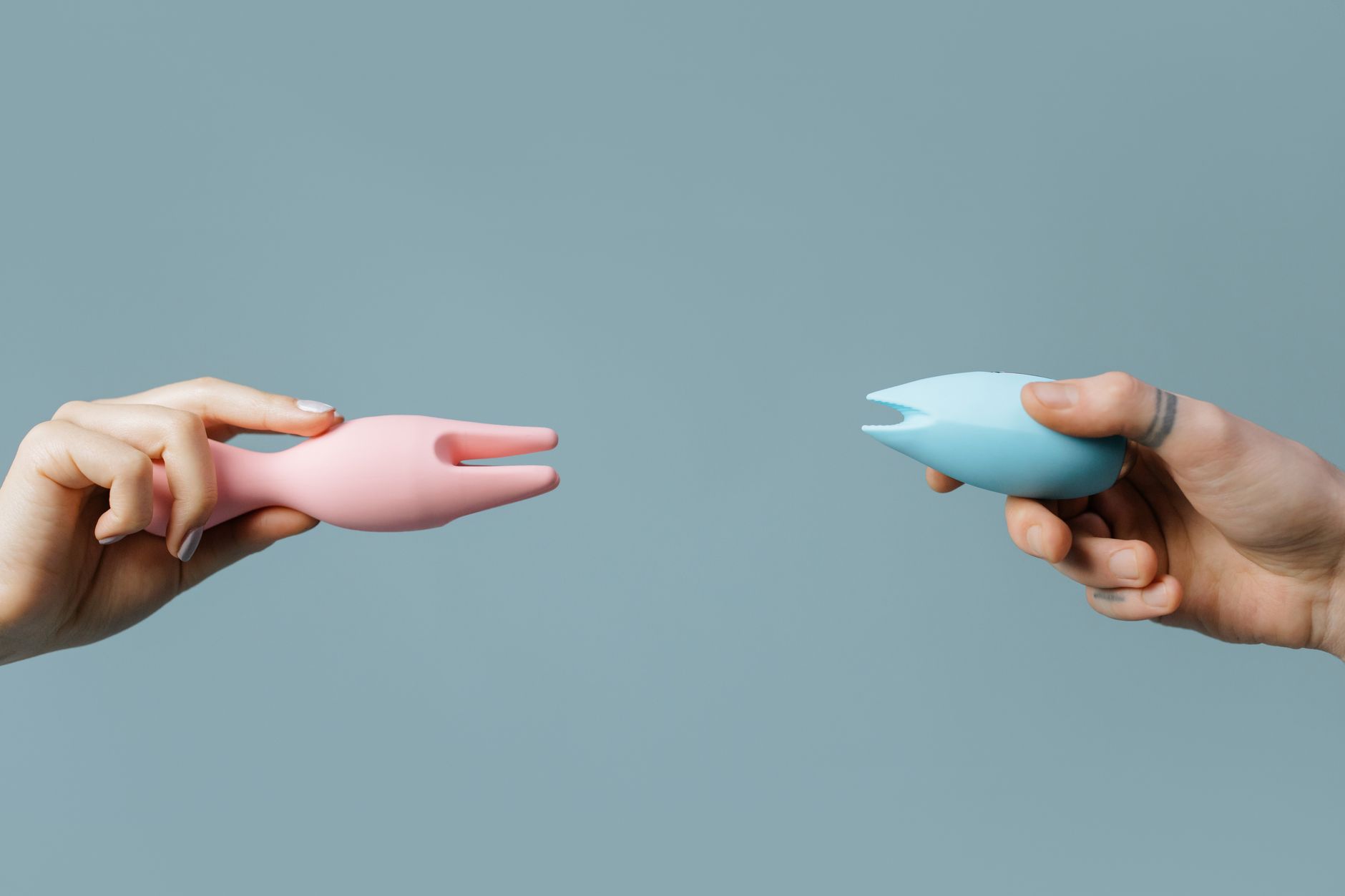
Photo by cottonbro studio on Pexels
The pressure sweet spot
With suction-based toys, intensity comes from two variables: pattern and pressure. Pressure means how firmly the toy seals against your body and how much suction force builds up.
Most people assume they should clamp the toy hard against themselves to maximize sensation. Wrong. Too much pressure actually numbs the tissue and can cause irritation. The right pressure feels like gentle containment, not a vice.
Here's the test: if you're white-knuckling the toy or bracing your legs hard, you're pressing too firmly. That's compensation behavior, and it means the toy isn't positioned optimally. Shift it slightly up, down, or to the side. When you find the right angle, you'll need less pressure and the sensation will be sharper and more pleasurable.
With a lemon clitoral vibrator, you're looking for just enough seal to create suction. Think of it as a soft cup rather than a clamp. Your hand should feel relaxed. If it doesn't, reposition.
What happens when you layer intensity with a partner
Intense solo play and intense partnered play use different intensity frameworks. If your partner is involved, here's what shifts:
Your arousal level before starting matters more. With a partner, nervous system arousal (excitement, anticipation, trust) amplifies what you feel physically. You might reach genuine intensity at pattern 3 with a partner present that takes pattern 5 to hit alone. This isn't about the toy. It's about your whole body being primed.
Timing becomes collaborative. If you usually build intensity over 20 minutes alone, but your partner's arousal peaks faster, the mismatch creates pressure. That's where lemon vibrators work better when partners have mismatched arousal speeds, because you have independent control. Your partner can touch you elsewhere while you handle your own intensity dial. That's genuinely powerful.
Intensity preferences can shift in partnered contexts. Some people want intense clitoral stimulation solo but prefer something gentler when they're with a partner. Others want the opposite. There's no consistency requirement. What matters is communicating what you actually want in the moment, not what you thought you wanted theoretically.
Safety guardrails for intense stimulation
A few things to watch:
Pain is information, not a feature. If something hurts, stop. Sharpness during orgasm is normal. A burning sensation, bruising, or soreness that lasts hours after you've finished is not normal and means you've overshot. Back down intensity, extend recovery time, and consider whether you need lubrication or repositioning.
Session frequency matters at higher intensities. If you're using your lemon vibrator at settings 5 and above, daily use can lead to irritation. Three to four times weekly with recovery days in between is a safer baseline. Your tissue genuinely needs time to reset.
Lubricant becomes more important as intensity climbs. Even if you don't usually need extra lubrication, the friction from sustained intense stimulation can dry tissue out. A water-based lube reduces irritation and actually makes the sensations feel smoother rather than harsh.
Nervous system tolerance is individual. If you have ADHD, anxiety, or high baseline nervous system activation, intense stimulation might feel overwhelming rather than pleasurable, even at objectively lower settings. That's not a failure. It might just mean your optimal range is medium rather than maximum. Work with your baseline, not against it.
Photo by Hanna Brovko on Pexels
Why consistency beats chasing intensity
One more thing that catches people off guard: some of the most intense orgasms I hear about come from people who've been using the same lemon sexual toy at moderate settings, consistently, for months or years. They're not chasing novelty or power. They've simply become extremely familiar with exactly how their body responds to precise, familiar stimulation.
Consistency builds a kind of intimacy with your own body. You stop second-guessing yourself. You know the rhythm that works. Your nervous system recognizes the sensation. That combination creates space for deeper, more satisfying intensity than constant experimentation ever delivers.
If you're serious about intense stimulation, pick a toy (the Lem is genuinely exceptional for this), learn it thoroughly, give yourself permission to stay with it long enough to really understand your response, and then decide if you want to explore beyond that. Most people don't need to. They find that depth is more powerful than novelty.
Questions people actually ask
Can you permanently desensitize your clitoris with intense vibration?
No, but temporary desensitization is real and common. Your tissue and nervous system are plastic. They adapt to whatever stimulus you're giving them repeatedly. That adaptation is usually reversible within a week or two of changing patterns or taking a break. The exception is if you're using extremely high-intensity toys daily for months. That can cause some longer-term nerve adjustment, but even that typically recovers. The takeaway: vary your approach and build in recovery time, and you won't run into problems.
Is it bad to use only the highest intensity setting?
Yes, for three reasons. First, you're missing the pleasure that happens in the build. Second, you're more likely to desensitize. Third, you increase the risk of tissue irritation. Intensity is one flavor of stimulation, not the only one that matters. Using the full range of patterns and settings gives you more pleasure variety and more sustainable sensation long-term.
Why does intense stimulation sometimes hurt instead of feel good?
Usually one of five things: positioning (the toy isn't hitting the right spot), pressure (you're pushing too hard), insufficient arousal (your body isn't primed), sensitivity variation (you're trying intense stimulation during a lower-sensitivity phase of your cycle), or genuine tissue irritation (you've overdone it). The fix is methodical: change position first, reduce pressure second, extend your warm-up third, and if it still hurts, take a break. Pain that appears suddenly in the middle of pleasure often signals you've crossed a physical threshold. Respect that signal.
Can lemon clitoral vibrators provide more intense stimulation than other toys?
The Lem and similar lemon vibrators deliver intensity differently than traditional vibrators. They use suction and micro-vibration rather than broad oscillation, which means you can reach deeply satisfying intensity at lower power settings. Whether that's "more" intense depends on what your body responds to. Some people find suction-based toys deliver more precise, sharper sensation. Others prefer the broader buzz of a standard vibrator. Both can be intense. The advantage of lemon toys is precision and efficiency. You get there faster and with less power drain.
How long should I wait between intense sessions?
If you're using high settings (patterns 4 and above), 48 hours between sessions is a good baseline. That gives your tissue and nerve endings time to reset. If you're at moderate settings (2-3), daily use is usually fine. Listen to your body. If you feel soreness, dryness, or reduced sensation the next day, back off frequency. Your pleasure isn't going anywhere. Building sustainability matters more than maximizing frequency.
What's the difference between intense and painful stimulation?
Intense pleasure has a sharp edge but feels good overall. You want more of it. Painful stimulation makes you want to stop or pull away. The sensations might be similar, but your nervous system's response is totally different. If you're ever unsure, that's your signal to slow down, reposition, or reduce intensity until the sensation clearly tips toward pleasure. Trust that response. Your body is giving you real information.
The bottom line
Intensity is achievable and worth exploring if that's what you want. The path there is patience, precision, and respect for your body's limits. A lemon vibrator like the Lem is genuinely excellent for this because suction-based stimulation naturally delivers intensity with specificity. You're not blasting your clitoris. You're targeting it strategically.
Start with mapping and rhythm. Build through patterns. Climb intensity gradually. Respect desensitization when it appears. Use pressure wisely. And remember that the most intense sensations usually come after you've spent months getting to know exactly how your own body responds. That's not patience wasted. That's foundation.
If you're navigating intensity with a partner or want to talk through what you're experiencing, I'm here. Reach out to Nancy's Lem Shop anytime.