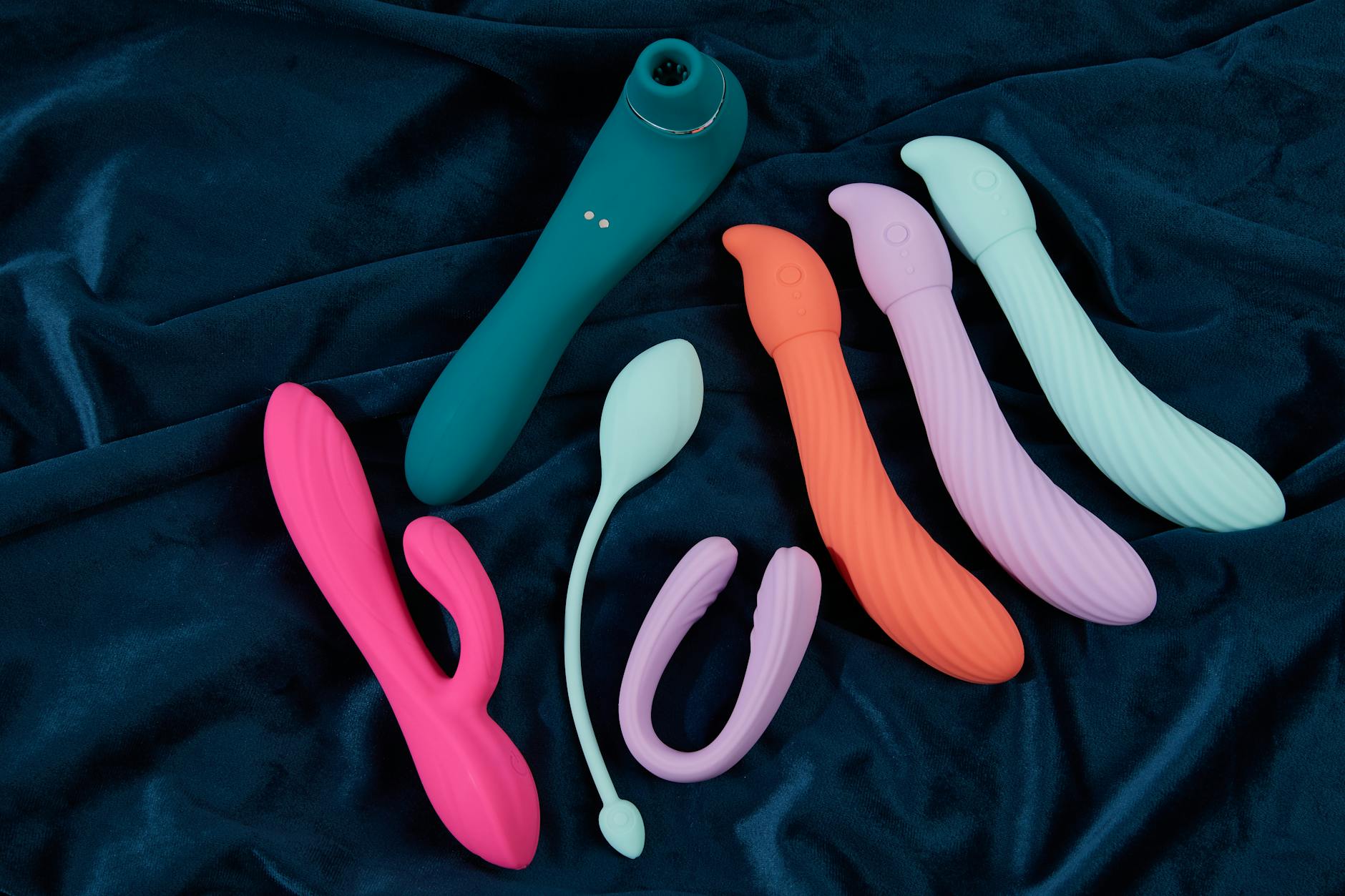
Let's talk about what low desire actually is
Low libido doesn't mean you're broken. It means something's shifted. Maybe your partner wants sex three times a week and you want it twice a month. Maybe you used to love sex and now you'd rather scroll. Maybe you feel desire, but your body won't cooperate when it matters. These are all different problems with different solutions.
Here's what I've seen in my work with couples: most people dealing with desire mismatches spend all their energy fighting the mismatch instead of understanding it. They make it mean something it doesn't ("I don't love them anymore"), or they white-knuckle their way through sex they don't actually want.
There's a third option. Use this time to actually rebuild your relationship with your own pleasure.
Why low desire happens (and it's rarely what you think)
Desire doesn't live in a vacuum. It's built on a foundation of physical safety, mental space, and genuine arousal capacity.
When desire drops, one of these things has usually shifted: stress is eating your bandwidth. You're touched out (especially if you have kids). Your partner dynamics have changed and intimacy feels obligatory. You're not being touched the way your nervous system needs. Or your body has changed (hormones, medication, aging) and what used to work doesn't anymore.
Here's the thing that gets missed: low desire often isn't a sex problem. It's a relationship problem, a nervous system problem, or a self-knowledge problem wearing a desire disguise.
A clitoral vibrator like the Lem doesn't fix the relationship issue. But it can do something equally valuable: it gives you a way to explore pleasure on your own terms, without performance pressure, without a timeline, without someone else's need in the room.
Why air-suction vibrators work differently for low-desire bodies
Most traditional vibrators require you to already be quite aroused to feel good. They're loud, intense, and they demand direct friction. If your desire is low or your arousal capacity has shifted, they can feel overwhelming or even painful.
The Lem works differently. It uses gentle air-suction stimulation instead of vibration. That means:
You need less initial arousal to feel something pleasurable. The sensation is diffuse, not pointed. You can ease into intensity instead of diving in. It's quieter, which matters psychologically (less performance anxiety). And because it works without friction, it's gentler on sensitive or under-stimulated tissue.
For people rebuilding their pleasure after stress, hormonal shifts, or relationship friction, this matters.
Solo exploration first (here's why)
If your low desire is tangled up with relationship dynamics, starting solo is non-negotiable. Here's why: you need to rebuild the connection to your own body without anyone else's needs in the equation.
Set aside 20 minutes when you're alone. No partner waiting. No performance pressure. No timeline. Start with the Lem on the lowest setting. Spend five minutes just noticing sensation without trying to "achieve" anything. Your job is to observe what your body actually likes, not to make it work.
Many people dealing with low desire have learned to bypass their own pleasure in favor of their partner's experience. They've become very good at faking it, accommodating, or dissociating. Solo play with a clitoral vibrator rewires that. You're literally teaching your nervous system that your pleasure matters.
This solo phase often takes 2-4 weeks before anything else changes. That's normal. You're rebuilding.
Bringing it into partnered sex (when you're ready)
Once you've spent time solo, you can introduce the Lem into partnered sex. But here's the shift that actually matters: you're not doing this to fix yourself for your partner. You're doing it to expand what's possible between you.
This changes the conversation completely. Instead of "My desire is broken, let me use this toy to perform better," you get to say, "This is how my body works now. This is what I like." Your partner isn't the fixer. They're the witness.
Start by using the Lem solo while your partner is present but not involved. You're showing them what turns you on, not performing for them. Then experiment with them using it on you while you focus on receiving rather than giving. The power shift is subtle but massive.
What to watch for (the tricky stuff)
Sometimes when you start exploring pleasure again, old stuff comes up. Shame. Numbness. Anger at your partner. The sense that you've "lost" years of your sexuality. These are all normal, and they're not signals to stop.
If you're experiencing pain or significant numbness, that's worth flagging to a healthcare provider. Those can indicate hormonal, neurological, or physical issues that need attention. But emotional stuff? That's the work. Sit with it.
Also watch for a trap: using the vibrator becomes a new form of performance. You're racing to orgasm. You're checking boxes. That's the opposite of what you're trying to build. Pleasure exploration has no finish line. Some sessions feel amazing. Some feel meh. Both are data.
When desire mismatch is actually a relationship problem
Here's where I need to be direct: sometimes low desire is telling you something important about your relationship.
Maybe you're not being heard. Maybe you feel unsafe emotionally. Maybe resentment has built up and your body's way of saying no is by shutting down desire. A vibrator can't fix that. Couples therapy, honest conversation, and sometimes significant change has to happen first.
But here's the thing: you won't know what's actually going on until you've spent time with your own pleasure. Once you've rebuilt that, the relationship stuff becomes clearer. You know what you actually want instead of what you think you should want.
That's when you can have a real conversation with your partner about what's shifted and what you both need.
The timeline you should expect
Pleasure doesn't rebuild overnight. Here's roughly what the arc looks like.
Weeks 1-2: You might feel nothing. Numbness is common. Keep going anyway. Weeks 3-4: You start noticing sensation. It might feel weird or unfamiliar. That's normal. Weeks 5-8: Actual pleasure starts building. You're finding rhythms and intensities that feel good. Weeks 9-12: You're developing a relationship with your own desire again. You know what you like. Your arousal capacity is rebuilding.
Some people move faster. Some slower. This isn't a competition.
The conversation with your partner
If you're in a relationship, your partner needs to understand what's happening. Not so they can fix it for you, but so they don't interpret your solo exploration as rejection.
The conversation sounds something like: "My desire has shifted and I need to understand my body again before we can move forward together. I'm using this time to explore on my own. This isn't about you or us. It's about me rebuilding my own pleasure." If your partner gets defensive or makes it about them, that's actually useful information about your relationship.
A partner worth staying with will understand that you rebuilding your desire capacity is good for both of you.
FAQ: Common questions about low desire and the Lem
Does using a vibrator mean my partner isn't enough?
No. A vibrator is a tool for self-knowledge, not a replacement. Many people find that once they've rebuilt their own pleasure capacity solo, partnered sex becomes significantly better because they know what actually works for their body.
What if my partner is resistant to me using a vibrator?
That's worth examining. If your partner is threatened by you exploring your own pleasure, that's a relationship dynamic that needs attention, possibly with a couples therapist. Your pleasure isn't a threat to theirs. If it feels like one, there's something deeper to unpack.
Can I use the Lem if I'm numb or can't feel much?
Yes. Start very gently and give yourself time. Numbness often eases with consistent, low-pressure exploration. If it persists for months or is accompanied by other symptoms, mention it to your healthcare provider.
How long before I notice a real shift in my desire?
Most people report shifts within 4-6 weeks of consistent solo play. But "shift" might not mean higher desire. It might mean clearer desire, or more honest desire about what you actually want.
Is this the same as using a vibrator while stressed or depressed?
Similar, but different. If you're dealing with depression or serious anxiety, vibrator exploration can coexist with therapy or medication, but it's not a replacement. Talk to a healthcare provider about what you're experiencing.
What if exploring solo makes me feel sad or angry?
That's actually really common. You might be grieving the sexuality you thought you'd have, or getting in touch with how much resentment has built up. These are important feelings. Feel them. Consider working with a therapist if the intensity is overwhelming.
The bigger picture
Desire isn't supposed to be constant or automatic. It ebbs. It changes. Sometimes it needs rebuilding.
A clitoral vibrator like the Lem is a tool for that rebuilding. But the real work is yours. It's about reclaiming your own pleasure as a non-negotiable part of your life, not as a performance metric in someone else's experience.
When you do that, something shifts. You become more alive. Your partner benefits. Your relationship benefits. But most importantly, you get your body back as a source of genuine pleasure instead of obligation.
That's the whole point.