
The thing nobody talks about
Desire mismatch isn't a sign your relationship is broken. It's the most normal friction point in long-term partnerships, and it creates more resentment than infidelity talk, money fights, or in-laws combined. One person wants sex three times a week. The other wants it twice a month. Nobody is wrong. Both people are miserable.
Here's what actually happens: the higher-desire partner feels rejected. The lower-desire partner feels pressured. Both start seeing sex as a problem instead of a solution. The bedroom becomes another place you're failing each other.
Lemon clitoral vibrators reframe this entirely. They're not a bandaid. They're a different tool that addresses why desire mismatch exists in the first place.
Why desire actually mismatches
Most people think desire mismatch is about hormones or attraction fading. That's sometimes true, but it's rarely the whole story. What I see most often in my practice is this: one partner's pleasure has never felt easy or reliable enough to want it often.
If you've spent years having sex that requires mental gymnastics to enjoy, you don't want to do it three times a week. If your body has to work to reach orgasm, or if reaching it takes so long that you feel like you're performing for your partner instead of experiencing your own pleasure, you'll naturally pull back. You're not broken. You're protecting yourself.
The higher-desire partner, meanwhile, wants connection and the neurochemical hit that good sex provides. They're not wrong either. They just need their partner's pleasure to be less of a mystery.
How lemon vibrators change the math
Clitoral suction technology (like the lemon vibrator) works differently than traditional vibrators. Instead of relying on speed or intensity, it uses gentle rhythmic suction that mirrors the exact stimulation pattern that works for most clitorises. The learning curve is shorter. The sensation is immediately recognizable. The orgasm, when it comes, often arrives faster and more reliably.
That matters for desire mismatch in three specific ways.
First, pleasure becomes predictable. If you know that your body will respond in 8 to 12 minutes, you're more willing to prioritize sex. Certainty changes everything. You're not bracing for disappointment.
Second, desire becomes personal, not performed. When you can access your own pleasure reliably during partnered sex, you stop managing your partner's emotions about your body. You're present in your own experience instead of monitoring theirs. That presence is magnetic. Partners feel it.
Third, the frequency negotiation becomes honest. Without a lemon vibrator, the lower-desire partner is saying no to sex. With one, they're saying yes to their own pleasure on a timeline that feels manageable. Those are completely different conversations. One is about rejection. The other is about autonomy.
The specific ways couples use them
I've seen four main patterns in relationships with desire mismatch.
Scenario 1: Quickies become viable. The higher-desire partner wants more frequent sex. The lower-desire partner is tired, touched out, or simply less interested in 30-minute sessions. A lemon vibrator makes a 15-minute session actually satisfying for the lower-desire partner because the clitoral stimulation is so efficient. Frequency goes up. Resentment goes down.
Scenario 2: Solo sex becomes shared. Some lower-desire partners find they want partnered sex less because their own needs aren't being met during it. They might masturbate frequently but deflect partnered advances. When a lemon vibrator enters the bedroom, solo pleasure transforms into mutual pleasure. Masturbation becomes foreplay. The dynamic shifts from rejection to inclusion.
Scenario 3: Foreplay gets time and attention. In many mismatched couples, the lower-desire partner agrees to sex but rushes through foreplay because they're anxious about taking too long to orgasm. A lemon vibrator makes the foreplay phase feel shorter and more pleasurable. Both partners feel heard.
Scenario 4: Pressure disappears entirely. Some couples use a lemon vibrator during solo time, completely separate from partnered sex. The lower-desire partner's orgasm becomes a self-care ritual, not a performance metric. The higher-desire partner stops monitoring and starts celebrating. Both get their needs met, just not always together.
The conversation before you bring it home
Here's what doesn't work: buying a lemon clitoral vibrator and leaving it on the nightstand with the message "Let's try this." That's a request for your partner to fix themselves.
What works: having an honest conversation about the fact that desire mismatch is a system problem, not a you problem or a me problem. Something like, "I want us both to feel good about sex again. I think the issue is that when we're together, your pleasure is harder to access, so you want it less often. And I'm frustrated because I feel like my needs aren't mattering. I found something that might help us both actually enjoy this part of our relationship more. Can we talk about it?"
Notice what's missing: shame, blame, or the implication that your partner is broken. Notice what's present: "both of us," "feel good," "enjoy this." That framing matters more than the tool.
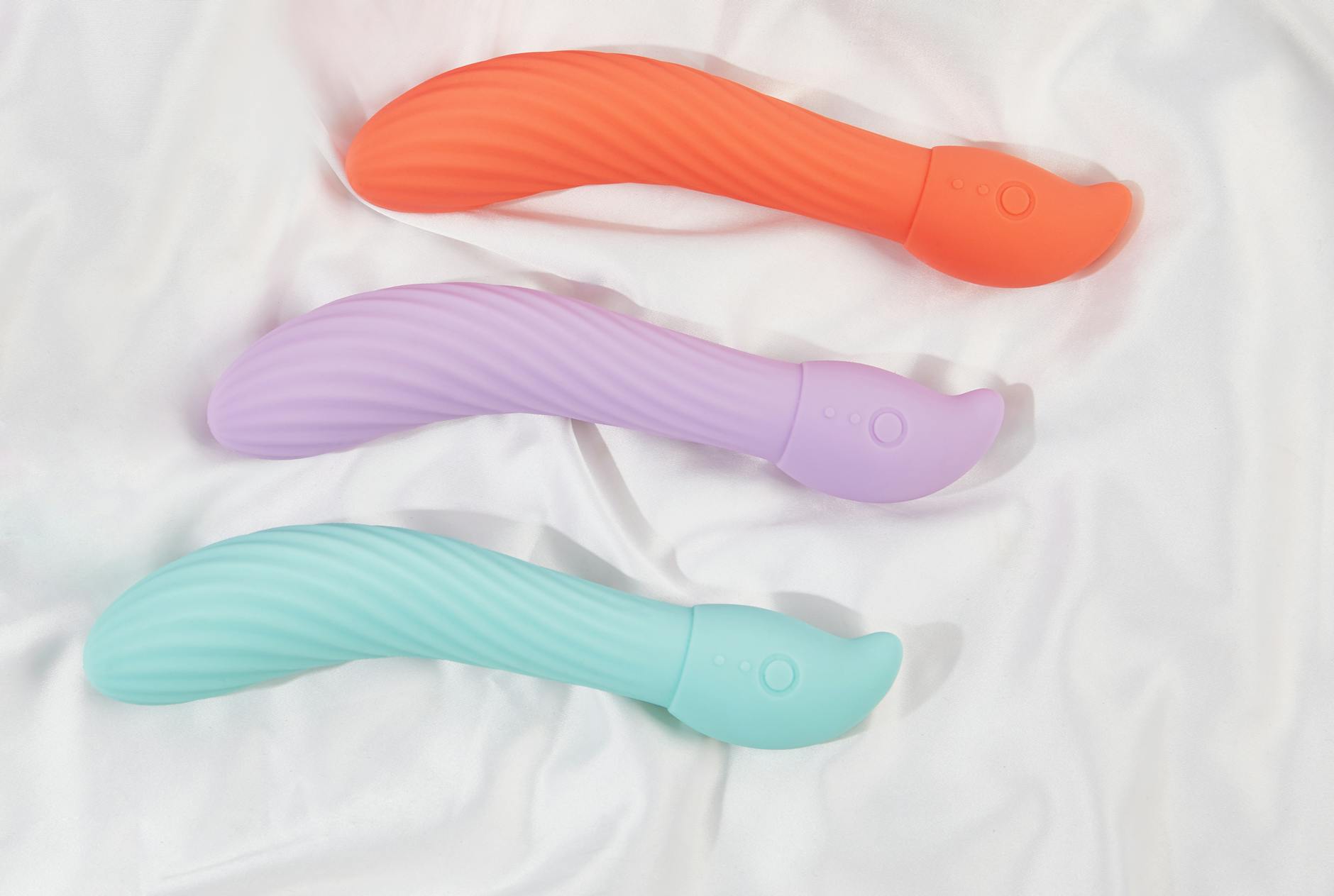
Photo by IFONNX Toys on Pexels
Why lemon vibrators specifically
There are hundreds of clitoral vibrators. Lemon vibrators stand out for couples with desire mismatch because they're intuitive and efficient. You don't need to fiddle with eight intensity settings. The suction technology does the work. That simplicity is everything when you're already feeling vulnerable about sex.
The lemon clitoral vibrator also has cultural permission built in. It's shaped like fruit. It's cheerful. It doesn't look like it's there to solve a "problem." That psychological distance helps lower-desire partners feel like this is pleasure, not medical intervention.
I've also found that couples are less likely to reject a lemon vibrator as "artificial." The sensation is closer to human contact than traditional vibration is. Your partner can feel what's happening. It's not a replacement for them. It's a translation tool for your body's language.
When lemon vibrators aren't the answer
If desire mismatch stems from resentment, infidelity, or a deeper breach of trust, a vibrator won't fix it. You need a therapist first. A toy comes after the relationship has some foundation again.
If the lower-desire partner is experiencing pain during sex, a vibrator might help, but medical evaluation matters first. Pain during sex after surgery or injury requires professional input, not DIY solutions.
If one partner is using desire mismatch as a control mechanism, a vibrator won't solve that either. That's a power dynamic issue, and it needs direct conversation or professional help.
But if you have a fundamentally healthy relationship where one person's pleasure is just harder to access, and the other person is frustrated by wanting more sex than feels feasible? A lemon vibrator often rewires the entire dynamic.
What happens after
Most couples I work with report that once desire mismatch eases, sex stops being a friction point and starts being something they both protect time for. The lower-desire partner initiates more because sex has become reliably good for them. The higher-desire partner stops asking and starts receiving. Frequency often settles somewhere in the middle, and both people feel seen.
The lemon vibrator isn't magic. It's just permission for your body to work the way it actually works, and permission for your partner to stop managing your pleasure. That permission changes everything.
People also ask
Can both partners use a lemon vibrator during sex?
Absolutely. Some couples use it on the penetrative partner's partner during penetration. Others take turns using it on each other as foreplay. There's no wrong way. The point is that it's a shared pleasure tool, not a solitary one.
Will a lemon vibrator make me want sex less often?
The opposite usually happens. When your pleasure is easy to access, you want sex more, not less. The vibrator doesn't decrease desire. It removes the barrier that was suppressing it.
How do I bring this up without my partner thinking I'm not attracted to them?
Separate desire from attraction in the conversation. "I'm attracted to you. I also know my body is sometimes slow to warm up during sex, and I want to change that for both of us." Frame it as a joint project, not a fix for your partner's shortcoming.
What if my partner refuses to try it?
That's information too. If your partner is unwilling to engage with solutions to desire mismatch, that's a sign the issue runs deeper than pleasure mechanics. A therapist can help you understand what's actually driving the resistance.
Is a lemon vibrator the same as other clitoral vibrators?
Not quite. Lemon vibrators use suction technology rather than pure vibration. For many people, especially those with desire mismatch (often rooted in difficulty reaching orgasm), suction feels more reliable and less fatiguing. Lemon vibrator intensity settings for sensitive clitorises can be adjusted to meet your exact needs without the numbness that sometimes comes with traditional vibrators.
How often should we use it?
Whatever feels good. Some couples use it every time they have partnered sex. Others use it a few times a month during the lower-desire partner's self-care time. There's no prescription. The goal is pleasure, not compliance.
The real shift
Desire mismatch in couples isn't solved by one person giving in or one person performing better. It's solved by making pleasure actually feel good for the person who's been struggling to access it. A lemon clitoral vibrator does that. It's not about the toy. It's about the permission the toy carries: permission for your body to work the way it works, and permission for your partner to stop being the only source of pleasure in the room.
That changes everything.