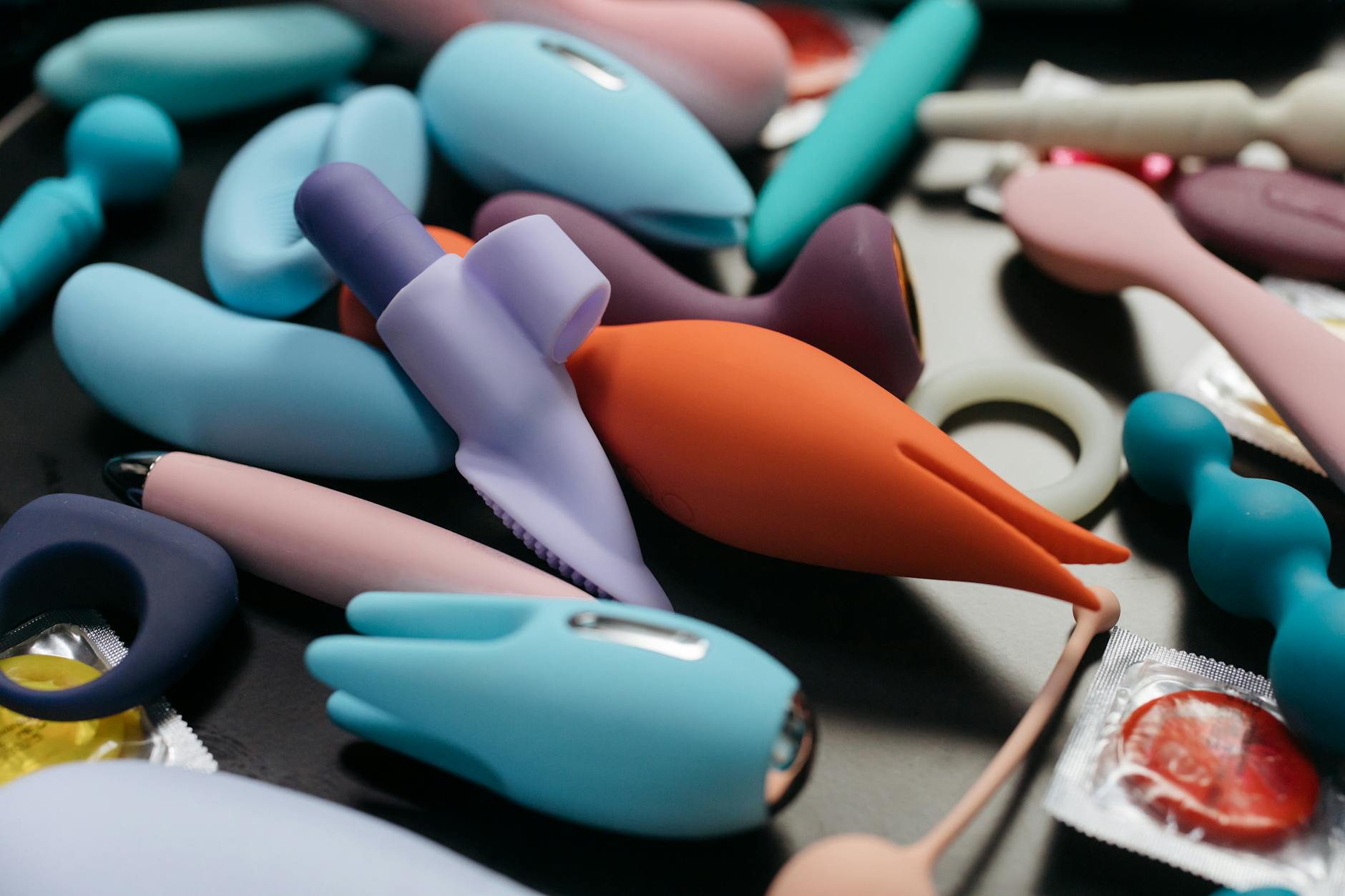
Let's talk about what trauma does to your body
Trauma doesn't just live in your mind. It lives in your nervous system, your muscles, your pelvic floor. Many people who've experienced trauma report feeling disconnected from sensation below the neck entirely. Some describe it as numbness. Others say it feels like their body belongs to someone else. Both are common, and both are reversible.
The nervous system learns to protect you by dampening sensation. That survival mechanism saved you. Now, if you're ready, you can gently teach your body that it's safe to feel again. A lemon clitoral vibrator can be a precise tool in that relearning process, but only if you approach it with the right framework.
Why vibration works differently for trauma recovery
Here's the physiological piece: trauma creates what's called "vagal freeze." Your vagus nerve, which runs from your brain to your pelvic floor, gets stuck in a protective state. Regular vibration (the kind a lemon vibrator produces) can help activate what's called "vagal tone." In plain terms, it gently reminds your nervous system that sensation can be safe.
The suction mechanism that makes Nancy's Lem so effective also matters here. Unlike traditional vibrators, which rely on rapid back-and-forth friction, suction stimulates the clitoral nerves without requiring the direct pressure that many trauma survivors find triggering. You're building sensation from the bottom up, not overwhelming a defensive nervous system.
Three things happen when you use a lemon vibrator intentionally during healing:
- Your body gathers evidence that touch can be neutral or pleasant, not dangerous
- Your pelvic floor begins to release chronic tension it's been holding
- You reclaim agency over what happens to your body, which is often the deepest loss in trauma
The preparation work comes first
Before you even unwrap a lemon clitoral vibrator, you need three things in place.
First, permission. Not from anyone else. From yourself. Many survivors carry guilt about wanting pleasure, as if healing your body is somehow a betrayal of your experience. It isn't. Your pleasure is an act of reclamation. Say that out loud if you need to.
Second, a nervous system regulation practice. This might be breath work (4-count in, 6-count out), grounding (naming five things you can see, four you can touch, three you can hear), or progressive muscle relaxation. Pick one. Practice it three times this week outside the bedroom so your body knows it when you need it.
Third, a trauma-informed therapist or somatic practitioner. Ideally, you're not doing this alone. If you can't access therapy right now, that's okay. But if you can, this is the time. A provider trained in somatic therapy or somatic experiencing can help you navigate what comes up.
How to actually start
Week one is about presence, not pleasure. You're teaching your body to notice sensation without judgment.
Set a specific time. Pick a day when you have at least 30 minutes with no interruptions and no time pressure. Turn off your phone. Lock the door. Make the space feel safe. This might mean soft lighting, a blanket you love, temperature that feels comfortable. You're signaling to your nervous system: this is a protected space.
Start clothed. Yes, really. Hold the lemon vibrator in your hand while it's off. Notice the weight, the texture, the temperature. Turn it on at the lowest setting and pass it slowly over your forearm, your inner elbow, your inner wrist. These are sensitive areas that usually feel safer than genital tissue early on. Notice what sensations you feel. Tingling, warmth, vibration itself, maybe nothing. All of these are fine.
If at any point you feel triggered, stop immediately. Pause the device. Use your grounding technique. Return to feeling the weight of the vibrator in your hand. There's no finish line here. You're not "supposed" to do anything.
Expanding sensation, week two and beyond
Once you've spent a few days with forearm practice (and it's fine if this takes longer than a week), you can move to your thighs, your lower belly, the outer labia. You're still clothed or wearing underwear. You're still at the lowest setting.
The goal is to build what's called "pendulation" in trauma recovery work. That means you notice a sensation, then intentionally shift your attention to a safe part of your body (maybe your feet on the ground, your back against the chair), then return to the vibrator sensation. This teaches your nervous system that you can move between sensation and safety. You're in control.
Many people spend 2-4 weeks at this stage. Some take much longer. There's no timeline. You're rewiring your nervous system, and that doesn't follow a calendar.
When and if you're ready to use the lemon vibrator on your clitoris, start at setting 1. Use water-based lubricant. You might only last 30 seconds. That's not a failure. You're collecting evidence that your body can experience sensation without danger. That's everything.
What you might feel (and what's normal)
Trauma survivors often report unexpected emotional releases during early reconnection. You might cry, feel angry, feel nothing, or feel a strange mix of pleasure and sadness. This is your nervous system processing. It doesn't mean something is wrong.
Some people experience what's called "flashback activation." A sensation or a memory suddenly appears. If this happens, stop immediately. Use your grounding technique. You can always try again another day, or with a different approach. Working with a therapist on this is invaluable.
Others report a strange dissociation, where they can feel the vibration physically but not emotionally. This is also common. Your brain is protecting you. Gently ask yourself: "Am I safe right now?" If the answer is yes, you can stay with it. If the answer feels like "no" or "maybe," stop and ground yourself. There's always another day.
The role of your partner (if you have one)
If you're in a relationship, your partner needs to understand that this process isn't about them. It's not "I don't want you." It's "I'm relearning my own body." Many partners feel rejected or helpless during trauma recovery. It helps to be explicit: "I need to do this alone for now. It's not about our connection. It's about me rebuilding mine with myself."
Some people, once they've spent 4-6 weeks rebuilding sensation solo, find that their partner's presence becomes soothing in the process. You might want them in the room, but not touching. You might want them nearby but out of sight. You might want them to hold your hand while you use the lemon vibrator. Let your body tell you. That's the whole point.
If your partner skips foreplay or pushes for faster progression, that conversation needs to happen separately from your healing process. Healing from trauma and negotiating a relationship are two different projects. Confusing them stalls both.
The nervous system piece nobody talks about
Your clitoris didn't cause your trauma. Your body didn't betray you. But your nervous system learned to protect you by numbing. As you reconnect with the lemon clitoral vibrator, you're also teaching your vagus nerve that your body is a place you can inhabit.
Some research shows that regular, gentle clitoral stimulation can help regulate your autonomic nervous system over time. This isn't magic. It's neurobiology. Your brain gets evidence, repeated and consistently, that sensation is safe. That changes the baseline.
Many trauma survivors also find that their experience of sensation changes across different life stages and hormonal cycles. Be patient with those shifts. Your body is healing, and healing isn't linear.
When to reach out for more support
If you're experiencing intrusive flashbacks that don't resolve with grounding, reach out to your therapist. If you're having thoughts of self-harm, contact a crisis line. Somatic healing is powerful, but it's not a substitute for professional mental health care.
If you've been using a lemon vibrator for 8-12 weeks and you're still experiencing complete numbness or persistent pain, talk to a pelvic floor physical therapist. Sometimes trauma creates physical holding patterns that benefit from hands-on work alongside your solo practice.
You deserve to feel at home in your body. A lemon clitoral vibrator is one small tool in a much larger healing process. Use it gently, with intention, and with patience for yourself.
FAQ: Somatic healing and lemon vibrators
How long does it typically take to reconnect with sensation after trauma?
Every nervous system heals at its own pace. Some people notice small shifts in sensation within 2-3 weeks of consistent, gentle practice. Others take 3-6 months. Trauma doesn't have a timeline, and neither does healing from it. The focus isn't on speed. It's on safety and consistency. If you use the lemon vibrator twice a week with intention, you're doing the work.
Can a lemon vibrator trigger a flashback?
Possibly, yes. The good news is that flashbacks during a controlled, safe experience are actually opportunities to process. Your nervous system is showing you something it's holding. That's not failure. That's information. If a flashback happens, stop, ground yourself, and talk to your therapist about it. Over time, as you repeat the experience safely, the flashback response usually reduces.
I feel nothing during or after using the lemon vibrator. Is something wrong with me?
No. Numbness is a trauma response. Your body is protecting you. Feeling nothing doesn't mean the lemon clitoral vibrator isn't working. It means your nervous system is still in protection mode. Keep going. Some people describe the breakthrough as sudden ("I felt it this time"), and others describe it as gradual ("I think I felt a little more warmth last week"). Both are healing.
What if I'm triggered by the idea of my clitoris at all?
Start much further away. The forearm and leg practice might be your entire toolkit for the first month or two. You're still rewiring your nervous system. You don't have to rush toward your genitals. Many people find that reconnecting with sensation in "safer" areas first makes the eventual genital work feel less overwhelming.
Can I use a lemon vibrator if I also take antidepressants or anti-anxiety medication?
Yes. In fact, for many trauma survivors, medication makes the somatic work safer because your nervous system is less reactive. Some medications do reduce sensation, which is a separate issue worth discussing with your prescriber. But the lemon vibrator's suction mechanism often compensates for reduced sensation from medication better than traditional vibrators.
Should my partner know I'm using a lemon vibrator for trauma healing?
That depends on your relationship and your safety. If you trust your partner and feel safe disclosing, honesty usually strengthens connection. If you have concerns about how they'll respond, that's worth exploring with a therapist first. What matters most is that your healing practice feels safe and isn't pressured.
The bottom line
Trauma disconnects you from your body. Healing reconnects you. A lemon clitoral vibrator is a precision tool that can support that reconnection because it produces sensation without the intensity or pressure of other devices. It's gentle enough for a protective nervous system and effective enough to create real change over time. Start slow. Be patient. And know that your body's capacity to feel pleasure again isn't lost. It's waiting for permission to return.